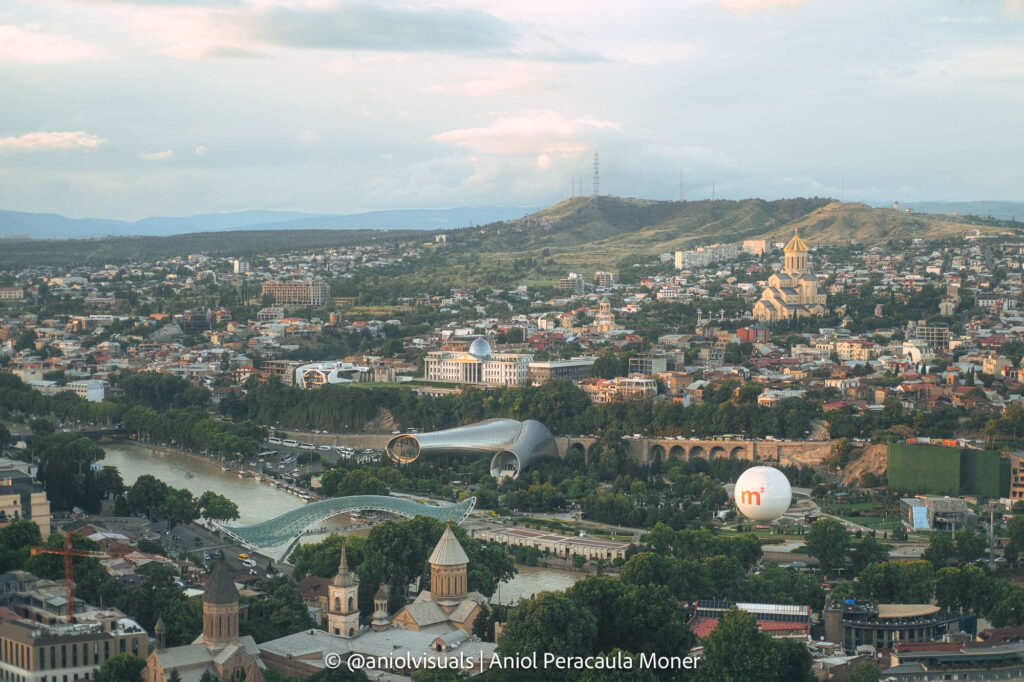
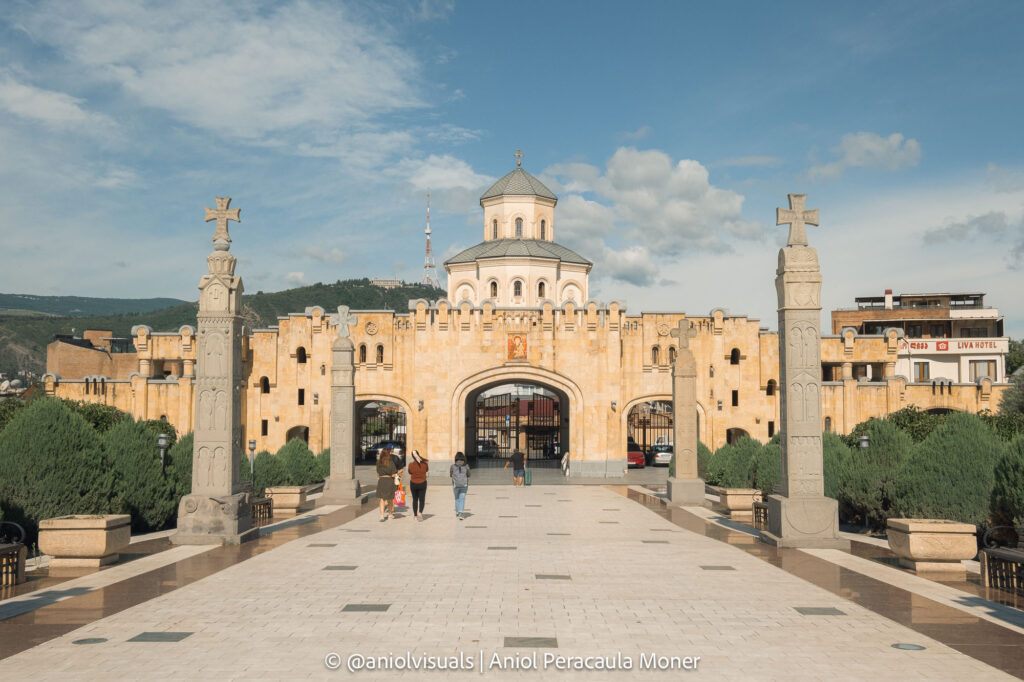
Find out all you need to know about Tbilisi in this complete travel guide: when to visit, how to get there, safety, travel costs and much more!

- Where is Tbilisi, Georgia?
- Is Tbilisi worth visiting?
- How to get to Tbilisi?
- What is Tbilisi's language?
- When is the best time to visit Tbilisi?
- How safe is it to visit and photograph Tbilisi, Georgia?
- How easy is it to move around Tbilisi?
- Where should I stay to visit and photograph Tbilisi?
- How expensive is it to visit Tbilisi?
- How many days do I need to visit Tbilisi?
Where is Tbilisi, Georgia?
Let’s start from the beginning. Tbilisi is the capital city of Georgia, a small country situated at the border between Europe and Asia. Geographically speaking, it is in Asia, but to many, it is still part of Europe.
If we look at a map, we can see that Georgia borders 4 different countries: Russia in the north, Azerbaijan to the east, Armenia to the south, and Turkey to the west. Thus, it is east of Turkey. Tbilisi, the capital of the country, is located around 50km from the Azerbaijan border.
The country itself has it all: beautiful beaches to the west, along the Black Sea, and stunning mountains to the north in the Caucasus range. The closest major tourist city to Tbilisi is Istanbul, Turkey’s capital. However, it is a little bit more than a 2-hour flight from there.
Is Tbilisi worth visiting?
In short, yes, Tbilisi is worth visiting. It’s a really interesting city, with lots of history and a unique culture, mixing east and west, Europe and Asia. However, is Tbilisi for everyone? No, of course not, just in the same way that 1 week relaxing on a beach in Mexico is not for everyone.
Who should visit Tbilisi?
Tbilisi is for those who are looking for a non-popular tourist destination, or who have already visited some of the most popular countries in the area. If you have already visited Istanbul, Tbilisi could be a nice destination. If you’ve been to Armenia or Azerbaijan and liked them, comparing them with Tbilisi might be a good idea.
Tbilisi is also for people who are looking for a slightly more adventurous destination. It’s not a major tourist hub, but it does have quite a strong tourism infrastructure, compared to nearby countries (for example, Russia). It’s ideal to mix it with a trip to the north of Georgia, exploring its beautiful mountains.
Who shouldn’t visit Tbilisi?
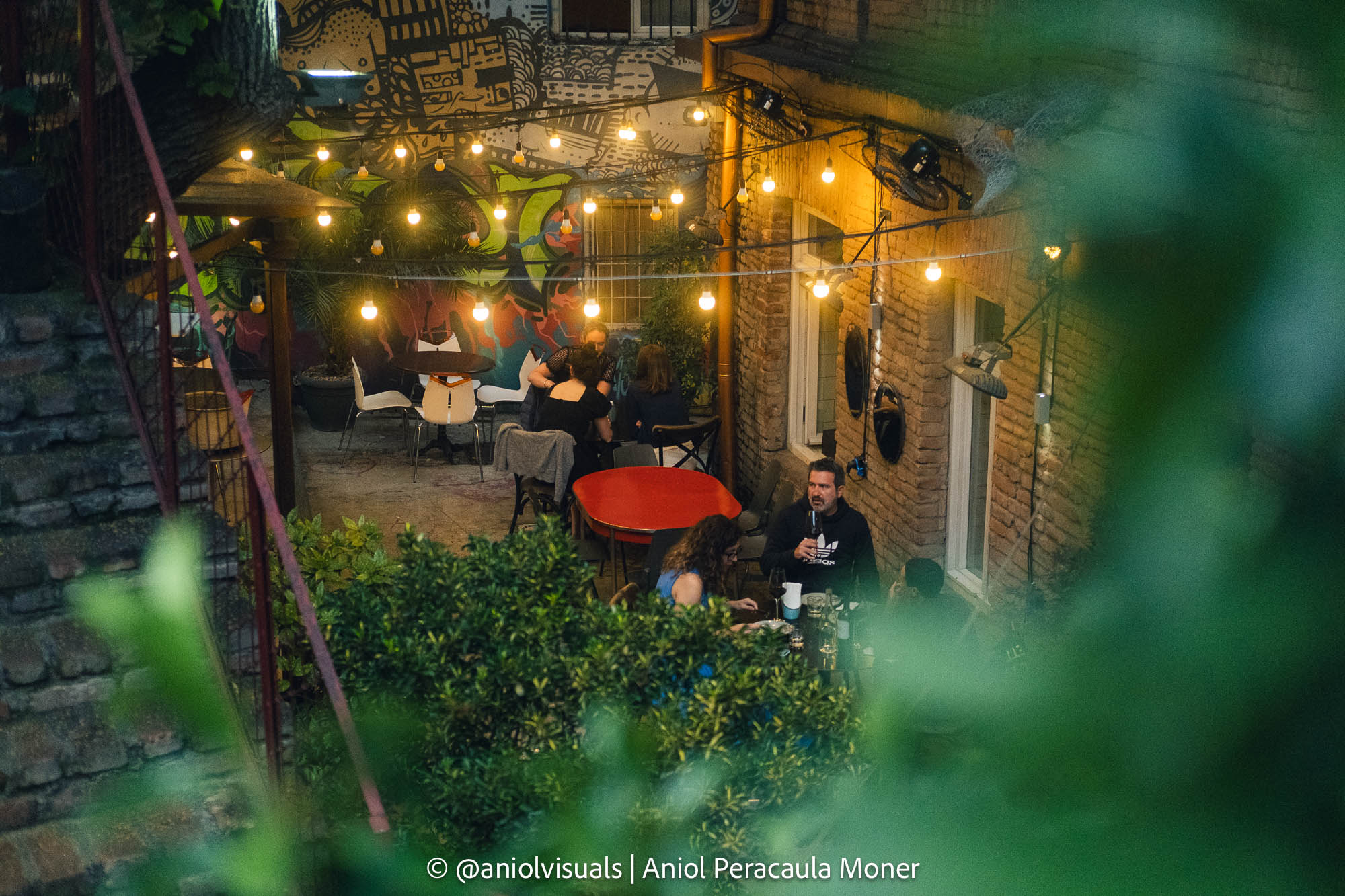
Tbilisi is not for you if you want a relaxing, easy and calm holiday. While you can get it there, you will enjoy it more if you go to other destinations. Tbilisi is not for you if you are looking for a metropolis, like Paris, London, or Berlin. If you want a big city with all the European standards, it might not be your city.
As you will see in this Tbilisi travel guide, it’s a safe and easy city to get around. However, it is not a resort-style city, nor a massively touristy city. There are tourists around, but it still has its own vibe and style.
How to get to Tbilisi?
There are 2 main ways to get to Tbilisi: by plane or by car.
The only reason why you would get to Tbilisi by car is if you are doing a road trip between Armenia and Georgia. I do not include Azerbaijan in this equation because, as of 2025, the border is closed, and the relationship between the two countries is complicated.
Most likely, you will arrive in Tbilisi by plane. Tbilisi has an international airport, code name: TBS, which is located a short taxi ride from the city centre. There are direct flights from major airlines, such as Lufthansa, Austrian Airlines, Turkish Airlines, or Qatar Airways, but it is not a very busy airport.
Interestingly, whenever I fly into this area of the world, I always end up on a plane landing at 4 a.m., because of the time zone they are in. More information about this on the section: How many days do I need to visit Tbilisi?
What is Tbilisi’s language?
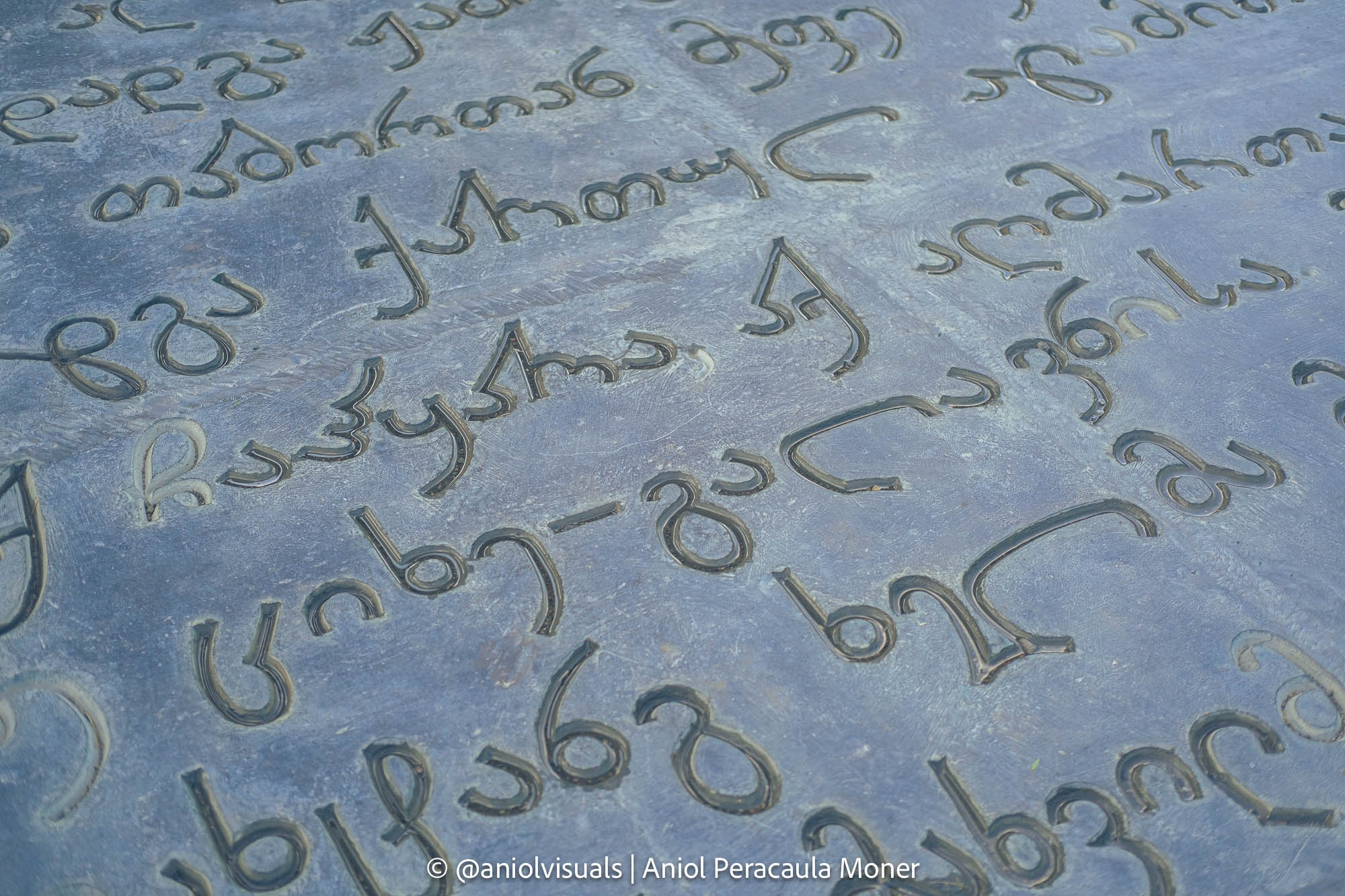
Georgia has one main official language, Georgian, and one other recognised language, Abkhaz. The moment you land there (or see some photos of the city), you’ll notice that they don’t use the Latin alphabet. Instead, they have their own alphabet, the Georgian script.
An important thing to know about Georgia is that while almost everyone outside of the country calls it Georgia, they don’t. They use the Georgian name, Sakartvelo, and you might hear it here and there if you visit the country.
Besides Georgian and Abkhaz, the vast majority of the population knows Russian. However, among younger generations, they do not use it that much, mostly because of the implications it has. There are parts of the Georgian territory that are in dispute with Russia.
Do people speak English in Tbilisi?
Yes and no. In any tourist spot, you’ll find people who can speak English. Surprisingly, due to the commercial ties of the country with France and Germany, you might find people who speak those languages as well. However, it is not widely spoken. Nowadays, it is taught at school, so younger generations speak it (at various levels of proficiency).
With the increasing expat population in Tbilisi, English is becoming more and more spoken, but it is not like a Nordic country, where you can speak in perfect English with anyone.
Don’t let the language barrier worry you! Georgians are really welcoming, and even if you don’t speak their language, you will be able to communicate with them!
When is the best time to visit Tbilisi?
Tbilisi can be visited year-round. However, depending on what you are looking for, some months or seasons might be more convenient for you.
What is the weather like in Tbilisi?
- Winter in Tbilisi: winters in Tbilisi are cold. Not super cold, but temperatures get below 0 degrees Celsius, although snow is not frequent. Bear in mind that this is Tbilisi’s weather. If Tbilisi is 0 degrees Celsius, then high in the mountains, it will be way colder. Winter might be the worst time of the year to visit Tbilisi, unless you want not many tourists and to mix your trip with some winter sports.
- Spring in Tbilisi: together with autumn, my preferred time of the year to visit Tbilisi. The weather is pleasant (a bit chilly even), the city is alive, and days get longer. Perfect for a long weekend or a one-week trip!
- Summer in Tbilisi: summers can be hot in Tbilisi. Average maximum daytime temperatures go above 30 degrees Celsius. While I am used to this, doing tourist activities in these temperatures is a bit less pleasant. However, this is the best time to head to the mountains to hike, so it’s also a nice time of the year to visit Tbilisi.
- Autumn in Tbilisi: I have never visited Tbilisi (or Georgia) during the autumn months, but I can’t wait to do it. The weather is not too cold to be in the mountains, before the snow starts falling, and the city should be beautiful with autumn colours and a slightly less touristy vibe.
How safe is it to visit and photograph Tbilisi, Georgia?
This was the thing I was worried about the most. There were 2 reasons why safety in Georgia worried me. The first one is their relationship with Russia. Russia has occupied some Georgian territory in the past (and still does), and with the war in Ukraine being active while I was there, I wasn’t sure if I should be worried or not. The second one was some reports of young kids stealing from tourists in central areas of the city.
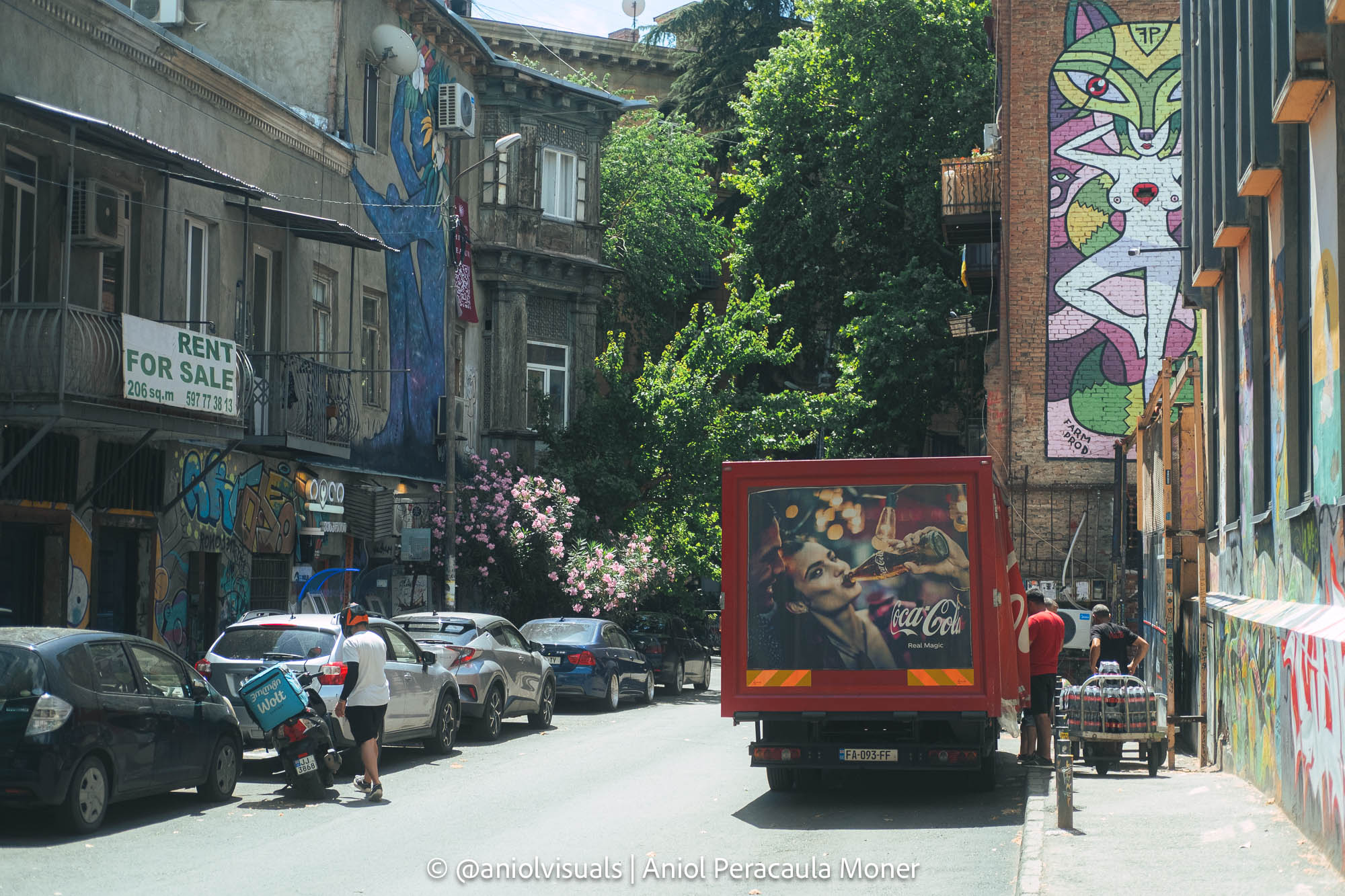
Of course, I can only share my personal experience, but I felt very safe in the city. However, if you are not used to the Eastern Europe/USSR vibe, the city can look unsafe, but only because of its decadent style. Some buildings have clearly seen better days, but this doesn’t translate into not feeling safe.
I mostly explored touristy and central areas, but it felt very safe and welcoming, taking into account what I mentioned above.
How easy is it to move around Tbilisi?
This was less of a concern for me, but something very important when choosing where to stay (see below). I am okay with walking long distances. Yet, it is nice to know there is an easy way to get back home without walking.
Tbilisi has a nice and very cheap metro system, but its taxis are equally cheap. Of course, not as cheap as the metro, but a 10-minute ride can cost you $2-4, making it very easy to move around. It’s true that being so cheap, you risk taking many taxis, and skipping walking.
Moreover, the city is hilly, especially its old town and cathedral area. Thus, sometimes it’s less about the distance and more about the convenience of taking a taxi and going back to your hotel or to the next area you want to visit.
To answer the question, though, it is easy to move around Tbilisi.
Where should I stay to visit and photograph Tbilisi?
The million-dollar question. Or not, because Tbilisi is not that expensive. The obvious answer to this question could be the Old Town. You’re in the heart of the city, close to most tourist attractions and photography spots in this guide. However, as you will see, most of the Old Town buildings are not in the best shape, at least from the outside.
The main reason is that it’s not possible to restore the façade of many buildings without complex government approvals, and people only renovate the inside. Thus, don’t expect the interior of the Old Town buildings to look like their façades. The same can be said for the area between the river and the Orthodox Cathedral, and even part of Rustaveli Avenue.
To decide where to stay in Tbilisi, you’ll have to decide 2 things: what you will be doing and how you will be moving around.
If you plan on taking taxis, almost everywhere in the city is a good spot. Otherwise, try to be close to one of the metro stops to ensure quick access to the city centre.
Areas to stay in Tbilisi
There are 4 areas I would recommend staying in Tbilisi:
- The Old Town: smaller apartments and buildings, not a lot of international hotels, but you’ll be in the city centre.
- Anywhere along Rustaveli Avenue: this is the main avenue of the city, connecting the Old Town with the richer Vake area. There are many international hotels like the Radisson Blu or a cheaper Ibis. I stayed in this area.
- Vake: This is, without any doubt, the most modern area of the city. Modern buildings, (a few) new skyscrapers, and lots of greenery around. If you stay there, either you will be taking taxis, or you are okay with walking a bit. Some high-end hotels are in this area.
- Marjanishvili: To me, it looked like a more hipster area, but with similar buildings to the ones in the Old Town and part of Rustaveli Avenue. It’s the only spot I recommend that is on the eastern shore of the river. It has easy access to the metro and it’s quite close to the Cathedral.
How expensive is it to visit Tbilisi?
Tbilisi is not expensive. However, I can see the city getting more and more expensive quickly, if the political situation allows it. Eating is easily half the price of countries like Spain in average restaurants, and if you are ok with budget restaurants, you can get a full meal for 4-7$. Yet, you can also find fancy and expensive options if you are into it. It’s not the goal of this guide, but Georgian cuisine left me hooked, and I can’t wait to visit again!
Accommodation expenses vary a lot, depending on what you choose. International hotels will be pricier, but local guesthouses are very affordable.
When it comes to transportation, as I already covered above, the metro is very cheap, and taxis can be considered as a usual means of transport, as they are quite cheap as well. Use apps like Bolt, and you will know in advance how much you will be paying.
Regarding tourist attractions, as usual, prices don’t reflect the prices of the location. However, it’s not abusive, and to be honest, I did not have the need to pay to access most of the main tourist attractions.
How many days do I need to visit Tbilisi?
Tbilisi is home to around 1 million people. Thus, it is a medium-sized city, and most of the areas of interest are relatively close. When it comes to photographing the city, I think the minimum time needed is around 3 days. One for the old town, one for the eastern shore of the river and one for the Vake area + Chronicles of Georgia. Adding an extra day can give you some room for a day trip or to get to see more of the city. I spent 4.5 days in the city, and if I could, I would add one more day, but this is because I like slow travel.
Consider the time zone of Tbilisi. Although for many airlines (I am looking at you, Lufthansa) it’s considered to be in Europe, its time zone is GMT+4, which means if you are coming from (for example) London, you’ll have a 3-hour difference. It’s not massive, but it adds up. Moreover, I also observed that flights tend to arrive in Tbilisi before sunrise and to leave at the same time. I landed at 3:30 am and left at 4:30 am, back to Europe. This means that you most likely will need to get an extra night of accommodation.
This is all you need to know to visit Tbilisi, and this closes this Tbilisi travel guide. Got extra questions? You can schedule a call with me using the link below, or check my Tbilisi photography guide!