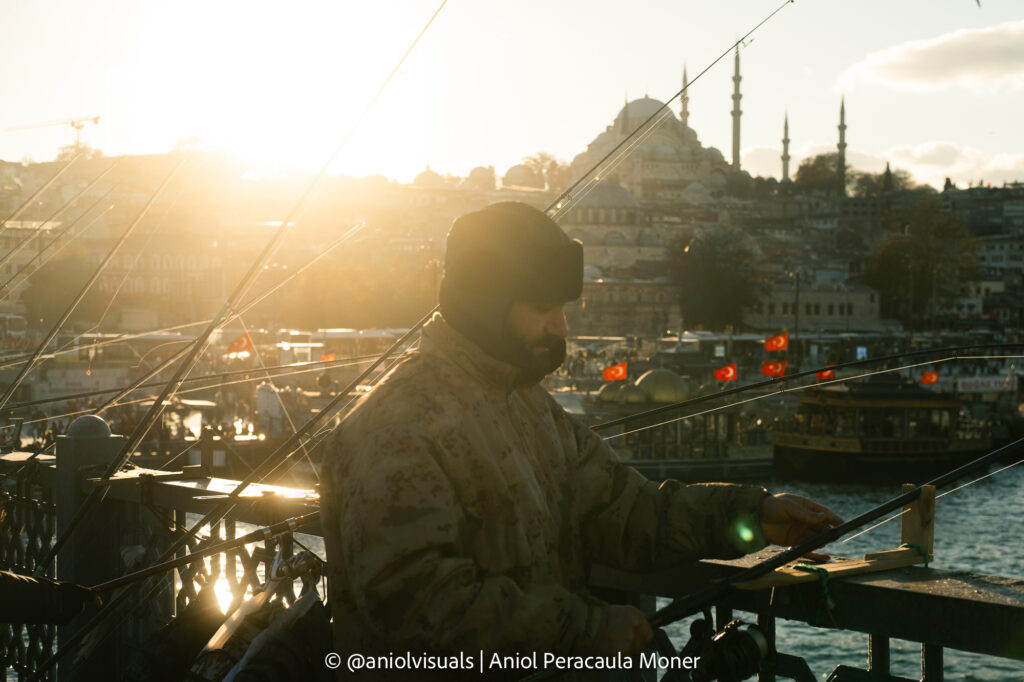
Explore Tbilisi, find out its best photography spots, opportunities, and very honest thoughts about its usual photo spots in this guide! Discover the capital of Georgia, where Asia and Europe meet.
Georgia is not a super touristy country. It’s becoming a Digital Nomad hub, especially due to its tax regulations, but it is not a super common tourist destination for Europeans or North Americans. Its time zone indicates their strategic position between Asia and Europe, but not many decide to explore it.
The country is much more than Tbilisi, with the amazing Caucasus mountain range to the North and the beautiful Batumi to the west. Yet, this guide focuses on the capital of the country, Tbilisi, and its photography spots and opportunities. It contains many honest thoughts about what I read online from a photography point of view, so be ready for some not so common opinions.
Tbilisi photography guide: information of interest
Before getting started, as in any of my travel photography guides, here are some of the photography-oriented questions I had before visiting Tbilisi.
How safe is it to photograph Tbilisi, Georgia?
I already covered the geopolitics of Georgia with Russia and their neighbouring countries in my Tbilisi FAQs article. Here, I will focus exclusively on the photography aspect. I did not feel unsafe at any point when visiting Tbilisi, but if you are used to “polished” cities, Tbilisi is not one of them.
Tbilisi felt safe, but also because I was cautious. In the Tbilisi Old Town and main photography spots listed in this guide, I did not experience any safety-related concerns. However, if this is your first trip to an ex soviet country, you’ll have to learn that dark and decadent doesn’t mean unsafe.
Where should I stay to photograph Tbilisi?
This question is also covered in my Tbilisi FAQs article. However, when it comes to photography, the answer can vary a little bit. I recommend the Old Town for most people and first-time visitors, but if your main goal in Tbilisi is to take photos, I’d also consider a couple of extra areas:
First, Rustaveli Avenue, with many hotels, easy metro access, and nice street photography areas around.
Second, Marjanishvili. I only recommend this area if you plan on spending a bit more time in the city, and within it, I’d choose the area closest to the cathedral, for quick access to the Old Town without being in it.
How many days do I need to photograph Tbilisi?
Tbilisi is home to around 1 million people. Thus, it is a medium-sized city, and most of the areas of interest are relatively close. When it comes to photographing the city, I think the minimum time needed is around 3 days. One for the old town, one for the eastern shore of the river and one for the Vake area + Chronicles of Georgia. Adding an extra day can give you some room for a day trip or to get to see more of the city. I spent 4.5 days in the city, and if I could, I would add one more day, but this is because I like slow travel.
Consider the time zone of Tbilisi. Although for many airlines (I am looking at you Lufthansa) it’s considered to be in Europe, its timezone is GMT+4, which means if you are coming from (for example) London, you’ll have a 3h difference. It’s not massive, but it adds up. Moreover, I also observed that flights tend to arrive in Tbilisi before sunrise and to leave at the same time. I landed at 3:30 am and left at 4:30 am, back to Europe. This means that you most likely will need to get an extra night of accommodation.
Tbilisi photography guide: Old Town photo spots
Liberty square
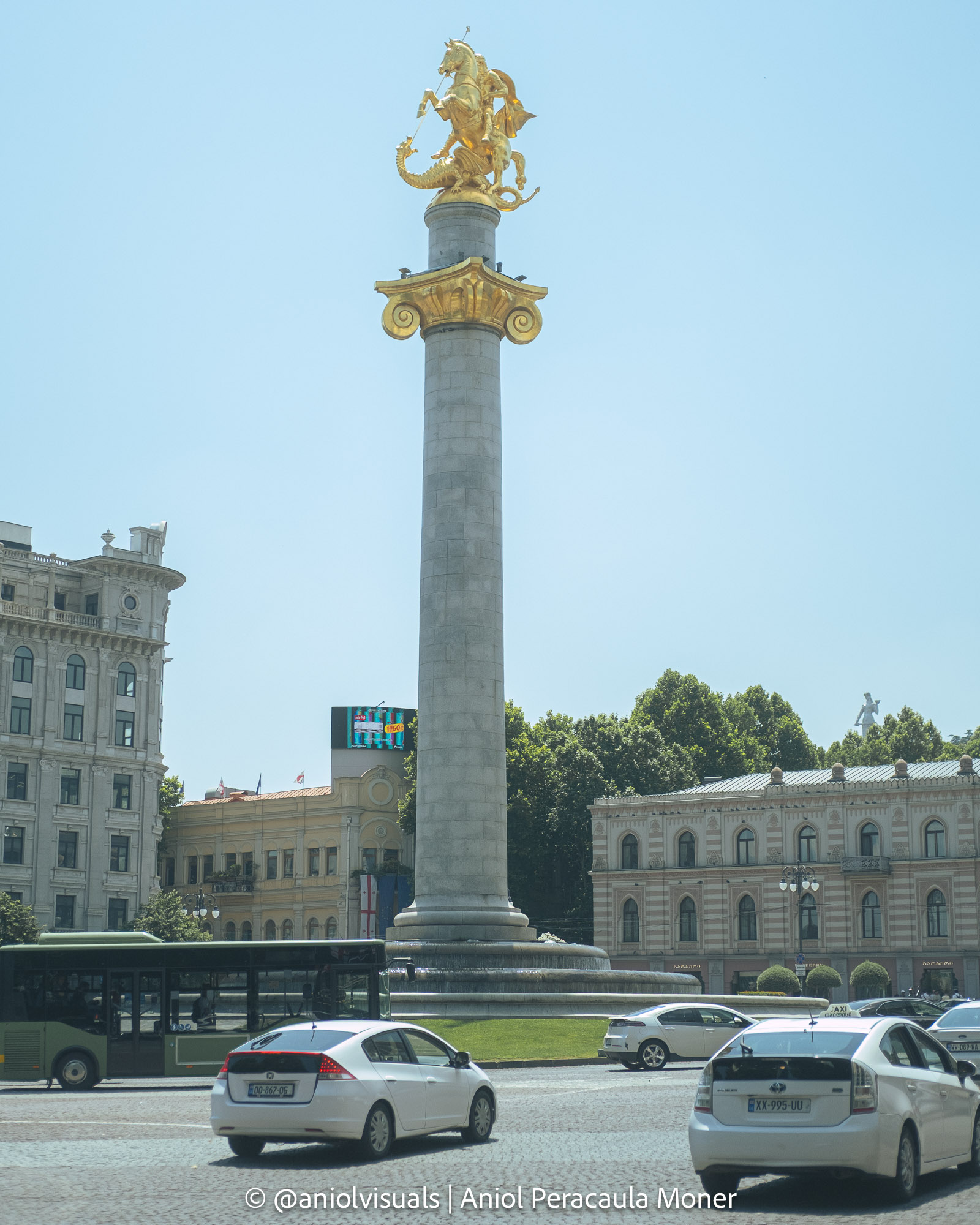
Liberty Square is where the “gates” to the Old Town are. From there, you can access the Old Town of Tbilisi and take the streets that go up to the Narikala Fortress and many of the other photography spots listed in this guide. The square itself is interesting to photograph. It’s a massive roundabout, and this means that there are a lot of people around.
At the centre of the square, there’s a tall pillar with a statue on top, a knight riding a horse and killing a dragon. It is St George, the patron of Georgia. Btw, fun fact, did you know the name Georgia is not inspired by St George? The country itself is not called “Georgia” by locals. The name they use and that you might hear is “Sakartvelo”.
Old town decadent buildings
I remember the first time I visited an ex soviet country. Over the years, I started to appreciate the decadence of some of the post-Soviet countries when it comes to photography. I am aware of the damage that it did to the people who lived there, but photography is a way to show it as well.
The Old Town of Tbilisi, and the whole city, is full of decadent buildings. Don’t think that the inside matches the outside. Discussing with some locals, they mentioned that the facades can’t be reconstructed because it is the government that should be doing it. Moreover, they are historical buildings, and it would be expensive to restore them properly. Thus, they are left as they are.
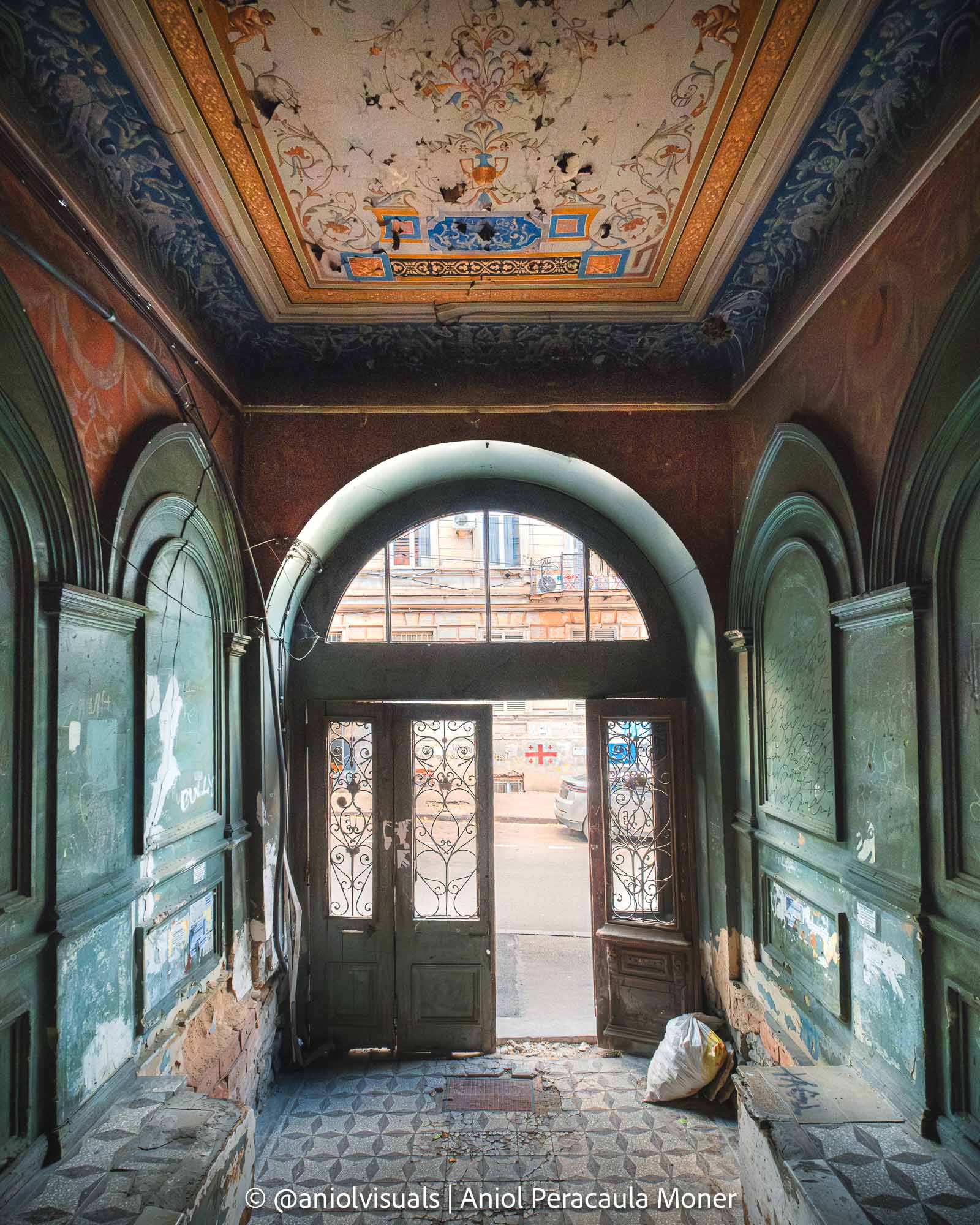
There is one specific building in the Old Town worth mentioning. Located on 58, Lado Asatiani St (approx), the building depicted below made me question if I should enter all open doors I found. I didn’t, but I am sure there are many hidden surprises waiting in the streets of Tbilisi.
Narikala Fortress
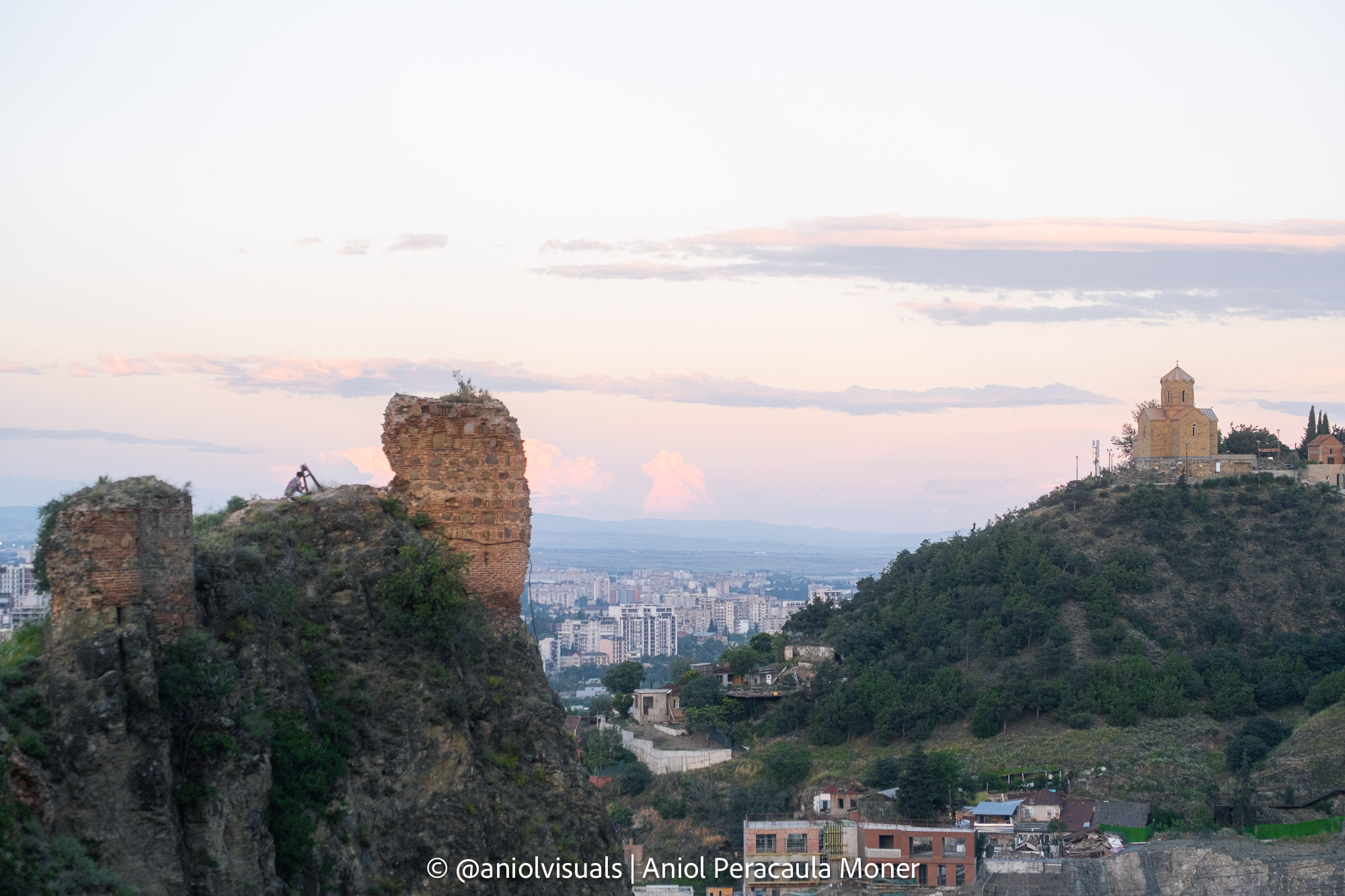
The most visited and photographed spot in Tbilisi must be Narikala Fortress. In fact, if you searched online for Tbilisi, you would have seen the photo of the fortress surrounding the Old Town. I did not find the Narikala Fortress easy to shoot, because unless you have a drone, there are not many good viewpoints towards it. It’s impressive, but it is difficult to convey the size of the fortress in a single photo.
What I enjoyed, though, was shooting from one side of the Fortress to the other. Especially at sunset, it’s a really nice vantage point.
To get to the top of the Fortress, you have 2 options: walking or taking the cable car. I recommend walking. Mainly because on your way up, you will get to see some of the other spots in this section of the guide. Nonetheless, the cable car has its charm. However, be careful, as the cable car doesn’t operate 24/7, and if you want to be there for sunset or sunrise, you’ll need to walk.
Betlemi street stairs (and other old town hilly streets)
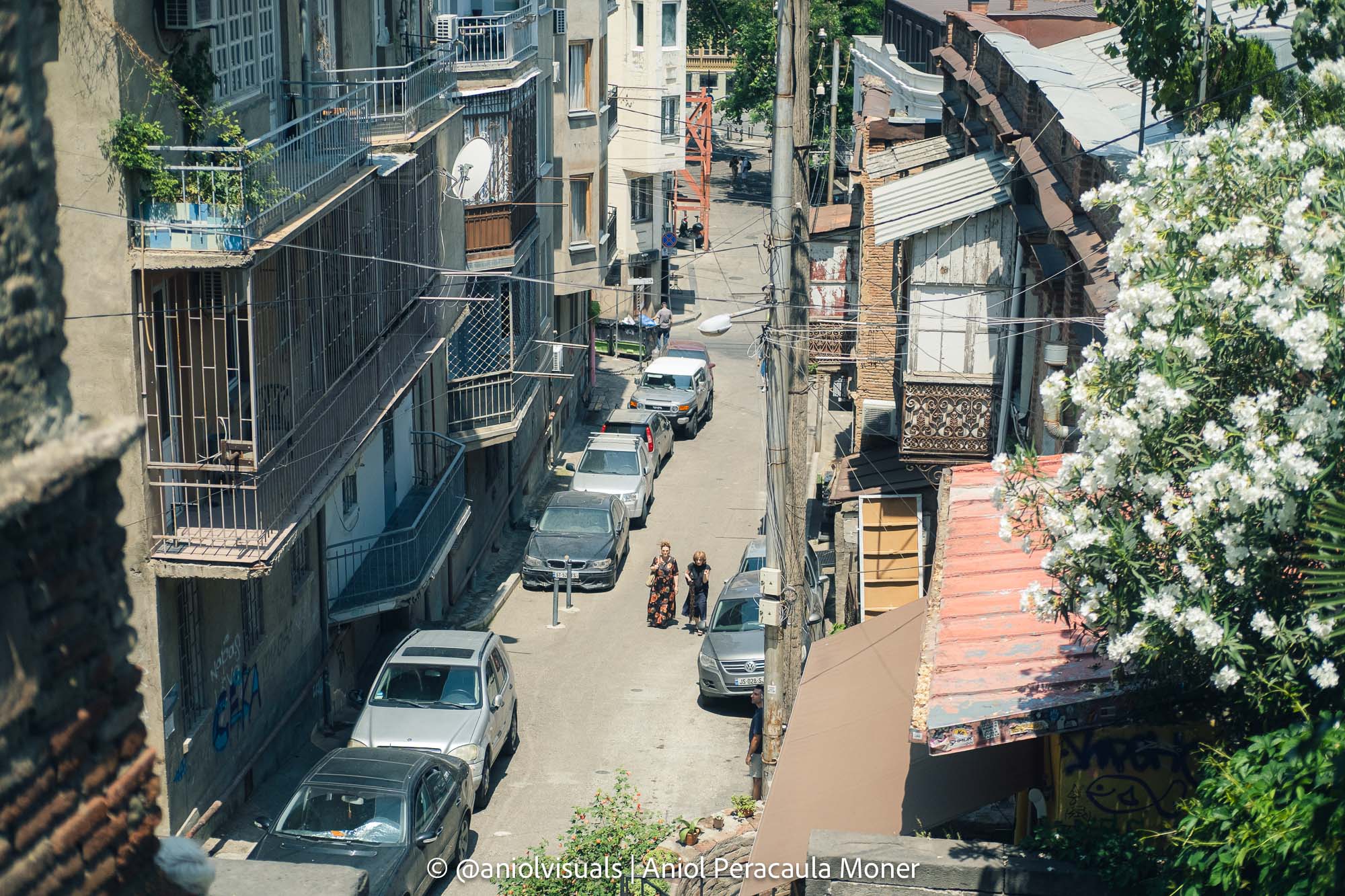
As you already know, the Old Town of Tbilisi is hilly, as the heart of it is the Narikala Fortress. This means that some of the streets near the fortress are quite hilly. From there, you can get different views of the city and take beautiful photos. One of the spots I recommend is the Betlemi Street stairs.
It’s a perfect place to see the wooden balconies and chaotic structure of the Old Town. And if you keep walking up, you will find the next spot.
Betlemi rise viewpoint
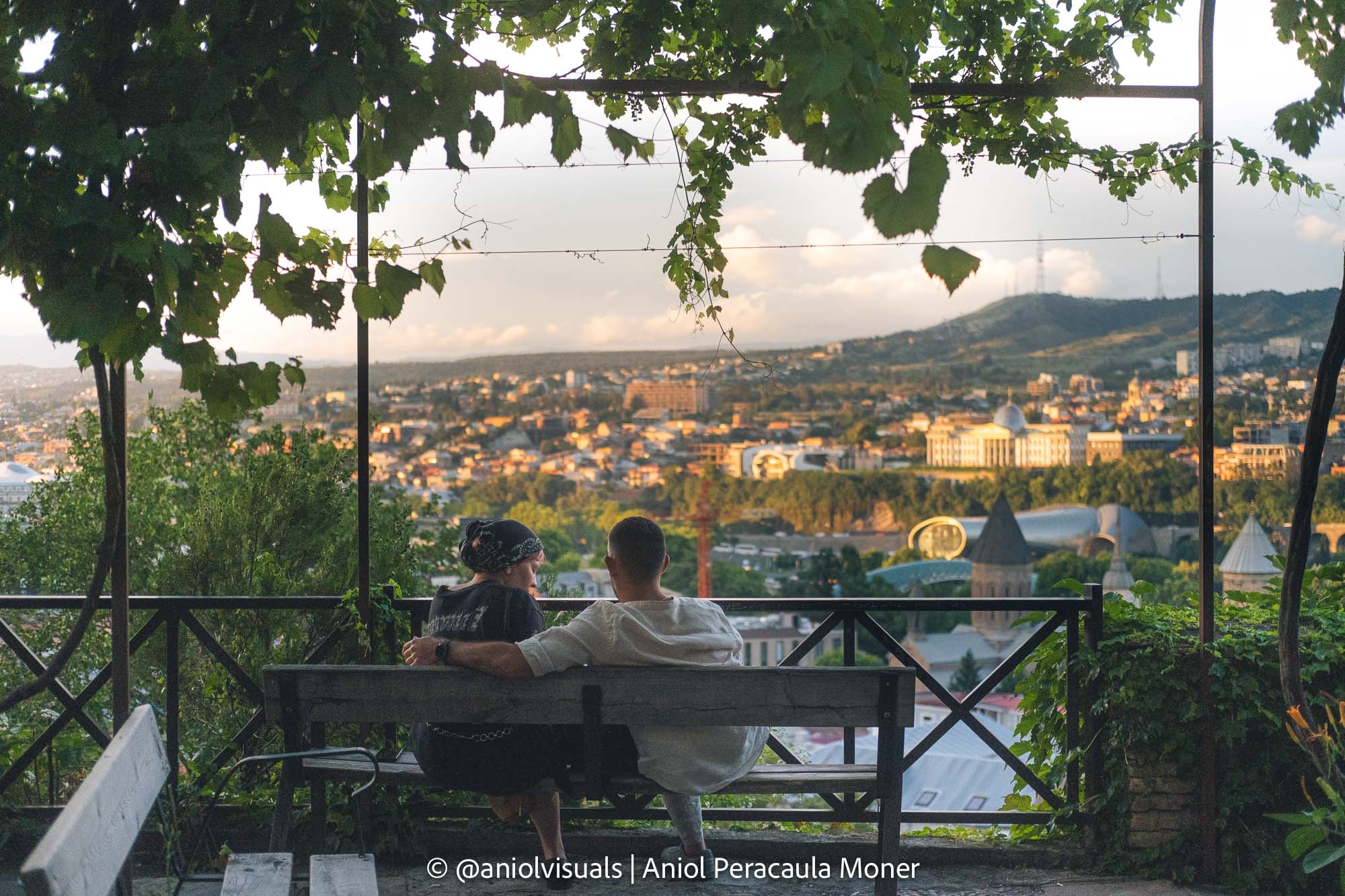
After going up the Betlemi street stairs, you will see a small path going up to the fortress. Halfway there, you will make it to this viewpoint. In fact, the whole way up is a viewpoint. Due to the high incline of the path, stop, take a breath and enjoy the views of the Old Town. With every step, your height increases and new perspectives open.
One of the most obvious photos is the small balcony and garden. But don’t stop there. The moment you start walking up again, with the upper and lower Betlemi churches under you, there are many great photo opportunities.
Mother of Georgia
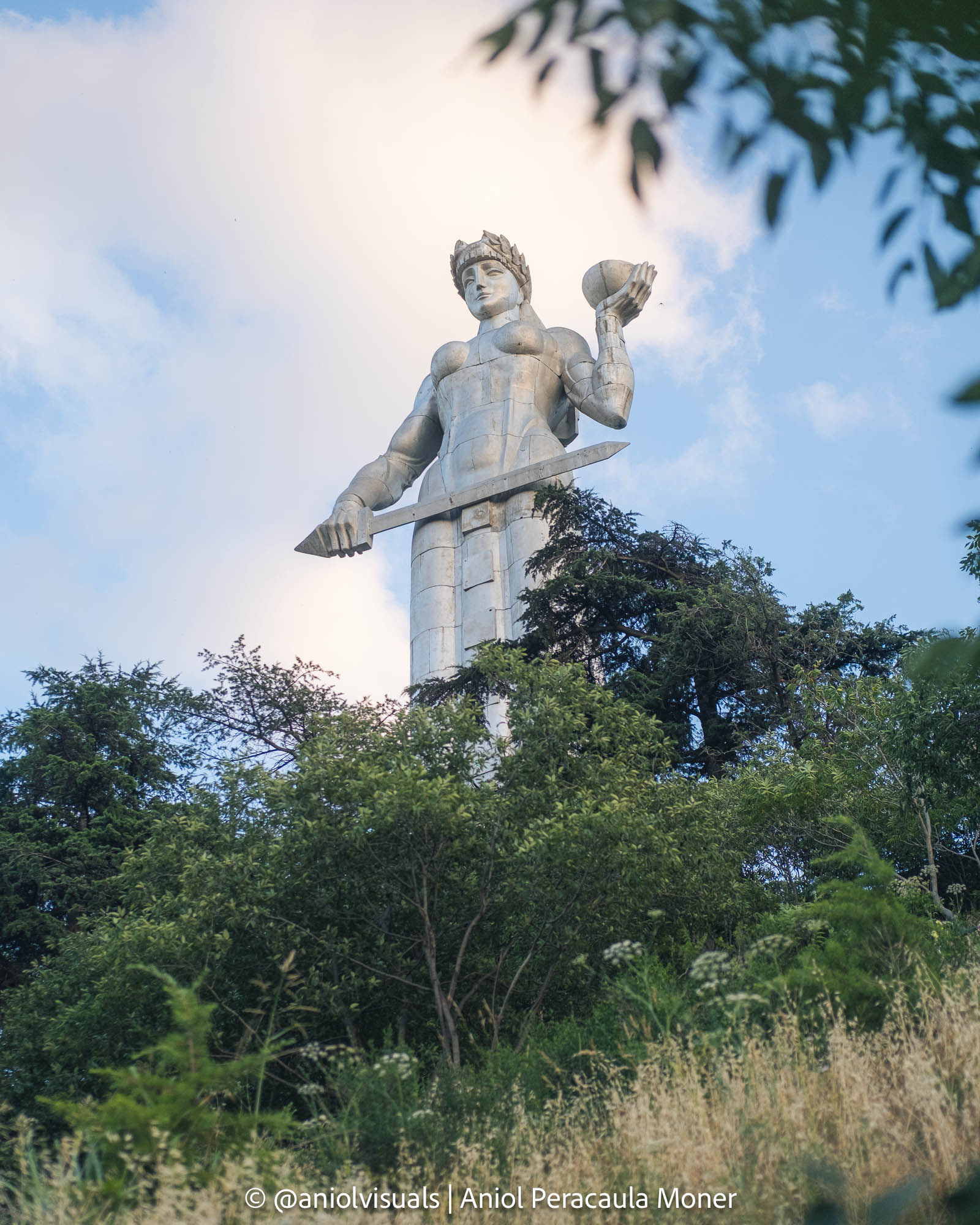
When you start exploring the Tbilisi Old Town, at some point you will see her: a massive sculpture of a woman, with food in one hand and a sword in the other. It represents the hospitality and the fierceness of the Country, and looks great in photos.
Of course, you can take it as the main element, either from beneath it or next to it. However, I think it is also a great touch element in your Tbilisi Old Town photos. Finally, make sure to check the viewpoint located at its feet. The view from there at sunset is really nice.
Narikala Viewpoint
After going up the stairs and seeing the Mother of Georgia, you will make it to the Narikala Fortress. Besides the Fortress itself, do not miss the views towards the city. I was there twice, once at daytime and once at sunset. It was a bit too crowded to my liking during the day. At sunset, though, when the gondola to go up there is not working anymore, it gets a bit quieter, and if you get some good light, you will be able to take great photos. This is a fantastic photography spot in Tbilisi, and I could not miss it in this guide.
Unlike the Fortress itself, which I found difficult to photograph, as I already explained before, this was a nice surprise.

The Clock Tower
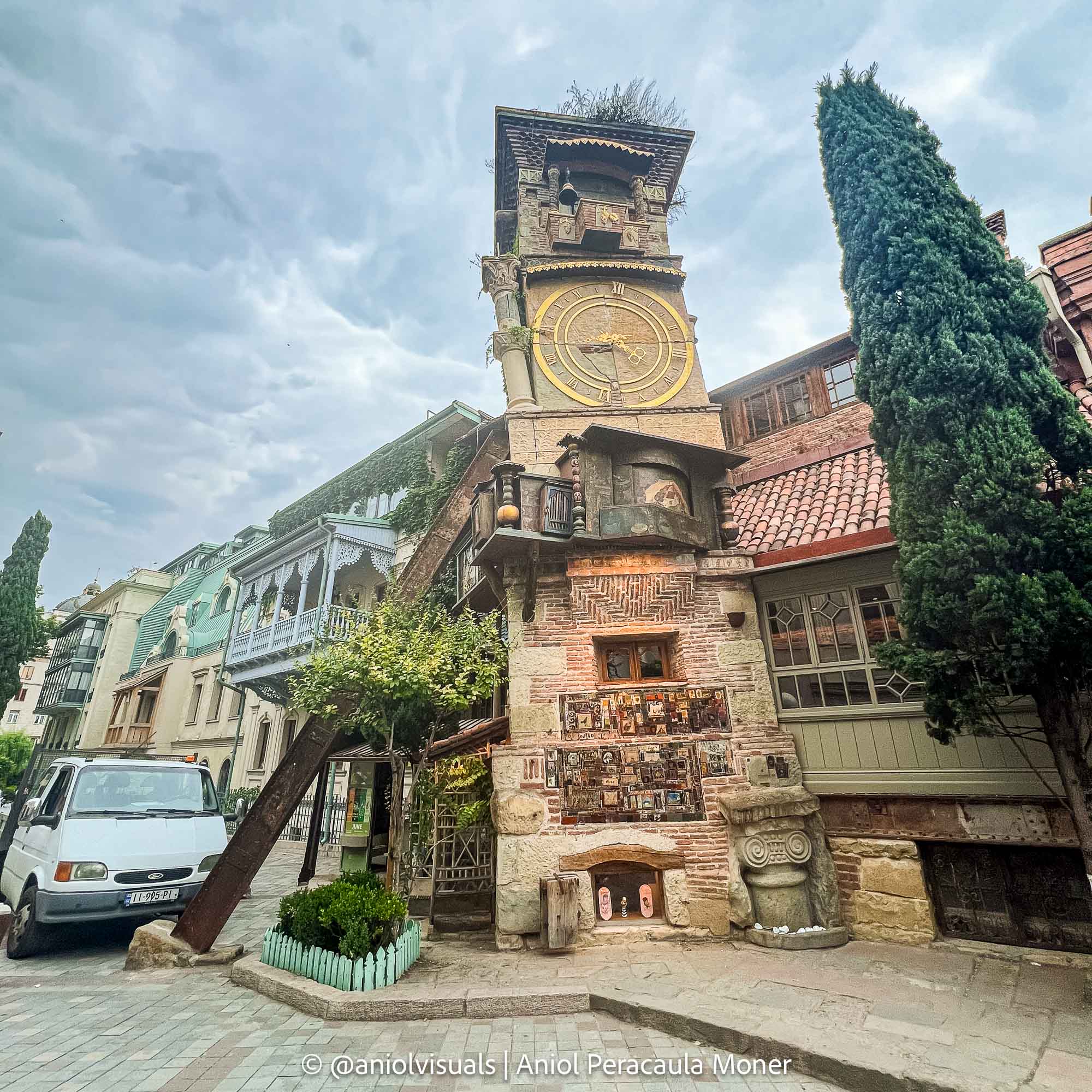
This spot is listed in almost all Tbilisi photography guides, and I don’t understand why. True, it’s interesting, but I don’t think it makes for a great photo. Mainly because there’s only one angle that works there.
This is a clock built in an “Alice in Wonderland” style. I have to say it is not something I have seen in other places in the world. It is worth visiting, but I don’t think it’s a great photography spot. Even if you visit it when not many people are around, there’s not a lot of space for creativity.
Sulphur Baths
In this area, you can find some thermal baths, and one of the buildings has a very characteristic set of half-domes, which can be interesting for photography. This is what is mentioned online as a photo spot. To me, though, this is another disappointing popular spot.
I was really looking forward to exploring this area. However, it feels like one of the “Instagram spots” that some years ago I would have enjoyed, but nowadays are all about finding an exact angle and taking the photo. While inside the baths (based on what I see online), there are nice photo opportunities, from the outside, it was disappointing.
Tbilisi photography guide: other photo spots
Tbilisi is not just its Old Town. There are many other areas in the city worth photographing, some even more than the Old Town itself! Let’s jump into them!
Rustaveli avenue
This is Tbilisi’s main avenue, ending at the Liberty Square, where the Old Town begins. This avenue is full of interesting photo opportunities. From the Opera House to the small food stalls or exchange offices. I recommend walking along the avenue, camera in hand, looking for interesting people or situations, as there are many of them. A short part of the guide, but one of my favourite spots, especially because of the contrasts that you can find in such a small space.
Dry bridge market
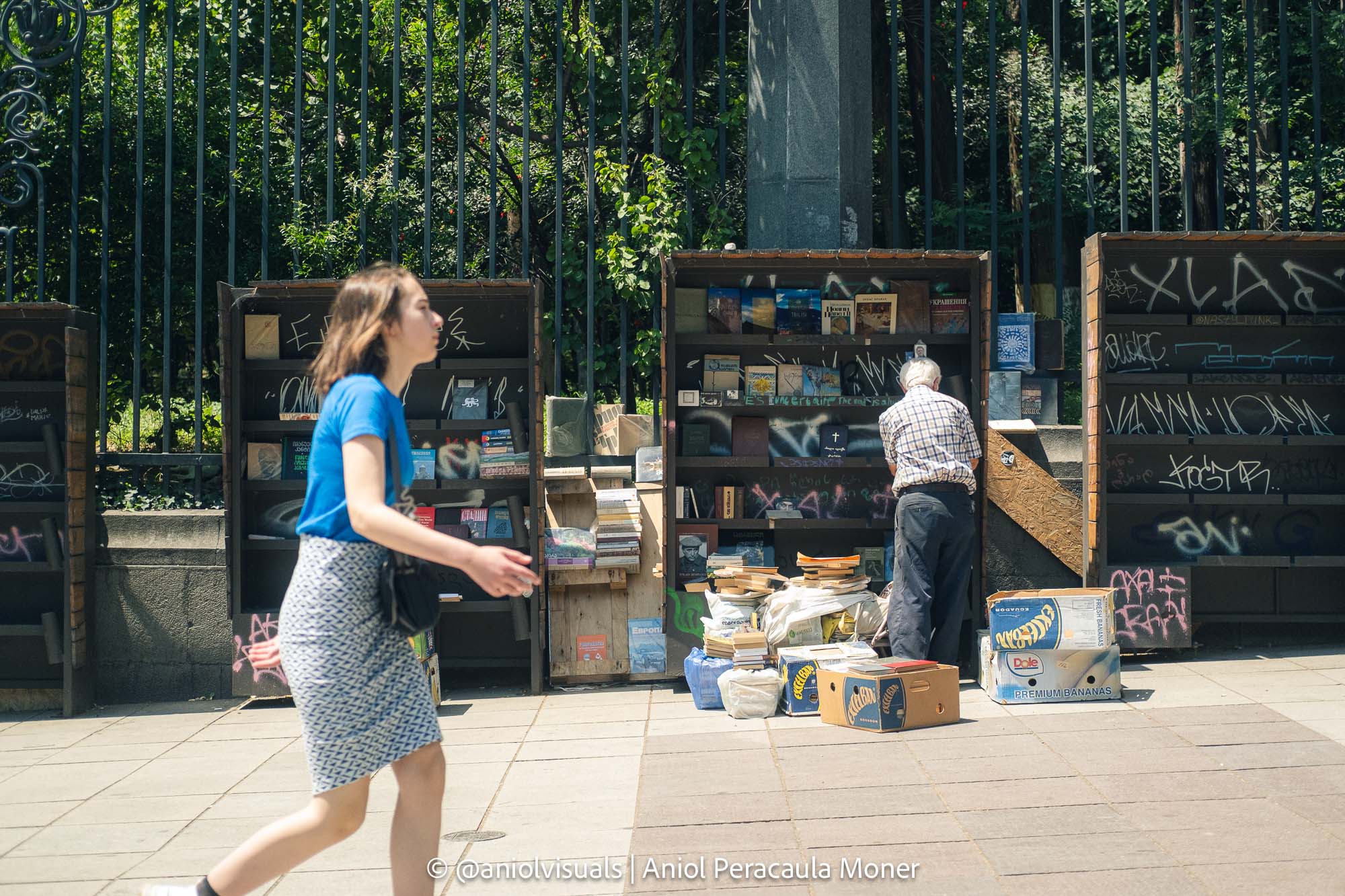
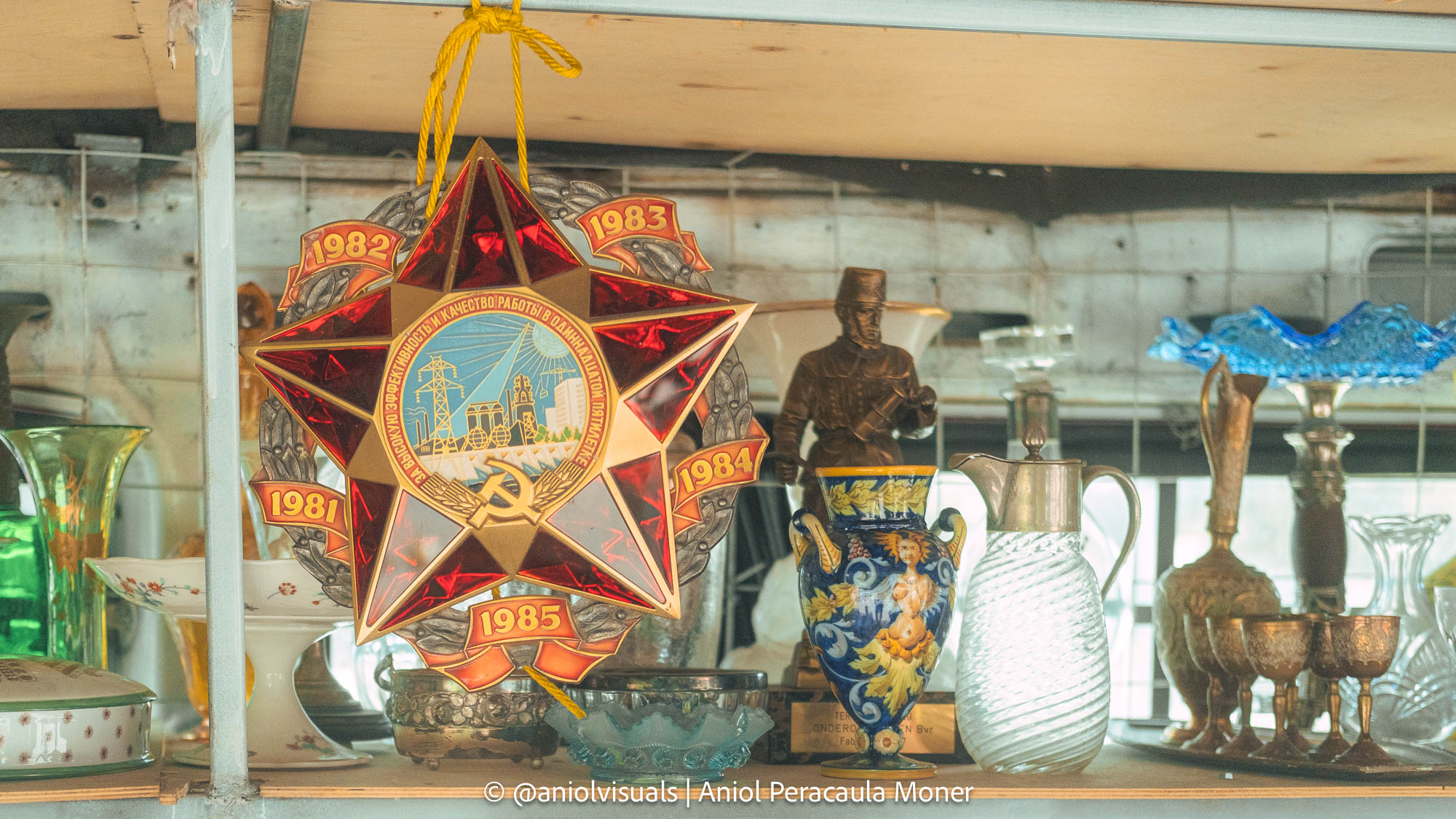
Another great place to see the contrasts of Tbilisi is the Dry Bridge market. This is a very interesting “flea market” with some soviet memorabilia. While I doubt that everything sold there is authentic, the market is worth exploring. When it comes to photography, it is mainly a street photography spot.
Besides the main USSR memorabilia stands, there are also some Georgian crafts spots, and other artisans, so it could be a good place to get some gifts to bring back home, if you are looking for them.
Fabrika Tbilissi
Every city has an alternative area with graffiti and overpriced food. In Tbilisi, you can find it in Fabrika Tbilisi. This is an old factory that has now become a gathering place for artists, hipsters, and tourists. Unlike similar places in other cities, I found it to be quite interesting from a photography point of view. Especially outside the factory, the graffiti, contrasts, and general vibe of the street led to some different photos.
While the food is definitely overpriced, it is a good place to grab a drink and relax a bit, either in the afternoon or later into the night.
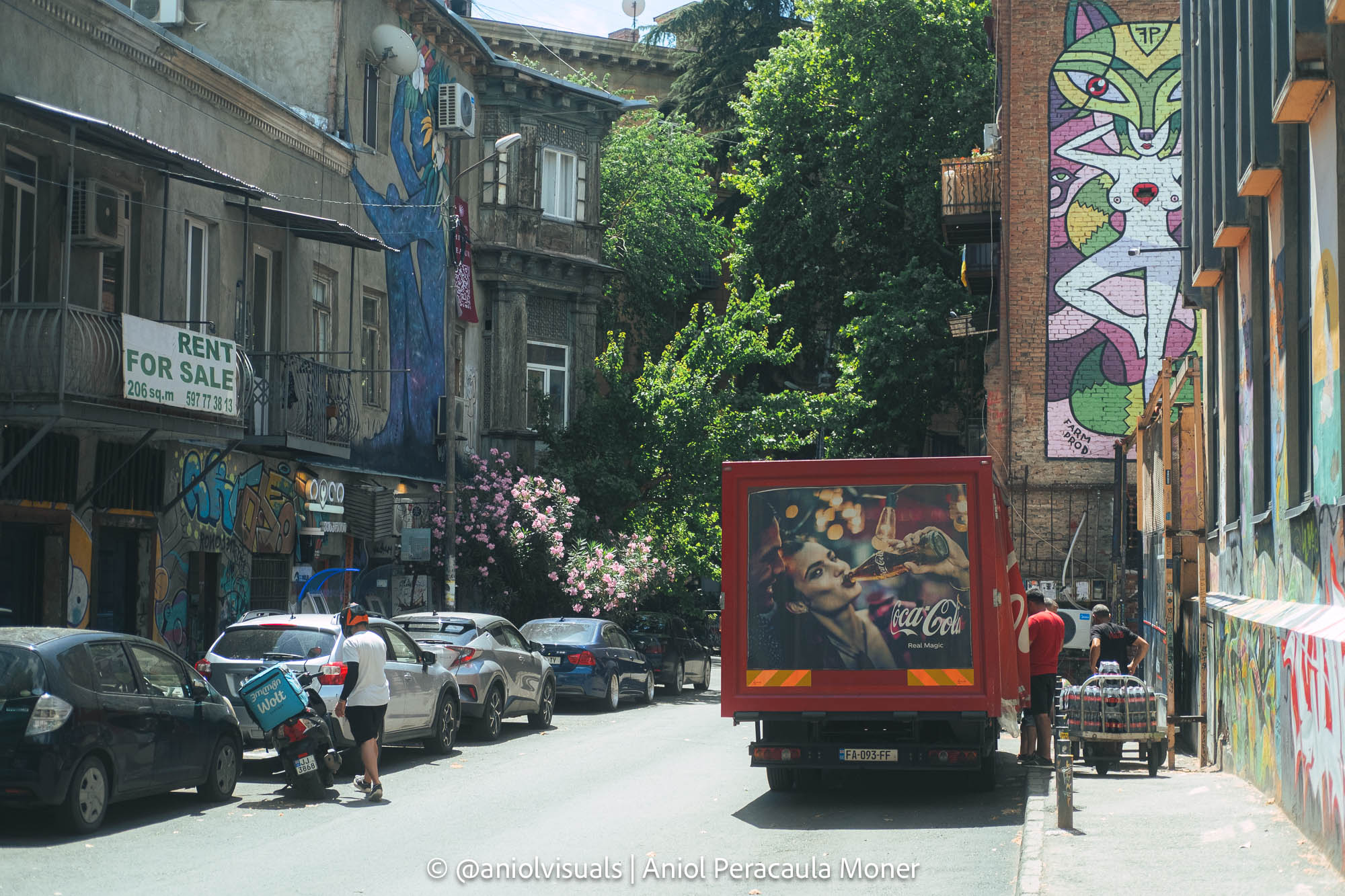
Marjanishvili neighbourhood
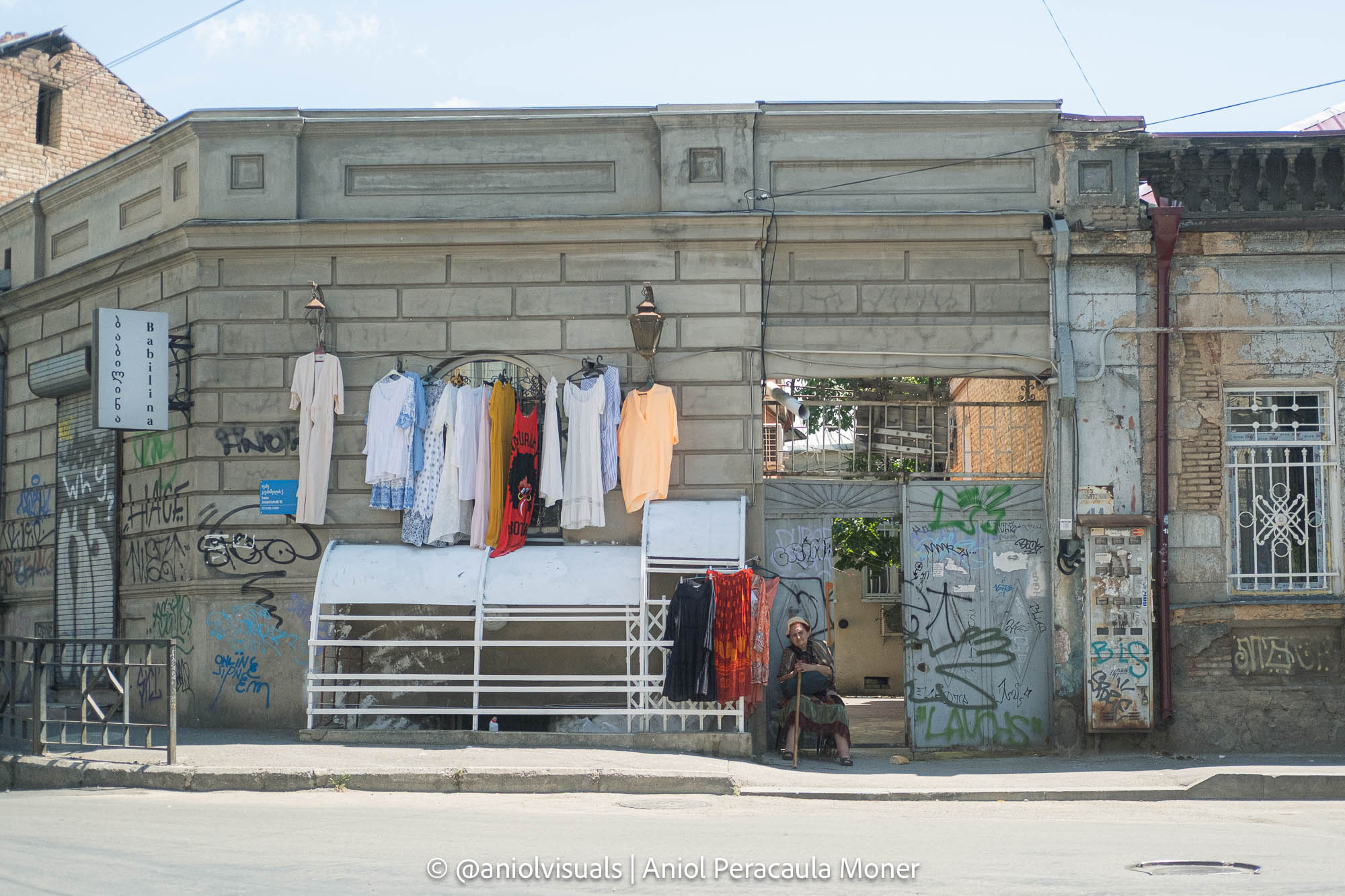
While Fabrika is the epicentre of the alternative area in Tbilisi, the whole Marjanishvili neighbourhood is worth mentioning. What makes me add this spot to this list is the contrasts. One of the things that surprised me about Tbilisi is the number of cars without front or back bumpers. In this area, I found many of them.
I can’t mention one specific spot in the city. Instead, I recommend walking around and exploring its streets. Even during the daytime, when light is not always the best for photography, I enjoyed this area.
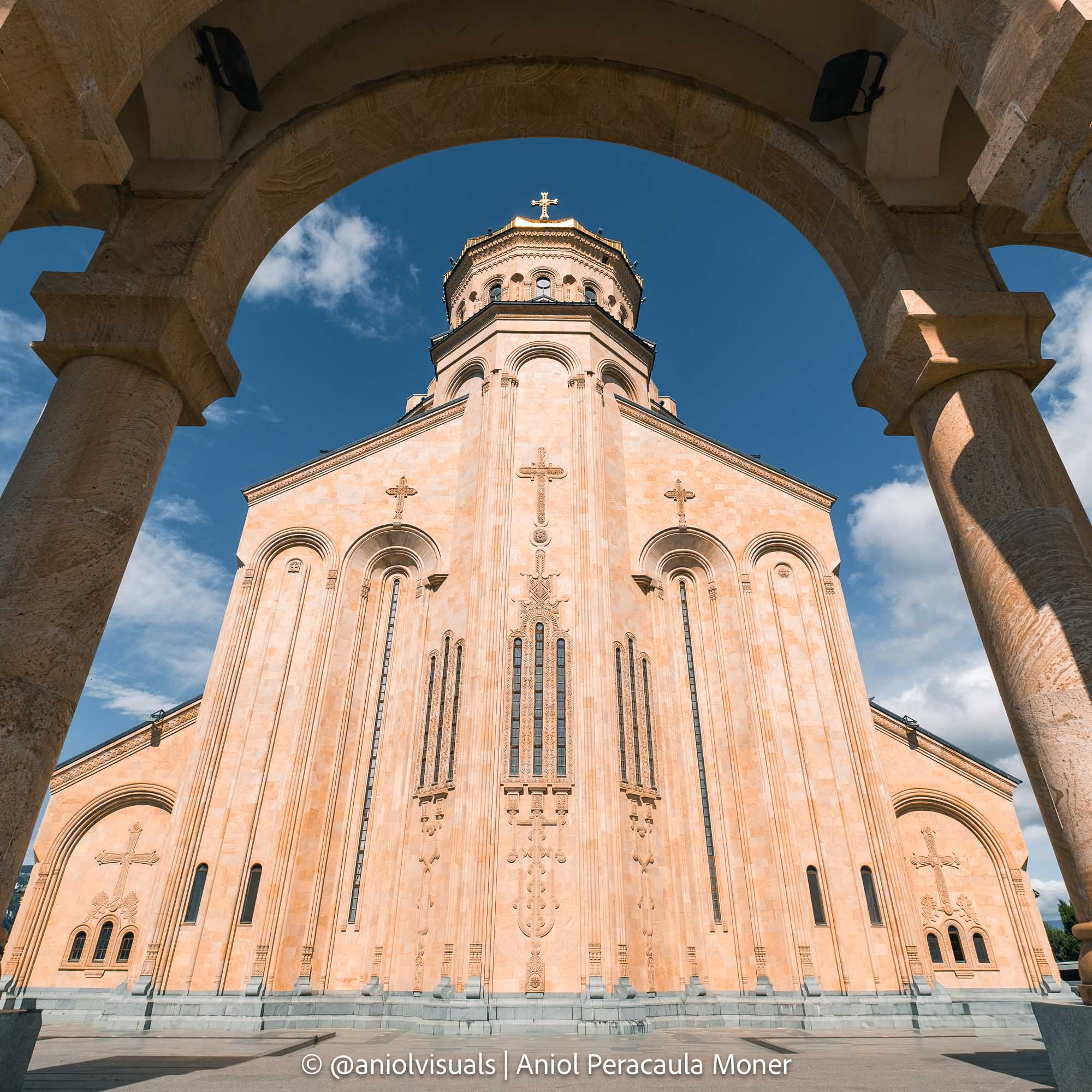
Holy Trinity Cathedral of Tbilisi
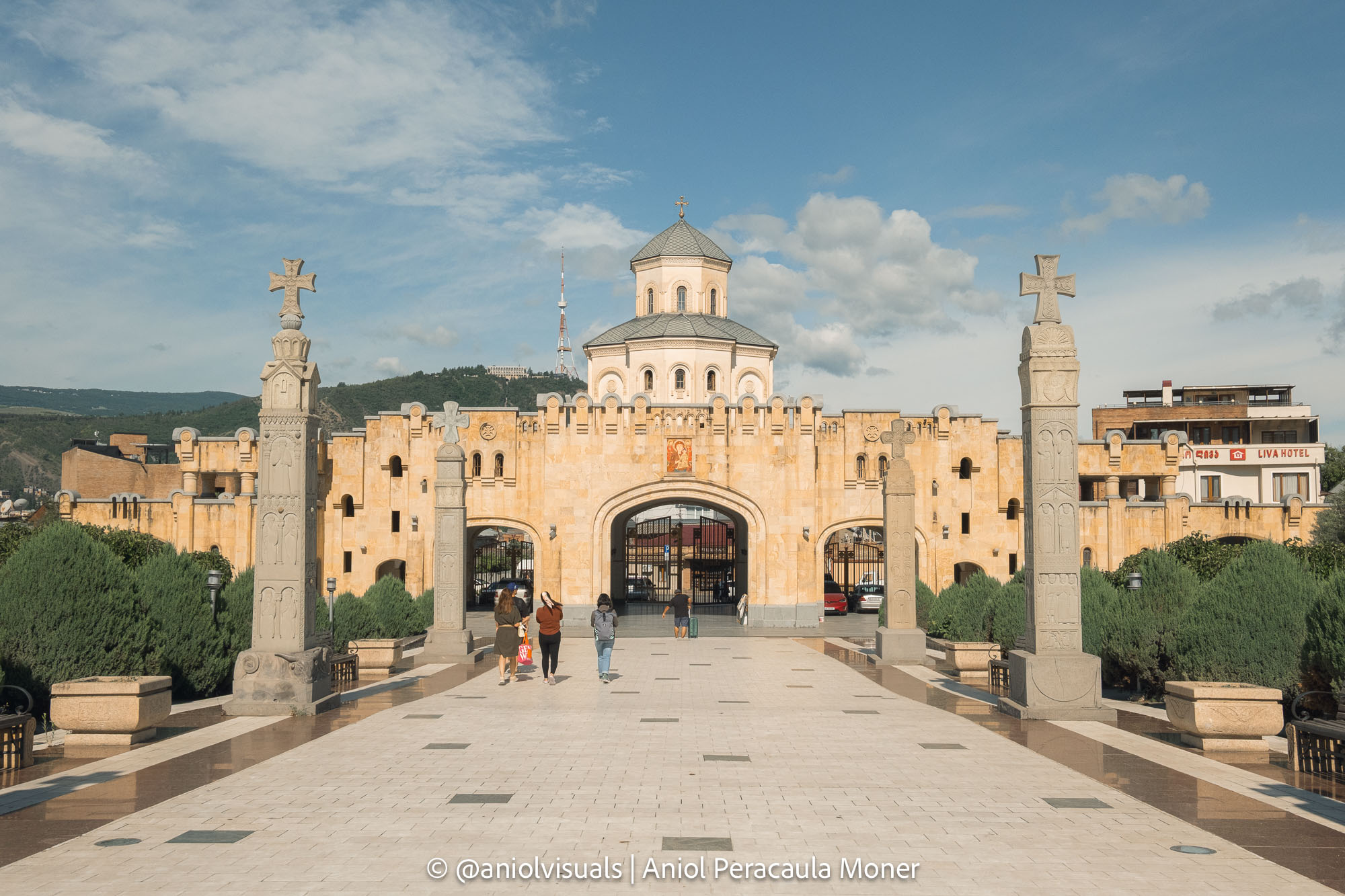
One of the main photography spots in this Tbilisi guide is its cathedral. Looking back, it is one of the spots and areas (see next spot) that I enjoyed the most. First, because it was different from most of the Orthodox cathedrals I had seen before. Second, because it was quite photogenic (even if I did not take photos that I like).
The Cathedral is in a privileged spot, high on a hill, dominating over the eastern part of the city. Photographing its interior was not allowed, but nice photo opportunities can be found outside.
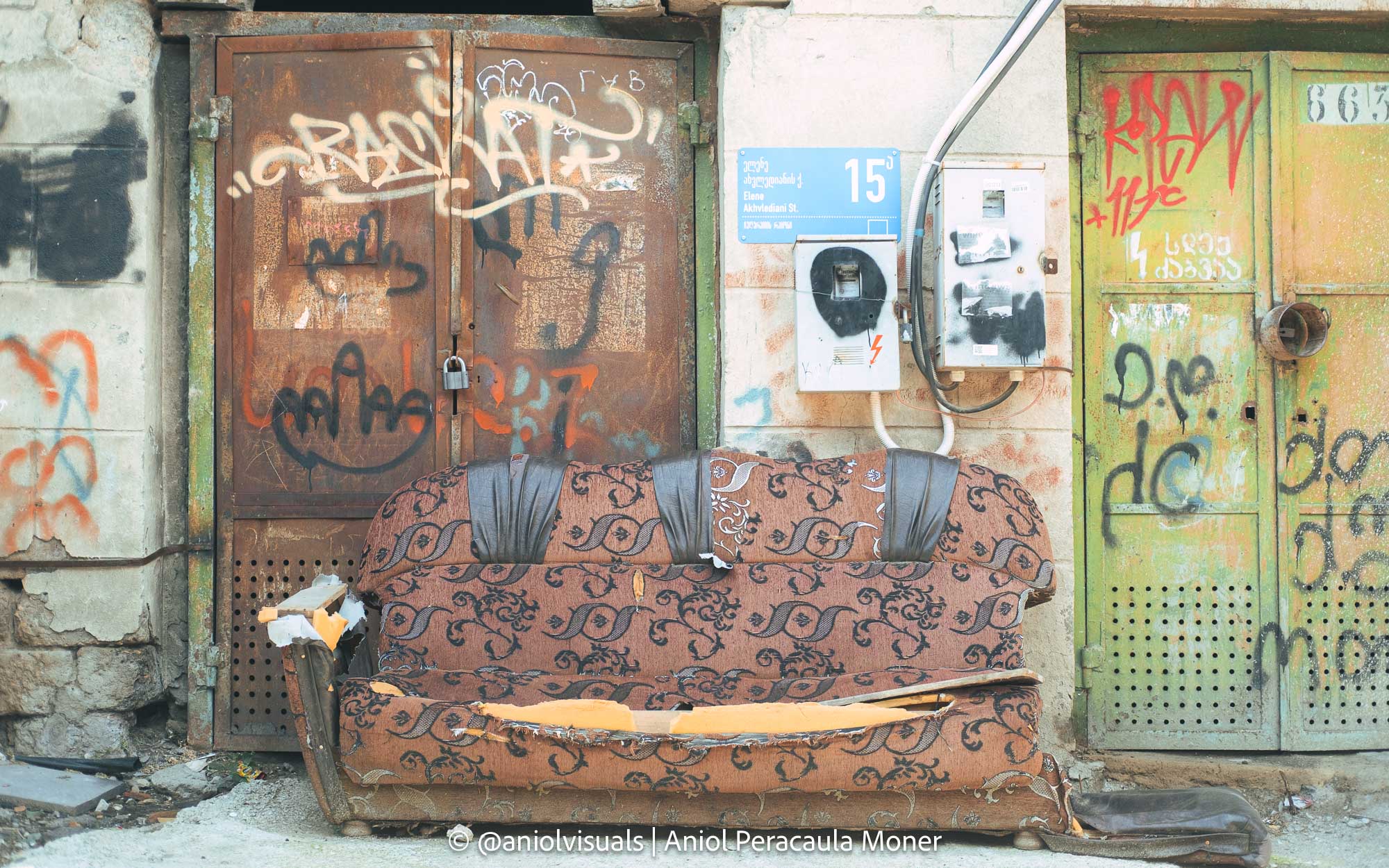
Avlabari area (next to the cathedral)
Just like with the Marjanishvili neighbourhood, I want to mention the Avlabari area. The specific part I refer to is the area between the Cathedral and the river.
The steep streets are great for photography. They were a bit deserted when I was there, so not many people are included in the photos I took, but I really liked the area. Again, like I mentioned in other spots, the contrasts are what made it unique.
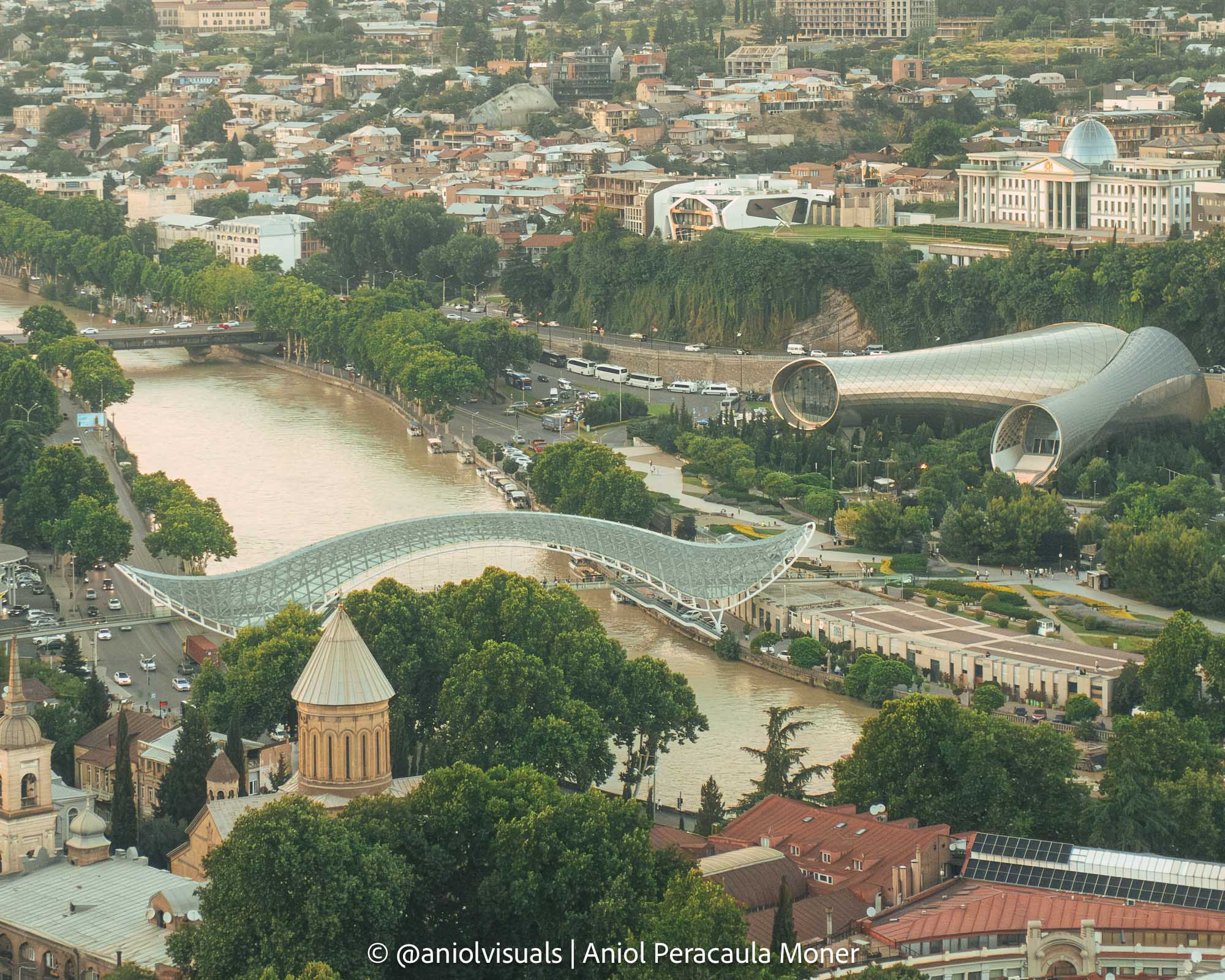
Bridge of Peace
Speaking of contrasts, the Bridge of Peace is a great example. This modern structure seems out of place, like it doesn’t belong there. Its distinct architecture contrasts with the nearby buildings, cars and overall infrastructure.
This is another of the spots that disappointed me a bit. However, I think this was my fault, as I did not take photos at the best time of the day, either sunrise or sunset. I did take photos of it at sunset, but from above. You will see it from any of the Old Town viewpoints, as it really stands out.
Vake Park
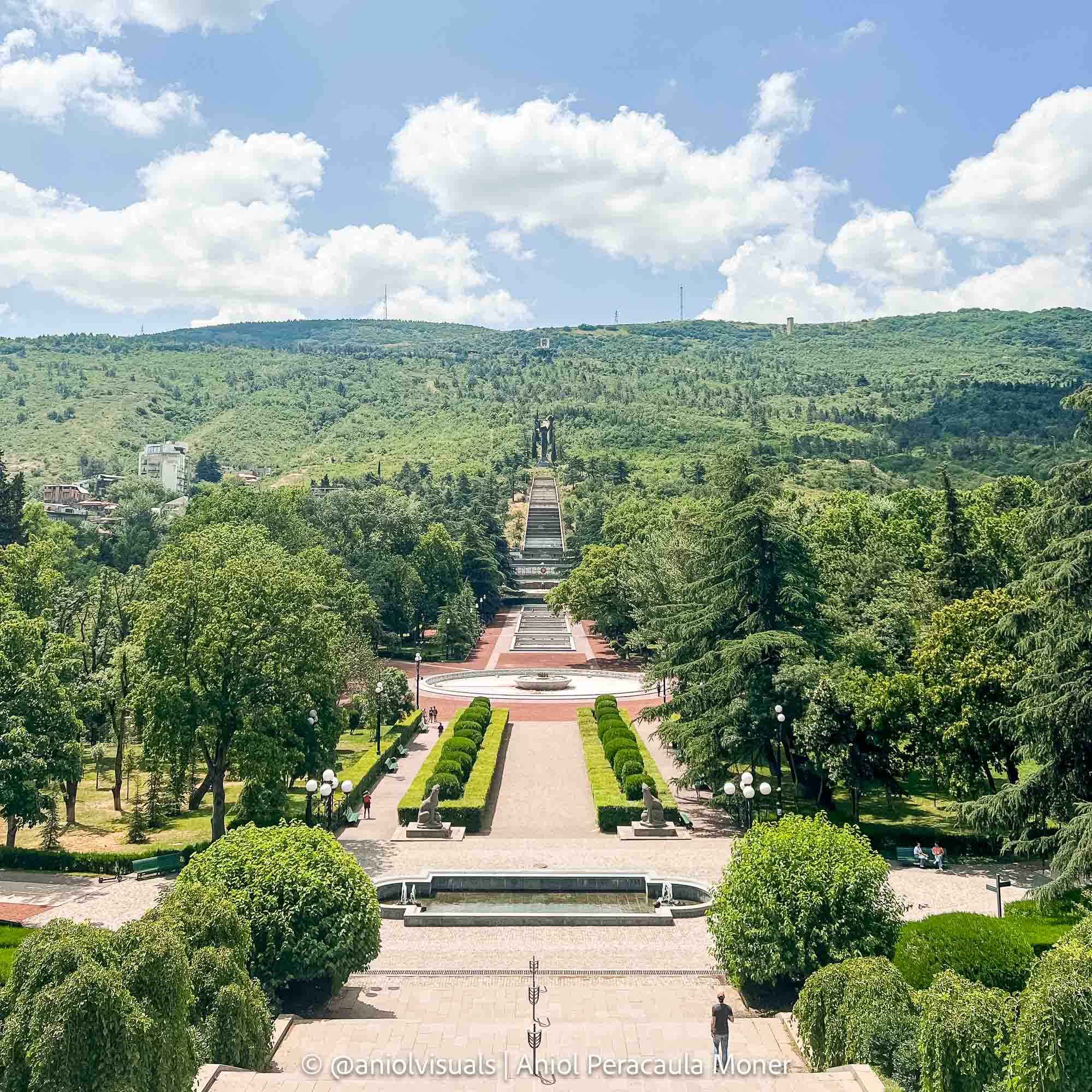
This is one of the most distant spots in this Tbilisi photography guide (excluding the day trip to the Rainbow mountains). Vake Park is located in the Vake neighbourhood, one of the rich areas of Tbilisi. Especially along the main avenue, the vibe is completely different from that of the old town or Rustaveli Avenue.
Vake Park is a public park where, on weekends, families go with their kids to play and enjoy the sun (and shade). One of its most characteristic elements is the World War II memorial at one end of the park. While I was there, it was being reconstructed, and the fountains were not working. Even with this limitation, I enjoyed my walk in this area.
From there, you have access to another cable car in the city, the so-called Turtle Lake Ropeway, connecting the lake with the same name and Vake. If you have some extra time and want to see a different view of the city, it might be a good spot!
Mtvkari riverside
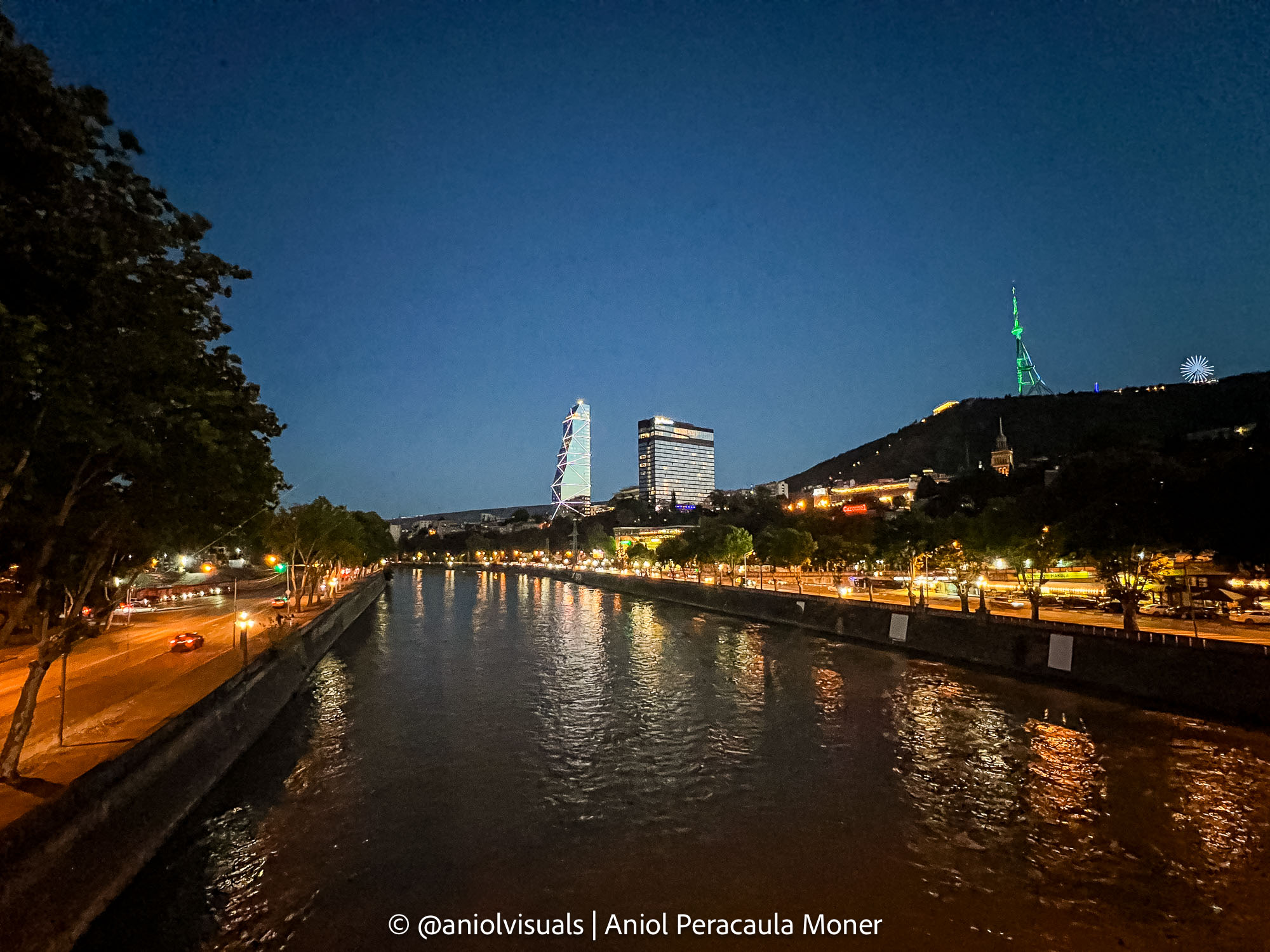
This is a spot with which I have a love-hate relationship. Tbilisi is a city built around a river. However, I feel that the river is a bit disconnected from the daily life of the city. Except for some areas like the Peace Bridge and the Dedaena Park, the river was always there, but not part of the scene.
I think it has to do with how the city is built, with large avenues immediately next to the river, distancing the people from the river. I can imagine in the near future that the city will reclaim some of that area, build nice walking promenades, and it will become a great place to walk/run/jog. Still, it is a nice place to take some photos of the city, with great views over some of the most modern buildings.
Rike Park
I don’t list the Rike Park in the Tbilisi Old Town photography spots guide section because it is technically not in the Old Town. However, this is one of the most centric spots in the city, and a common starting point for tours or one-day trips from the city.
The Rike Park is a small but beautiful park located on the northern side of the River, but just in front of the Old Town. It’s impossible to miss. One thing that will catch your eye will be the massive white air balloon in the center of it. It’s an obvious tourist attraction, and I did not pay for it, but the views from above must be nice for photography.
The park itself is beautiful, and offers some photo opportunities, either for shooting at the park itself, or towards nearby attractions, such as the Old Town or the bridge of peace. In fact one of the two ends of the Bridge of Peace ends in the Rike Park. Even if you don’t intend to, you will end up visiting it.
Tbilisi photography guide: photo opportunities and concepts
In photography, many times it is more about the photographer than the spot. In this section of this Tbilisi photography guide, I am not presenting specific spots, but photo opportunities I observed while exploring the city.
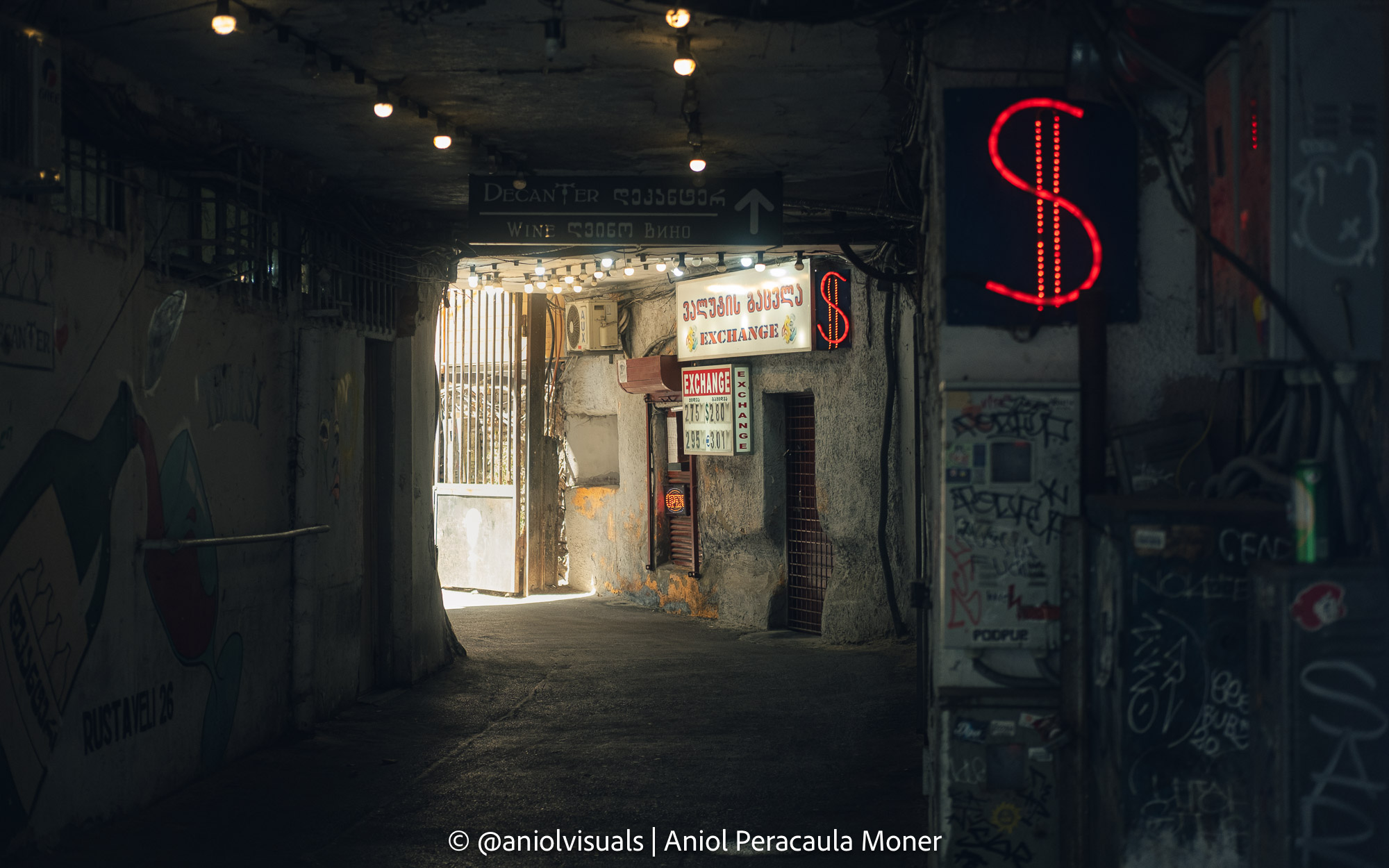
Building entrances (tunnels)
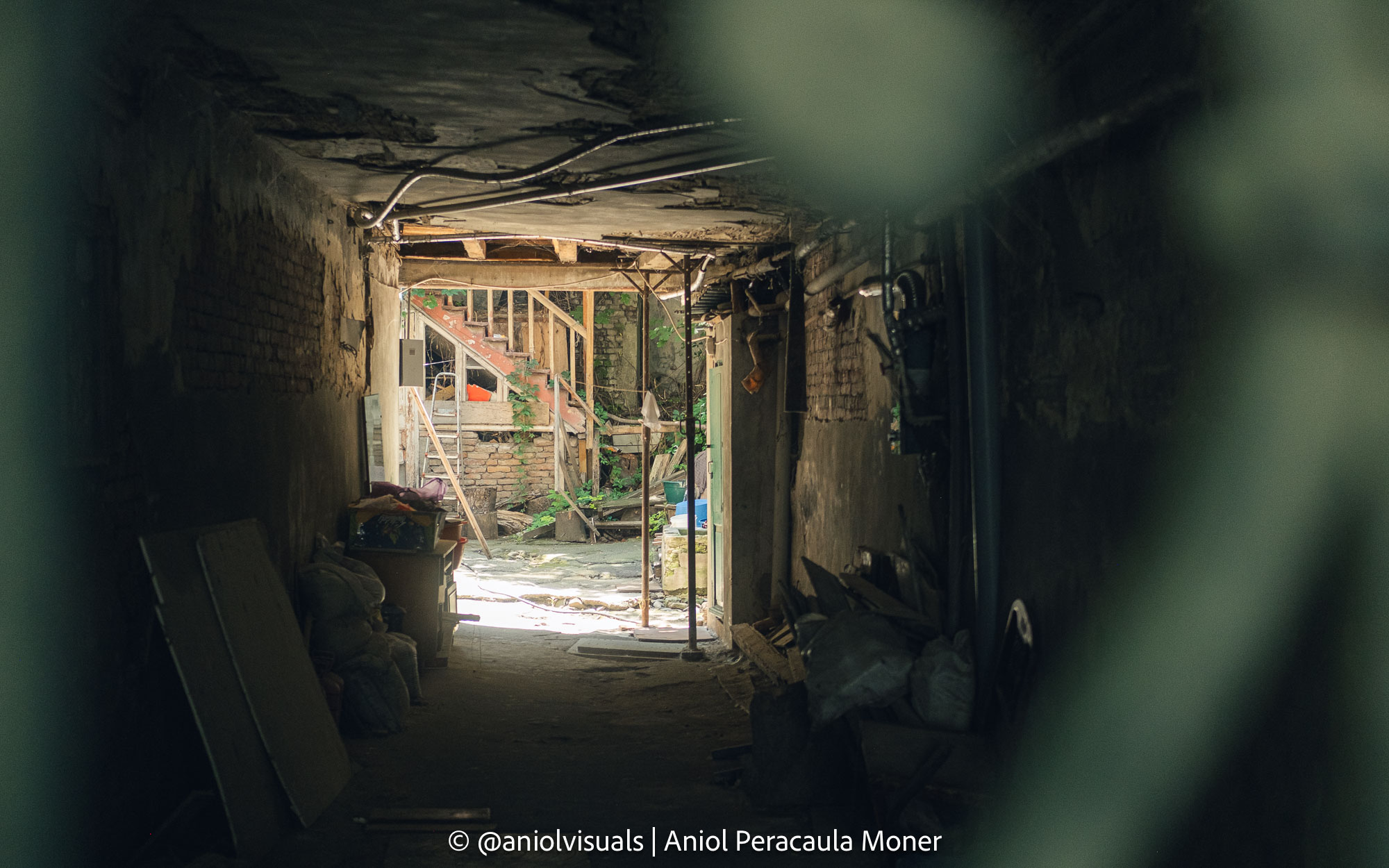
This was the thing that defined my trip to Georgia. I immediately noticed how many buildings had inner parking lots for the people living there, which were accessed by mini-tunnels in each building. Where I am from, this is not common. While it’s true I’ve seen it in other places in the world, it felt different.
I really liked the differences between buildings, and how some felt very welcoming and others hard and distant. From Rustaveli Avenue to some of the other districts I mentioned, the tunnels were everywhere. I also enjoyed shooting from inside the tunnel to the street, getting people in frame or showing the chaotic life of some streets.
Modern bars
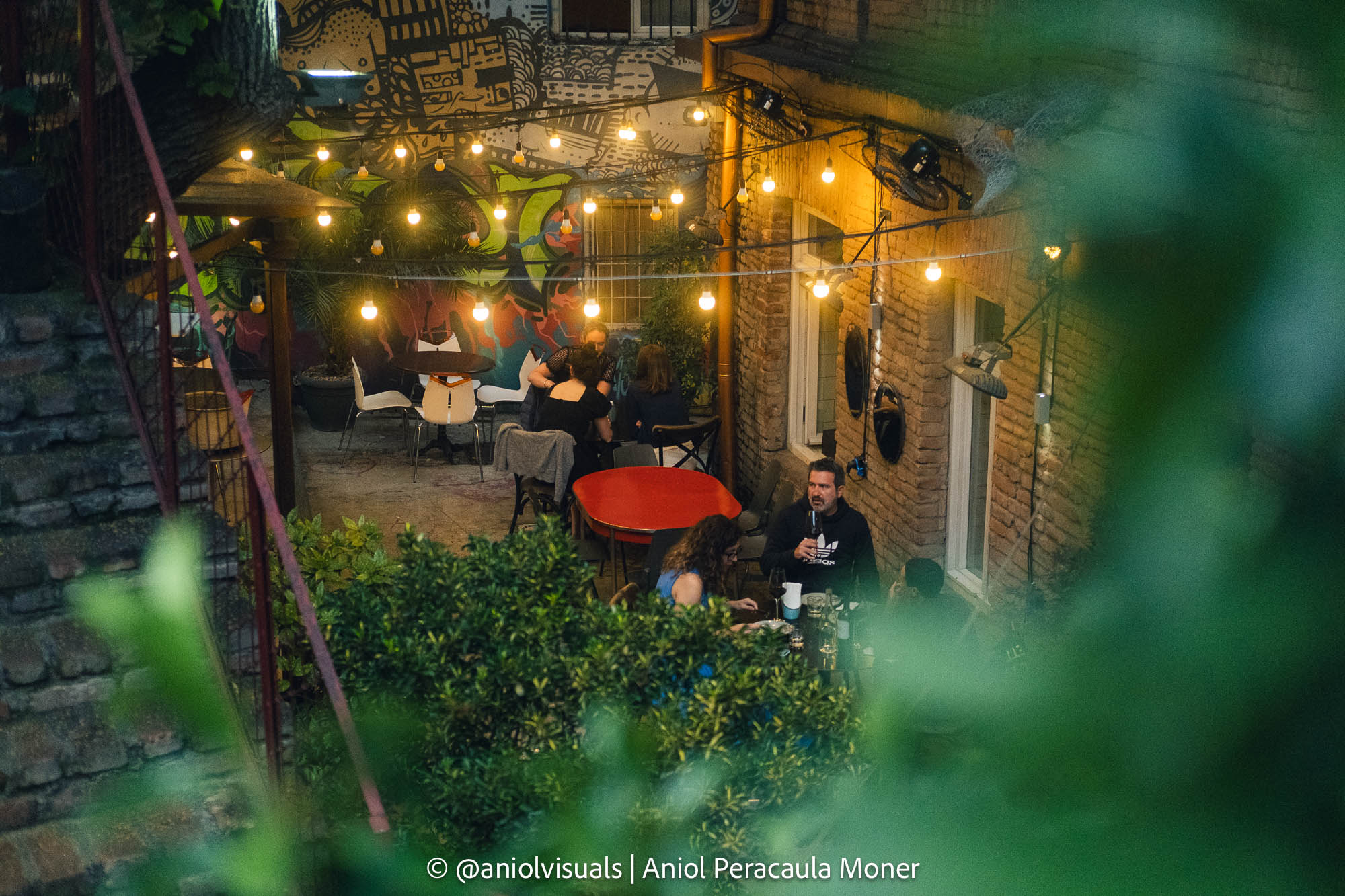
If you made it here, you’ve read the word contrasts a few times. This is what’s behind this photo opportunity. There are many bars and restaurants in the city, and some of them have a very modern and European style. Neon lights, open spaces,… that contrast with the reality of the street they are in. I found them quite appealing, especially at blue hour or night. That’s when people were out and the restaurants were at full swing.
Underpasses
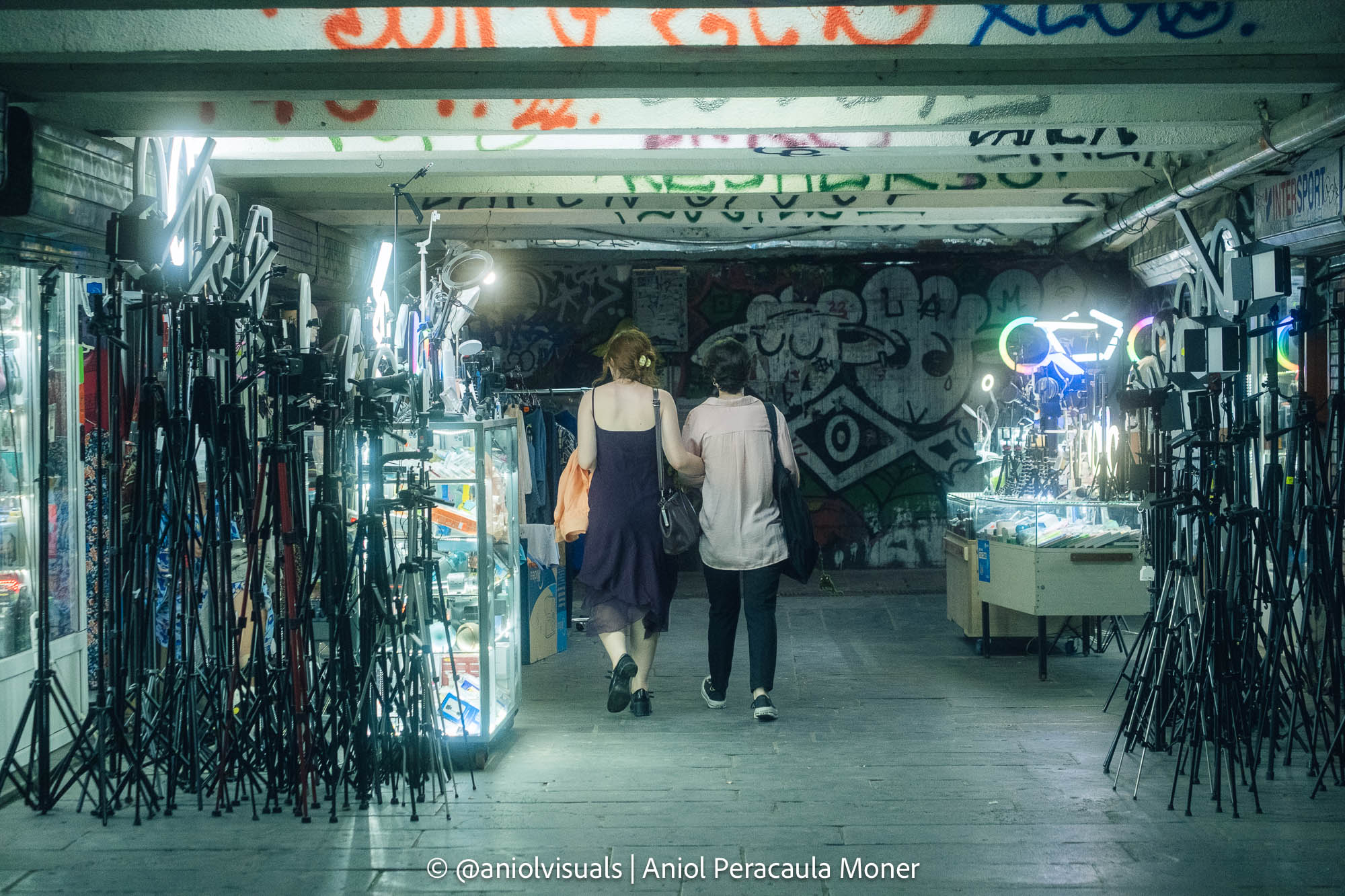
In a city with many large avenues (such as Rustaveli Avenue) and metro stations, underpasses are quite common. This is another characteristic element that is not so common in my area and that I always enjoy photographing. In this case, I really liked the small shops that some of the underpasses had installed. Bonus points if they were all about TikTok influencer tripods.
Food Stalls
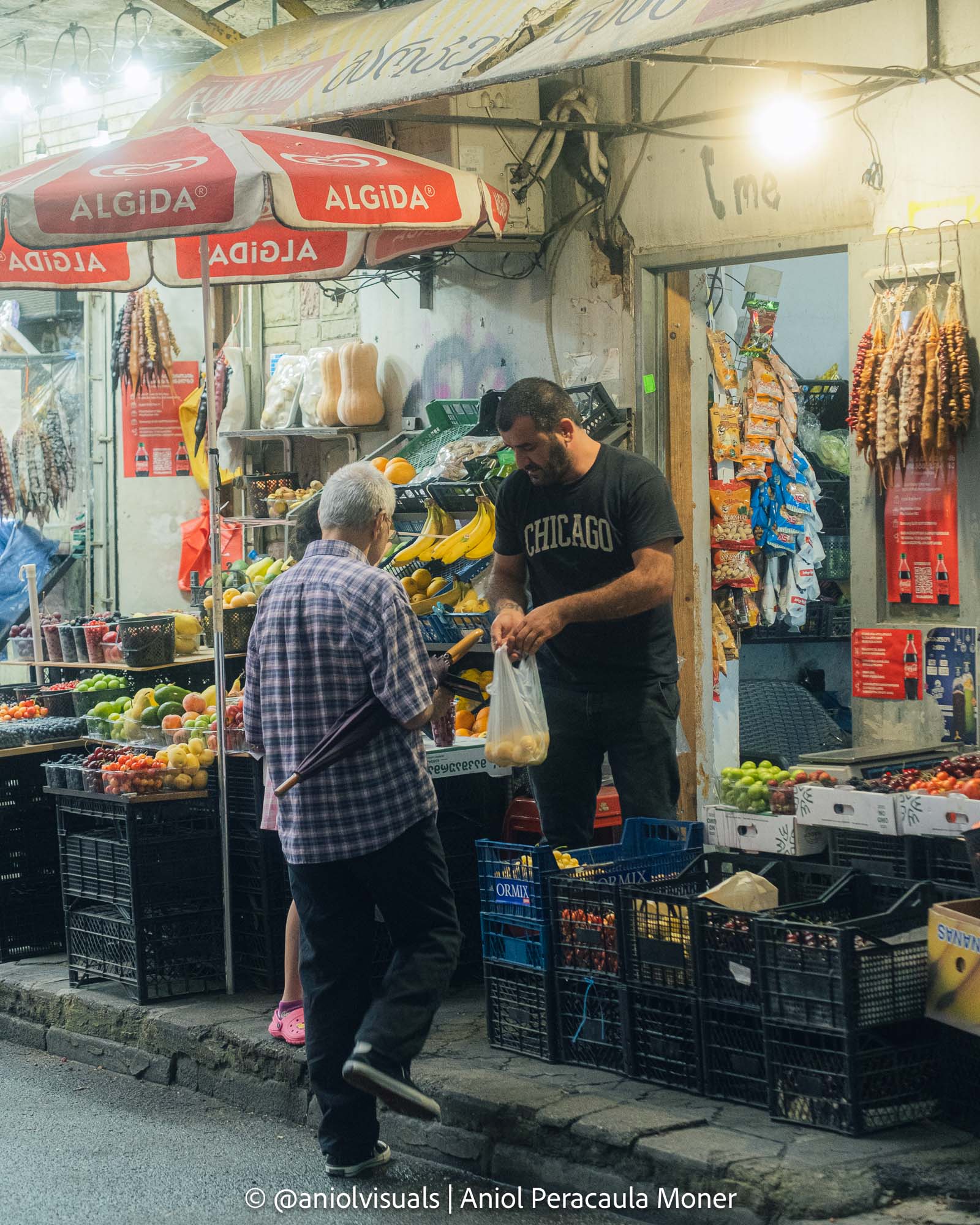
Tbilisi has some nice supermarkets, but when walking around, I also found small food stalls or grocery stores that were perfect for people watching and photography. I can’t say where most of the photos of stalls are, but if you walk around the streets from the old town to the end of Rustaveli Avenue, you should find some.
Stray cats and dogs
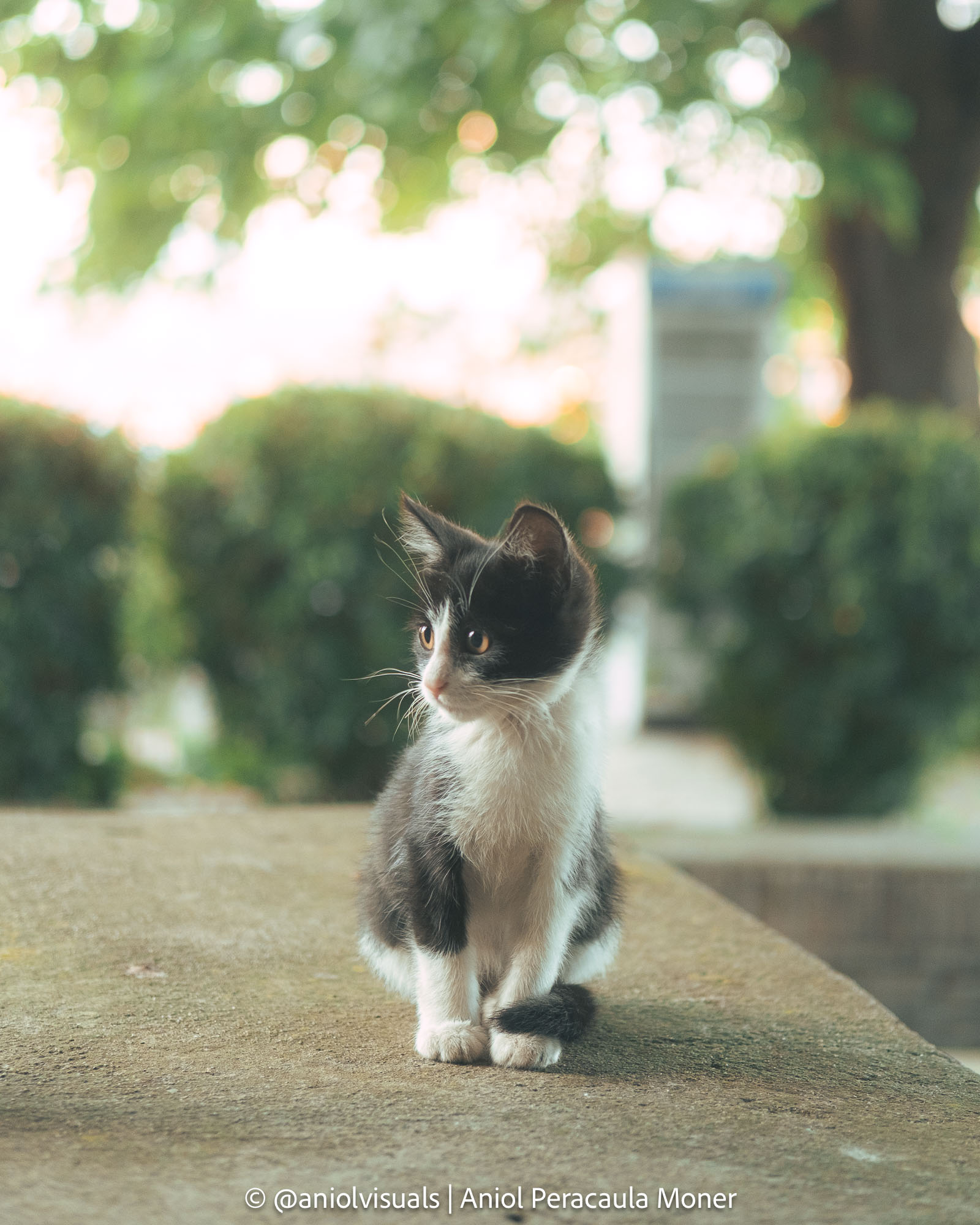
When I was looking for online tips to visit Tbilisi, many mentioned to be careful of the stray dogs. In my personal experience, I did not pay special attention to them, and none tried to attack me. However, I think it is wise to maintain the distances. There are many of them, and it’s a bit sad, although most seem well fed by the locals.
When it comes to photography, though, cats can be a great touch for your images. I got to capture a few photos of them that I am happy with, especially around the old town, where tourists feed them.
Georgian alphabet
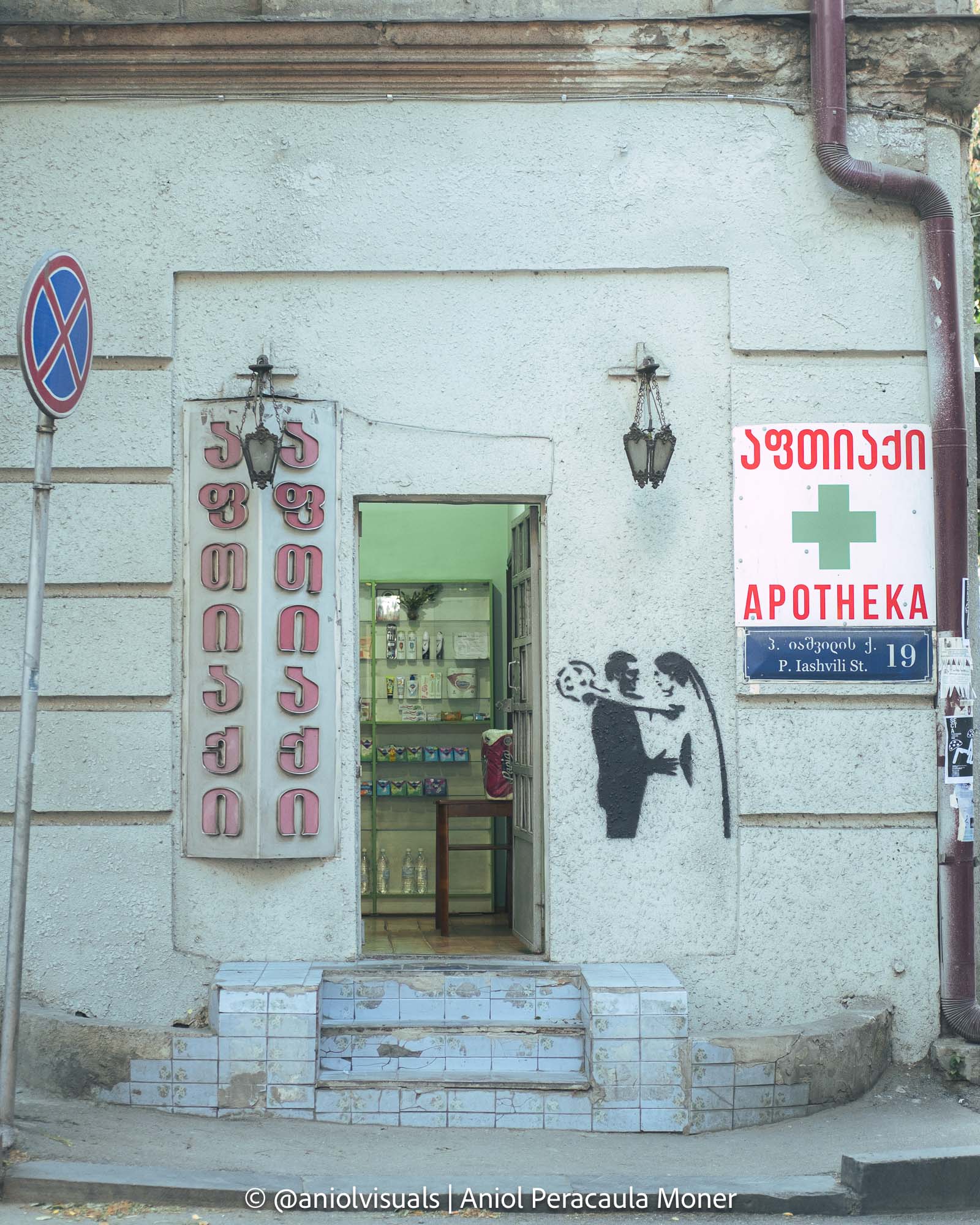
One of the main things you will notice when arriving in Tbilisi (or Georgia) is that they don’t use the Latin alphabet. The Georgian alphabet looks nothing like what you are reading now, and I found it really beautiful. From a pure aesthetic point of view, the rounded shapes are very photogenic in my opinion.
Including the language and script of one place in your photos is a great way to capture their culture, and also add a distinct touch.
Tbilisi photography guide: spots outside of the city
Before closing, I want to make sure to mention 2 extra spots. One is all over the internet, the other not so much. Both were among the top things I did when visiting Tbilisi. The first one is a short taxi ride from the Old Town, but for the second one, you’ll need to book a tour, as it’s not an easily accessible area.
Chronicles of Georgia
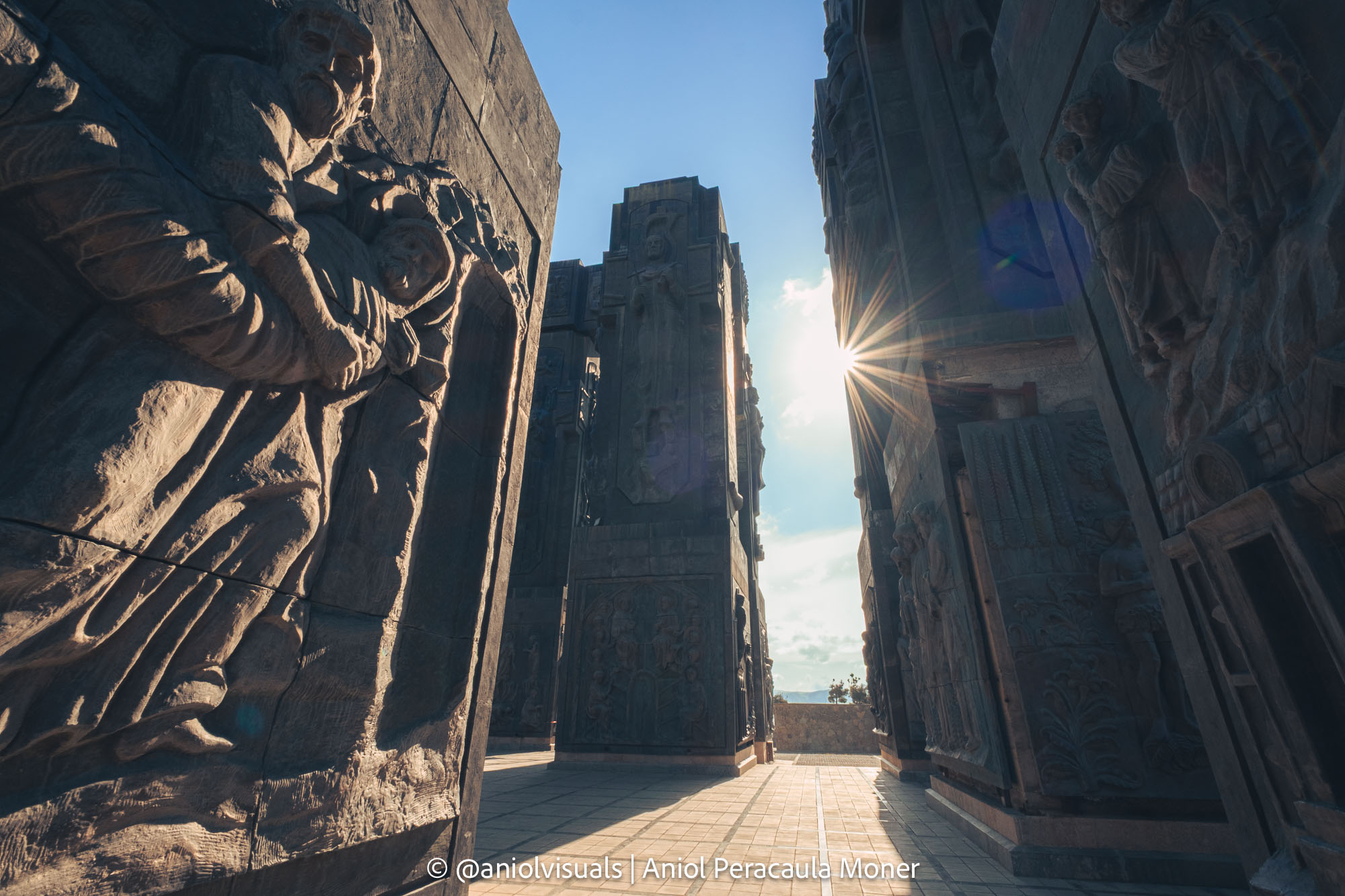
This is one of the most Instagrammed spots in Tbilisi, and I get why. At a short drive from the city centre, there are the Chronicles of Georgia, a massive monument made of 16 35-meter pillars with sculptures of kings and queens and inscriptions. It was built in 1985 and never completed. The pillars record the history of Georgia, hence the name Chronicles of Georgia.
The area is unique. On one side, it overlooks the “Tbilisi Sea”, a massive lake used as a refreshment area during the summer months. On the other hand, you have a different view of Tbilisi, with some massive concrete residential buildings.
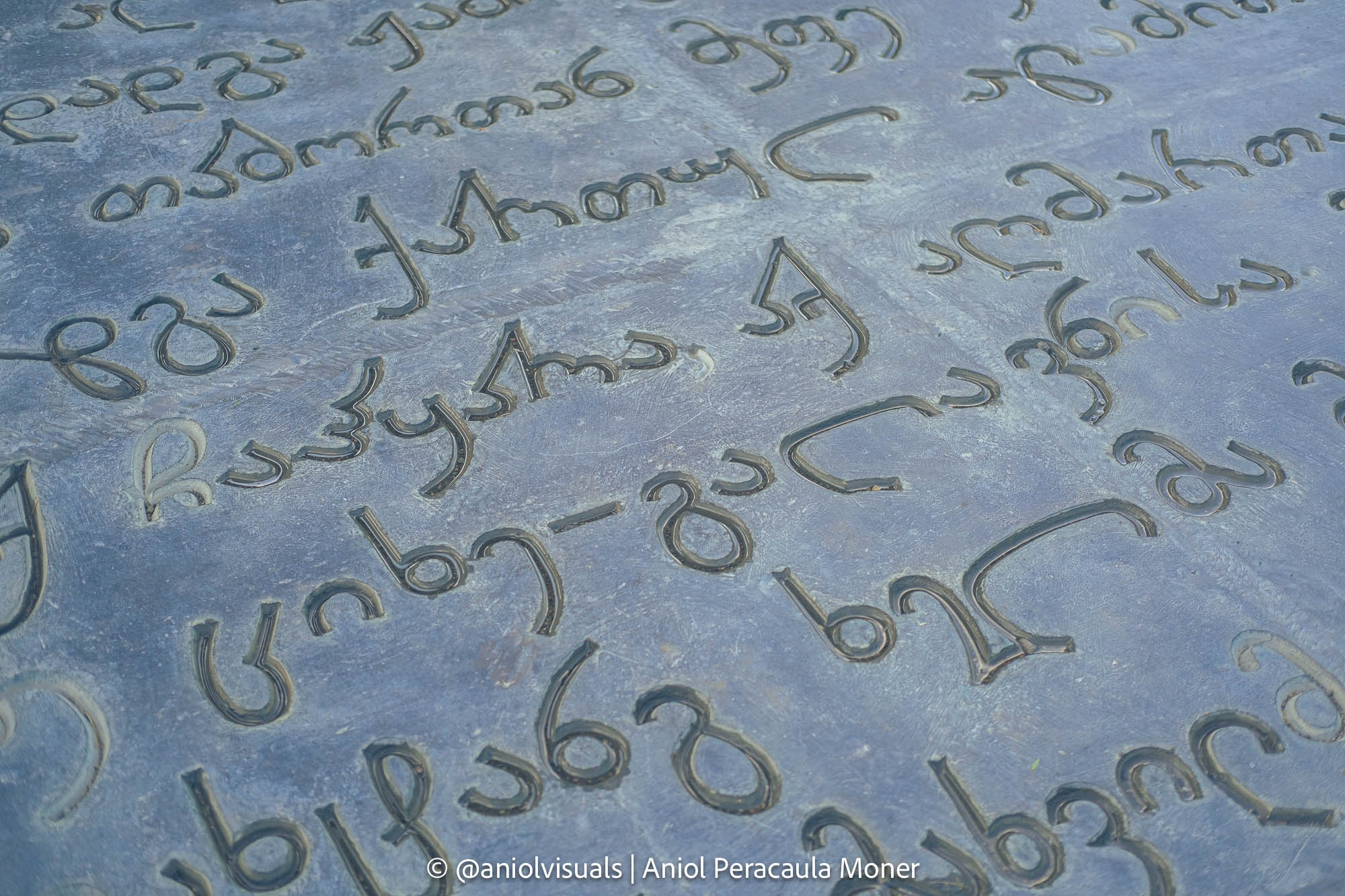
Photographing the Chronicles of Georgia was not that easy. While the spot is very photogenic, using the right lenses is important. If you don’t have a wide-angle lens (something between 10 and 15mm), it can be tricky to get a photo like the one below. Besides the wide-angle shot, though, look at some of the details. I already mentioned the beauty of the Georgian alphabet, and this is one of the spots where I could admire it the most, but it’s only one extra reason to add it to the Tbilisi photography guide.
To get to the Chronicles of Georgia, I recommend getting a taxi. If you are renting a car, it’s easy to access, but public transport to the site is almost nonexistent.
Daytrip Rainbow Mountains
One of the most common day trips from Tbilisi is the one that goes to the Gergeti Trinity Church in Stepantsminda. It is a gorgeous place, with a church overlooking the Caucasus mountain range. However, as a day trip, it’s not that good. It takes some hours to get to the location, and most of your day will be on the road. Although I can’t wait to better explore the area, I recommend staying a bit closer to Tbilisi.
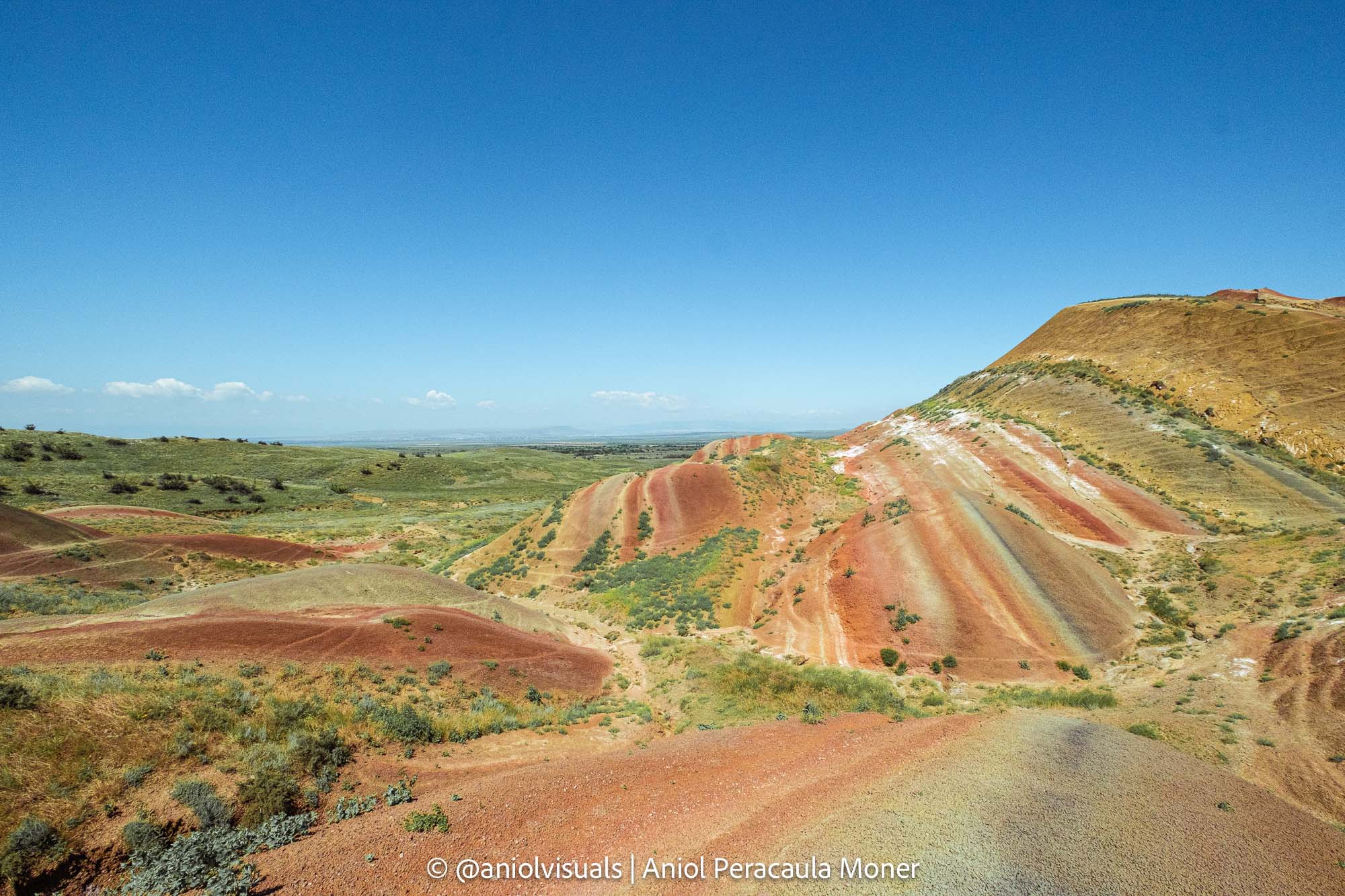
One way of doing it is to go to the so-called Rainbow Mountains. No need to clarify why they are called like that with the image below, right? It is only accessible by 4×4 and driven by an expert driver. The area, though, is insane. I got the chance to visit some of the monasteries in the mountains. David Gareji is the famous one, where some tourists arrive, but I also explored some others in the mountains, with no internet, and almost no light or water.
This is not a paid post, but this is the tour I did. I can recommend it, it’s a small group, and I got the chance to learn a lot about the country and its ongoing political situation with Azerbaijan.
Tbilisi photography route: a suggestion
To close this Tbilisi photography guide, here you have a suggestion of a walking route in the city, where you can find some specific spots but also explore the more general opportunities I listed.
The idea behind this walking route is to give a rough idea of how different spots might be combined. You can do each route more than once, or explore it at different times of the day.
The Old Tbilisi route
Start around Rustaveli metro station and walk along the avenue, exploring some of the side alleys and streets of the area. When you arrive at the Old Town (Liberty Square), turn right, all the way to the western point of the Old Town. From there, walk down until the Betlemi stairs. Then you can decide if you want to go all the way up to the mother of Georgia and Narikala fortress, or continue going down, and explore the lower Old Town, and the more touristy part.
The River Walk
This is a very simple one: take one side of the river, and go from the Old Town, all the way up to the Dry Bridge Market. There, cross the river, and do the same route, but on the other side and with nice views over the Old Town.
The eastern shore route (with Cathedral)
I recommend starting early in the morning at the Orthodox Cathedral to avoid the groups of tourists. From there, walk down towards the river, in the Avlabari area and reach the Rike Park. Once there, don’t take the riverside, but walk north through the Marjanishvili neighbourhood until you arrive at Fabrika Tbilisi.
This is the end of my Tbilisi photography guide, with some of the best photography spots and opportunities in the city. Got any questions? Book a free call with me using the link below!
26 best Romania photography spots: a complete guide
Best Frankfurt photography spots: a complete guide
Best Bucharest photography spots: complete guide (10+ spots)
What are the best Hamburg photography spots? 28 locations
The 17 best Salzburg photography spots: a complete guide