Explore one of the most beautiful and photogenic countries in Central Asia with this Uzbekistan photography spots guide. 30+ spots in 6 cities, including Tashkent, Samarkand, Bukhara and Khiva.
Uzbekistan is a rising tourist destination. A country with deserts, oases, mountains, modernity and history, a lot of history. It’s a photographer’s dream; still relatively undiscovered by tourists, yet equipped with solid infrastructure. This is a destination to visit before the crowds arrive.
In this Uzbekistan photography spots guide, you will find over 30 places to photograph in this Central Asian country. Spots are divided into cities or regions, and for each of them, you will find a specific photography guide linked with more photo spots and location-specific tips. Instead of making a list that’s too long, I decided to make a list with only the best Uzbekistan photography spots.
If you are planning a trip to Uzbekistan and want to go beyond what can be written in a travel guide, you can schedule a call with me using the link below. When you plan on spending thousands on a trip, why not ensure that all your questions are answered by someone with first-hand experience travelling the country?
Uzbekistan photography guide: FAQs
Before deep diving into them, here are some of the most frequently asked questions when it comes to visiting and photographing Uzbekistan.
How safe is Uzbekistan?
I list this as the first Uzbekistan FAQ, because it’s something that people ask nonstop. Uzbekistan is a very safe country. When it comes to personal safety, it compares to some of the safest countries in the world.
Yes, it’s a -stan country, but this doesn’t mean that it’s a place with wars, uprisings, or other similar things. There are a few areas in the country, all of them near the borders with other nations, where some recommend not to get close. You won’t find any places close to these locations in this Uzbekistan photography spots guide.
Uzbekistan is very safe, but as always, when travelling, make sure to pay attention to your surroundings and be vigilant at all times.
How many days to visit Uzbekistan?
The answer to this question is, “It depends”. It depends on what you want to do and see in the country. If you want to understand the culture, explore some off-the-beaten-path destinations, and discover the main cities in Uzbekistan, you’ll need around 3 weeks. You could also spend one month exploring Uzbekistan.
However, if you want to see its main sights, you could do it in 7-8 full days. Busy days, missing some areas of the country, especially in the north and the Aral Sea, but doable. If you want to visit all the Uzbekistan photography spots listed in this guide, 12-15 days would be the sweet spot. Enough time to not do long-distance day trips, and to allow one or two slower days in your itinerary.
What to visit in Uzbekistan?
As you’ll see in this Uzbekistan photography spots guide, it’s all about the cultural heritage and history. The main sights in Uzbekistan are linked with the Silk Road. Samarkand, one of the most important cities on this legendary trade route, is located in Uzbekistan. This road, which connected Europe and Asia, made this area considerably rich and important.
Within Uzbekistan, you can visit amazing madrasahs and mausoleums, discover the culture of Central Asia, try its food, and observe the daily life of a truly unique country (most of the Central Asian countries share a lot, so if you’ve been to Kyrgyzstan, it will feel familiar in some way).
The main tourist sights in Uzbekistan are divided into 4 cities: Tashkent, the capital, Samarkand, the Silk Road city, Bukhara, and Khiva. Moreover, if you want to add some nature to your trip, you have two options: the Fergana Valley and the Aral Sea.
The Aral Sea was once the fourth-largest lake in the world, and nowadays is just a set of smaller and highly polluted lakes. It’s a sad story, and a place that, if time allows, I highly recommend visiting, even if you don’t reach the current shoreline. It’s listed later on in this Uzbekistan best photography spots guide.
How to move around Uzbekistan?
Moving around Uzbekistan is generally easy. There are 2 main ways to travel between cities: trains and cars. There are indeed flights connecting some of them, but usually they are not worth it (unless maybe the trips to the further west from the capital, Tashkent).
Within the trains, there are 2 options: high-speed, and old soviet trains (similar to the ones that run the Trans-Siberian). High-speed trains are fast, connect most major cities, and their frequency is increasing year after year. The old Soviet trains are slow, not that comfortable, but allow you to cross the country while sleeping in one of their shared (or private) cabins. It’s a nice experience if you are adventurous. However, note that most of the people in the train (99.5%) do not speak English, or any other language besides Uzbek, some Russian, and if you go west, Karakalpak.
In larger cities (mainly Tashkent), there’s a very efficient subway system, but it’s not common in the other main cities. There are some with good buses and trams, but I only used them in specific situations.
Regarding cars, there are 2 options: renting a car or using taxis.
I can’t talk from first-hand experience about rental cars, but I took many shared taxis in Uzbekistan, and the roads and the driving style of the Uzbek people made me happy with my decision not to rent a car.
How to use taxis in Uzbekistan
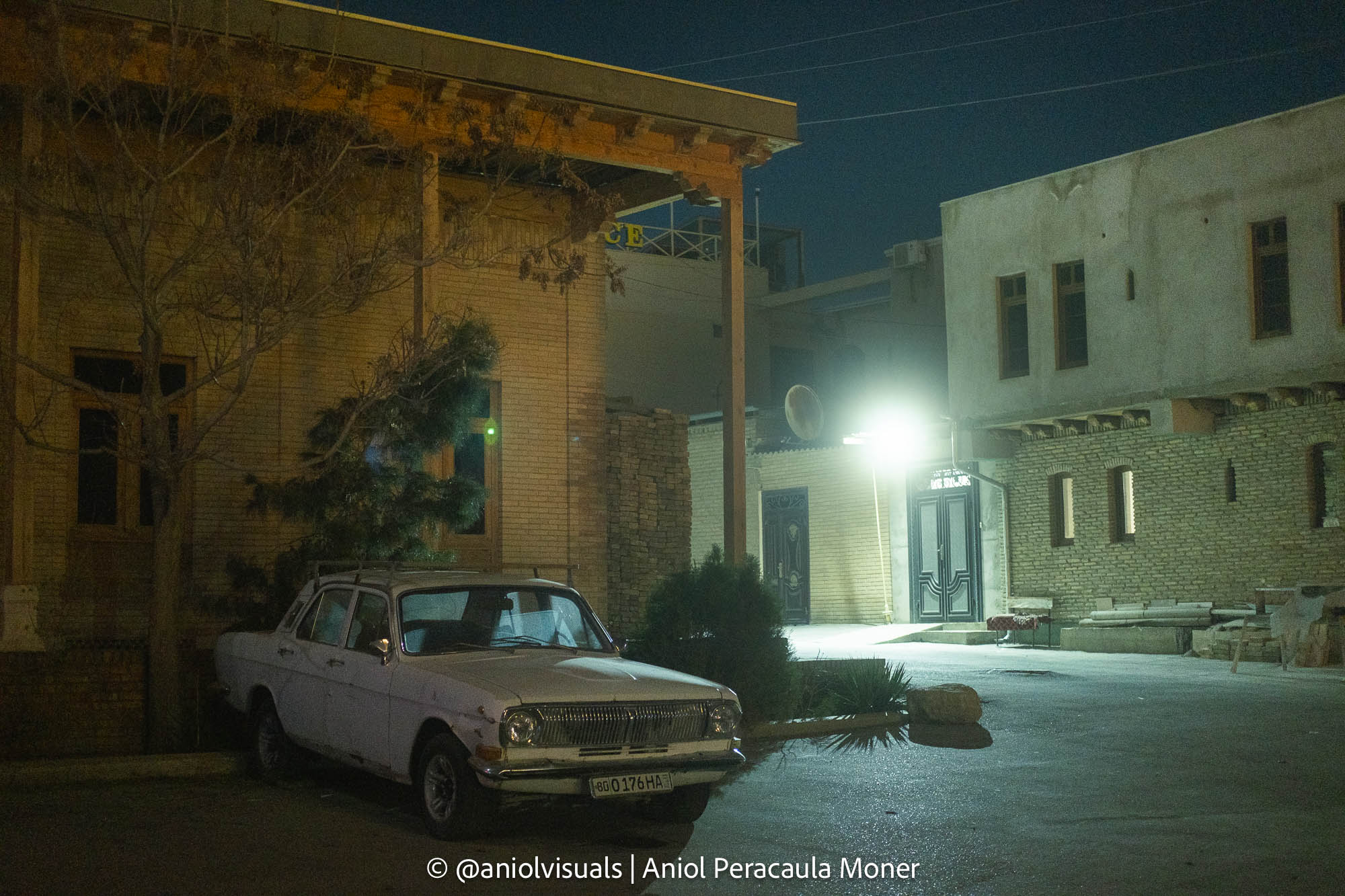
Regarding taxis, there are 2 options. The easy one is using Yandex, the equivalent of Uber. They are quite cheap, drivers are nice (again, don’t expect them to speak English), and they are quick. However, in more remote parts of the country, or for longer distances (2-3h drives), shared taxis are the way to go. You can find them either by asking in your accommodation, or by stopping cars by the road.
Hitchhiking is very popular, and that’s how I moved around the northern part of the country. There are some tricks on how to know the price to pay for shared taxis, but these are for the people I consult with on their photography trips. If you want to be one of them, you can schedule an initial call with me using the link below 🙂
Where to stay when travelling in Uzbekistan?
This is an interesting point. Uzbekistan has an interesting offering of places to stay, from some luxury hotels to family-run guesthouses. Your choice will depend on your budget and how interested you are in the local culture. I spent almost all my trip in family-run guesthouses, and it was a fantastic decision. Some call themselves a hotel, but they are a family house with 3-5 rooms.
If they have breakfast included, go for it. I was amazed by the quality (and quantity) of food that I was served in the places I stayed.
The usual suspects work well for booking your accommodation in Uzbekistan. I booked all my accommodations through Booking.com, and I did not encounter any issues.
In more remote areas (if you decide to visit them), it can be a bit more difficult to book a place to sleep online, mostly because they are not listed there. In that case, ask around, and you will find either a local hotel/hostel or someone willing to host you in their place for a reasonable price.
How expensive is Uzbekistan?
Let’s talk about money. Uzbekistan uses the Uzbekistan SOM, a highly devalued currency. This means that everything is in the thousands, hundreds of thousands, or millions. A 100,000 SOM dinner is quite cheap, around 7-8 €/$.
Uzbekistan is a cheap country to travel to, at least while I am writing this. The local prices are affordable, and if you avoid the main touristy spots, prices drop considerably. The language barrier is real, but if you are friendly and a bit bold, you can find great deals.
Accommodation is also quite affordable, especially at the family-run guesthouses.
The only thing you should watch out for is taxi drivers and market sellers. Taxi drivers will see you as a cash cow. That’s why I recommend using Yandex, or at least checking the price of the trip beforehand on the app. Be prepared to haggle, extensively. If you have the chance, ask a local; they will be able to tell you what the price you should pay is. Same thing at markets. They have amazing nuts, pistachios, almonds,… but they will try to make you pay a small fortune for them. It won’t seem that expensive to you, but it will be very overpriced.
Some tourists say: “It’s ok, it’s not that much money anyway”. But this starts with the sellers, and then it expands everywhere in the country. Thus, I encourage you to haggle. I am willing to pay more for being a tourist, but not to be ripped off.
Overall, Uzbekistan is very cheap, one of the cheapest places I’ve ever been. If I had to compare it with other destinations in terms of price, it would be with Southeast Asian countries, some of the most affordable in the world.

Tashkent photography spots
Let’s start the Uzbekistan photography spots guide with Tashkent, the capital of the country. A large city with dispersed tourist attractions. Some people choose to skip Tashkent and fly directly to Samarkand, but it’s a mistake, imo. Explore Tashkent, it’s a really interesting city to visit. These are the best Tashkent, Uzbekistan photography spots. More spots and photo tips in my dedicated Tashkent photography guide!
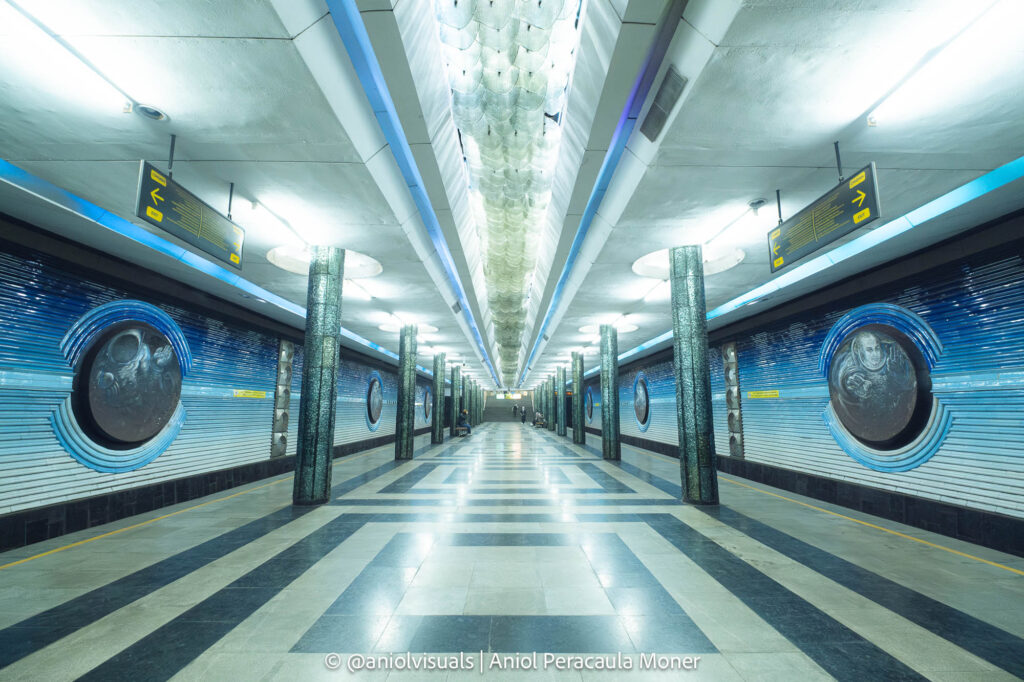
Tashkent metro
This is one of my favourite Uzbekistan photography spots. Tashkent has an amazing metro system. Reliable, cheap, efficient,… and beautiful. It’s among the most beautiful metro systems I’ve visited, and I’ve been lucky enough to see some of the usual suspects (such as Stockholm).
The best way to explore and photograph the Tashkent metro system is to spend a few hours jumping from station to station. For a full list of the best stations to visit and photograph, check my Tashkent metro guide.

Chorsu Bazaar
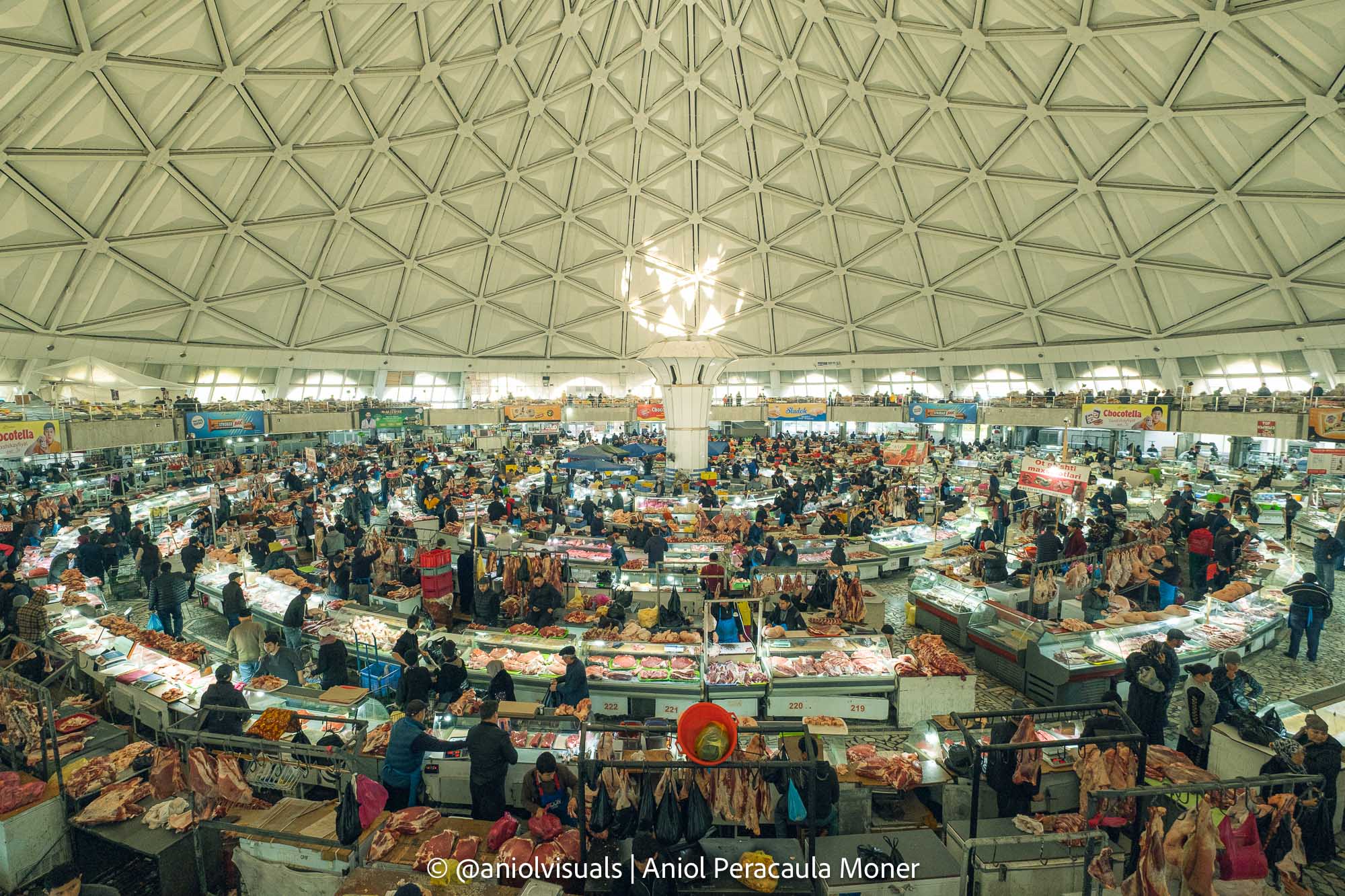
A very well-known Tashkent and Uzbekistan photography spot is the Chorsu Bazaar. I’ll mention more markets in this guide, but this is the place to go for chaos in Tashkent. The market is located inside and around a cool building, with a very characteristic cupola.
While most people only visit the interior of the market, they spend some time walking around it. There are some really nice photo opportunities, and people who will be very interested to hear about you and why you are there, even if they don’t speak your language.
Tashkent Tower
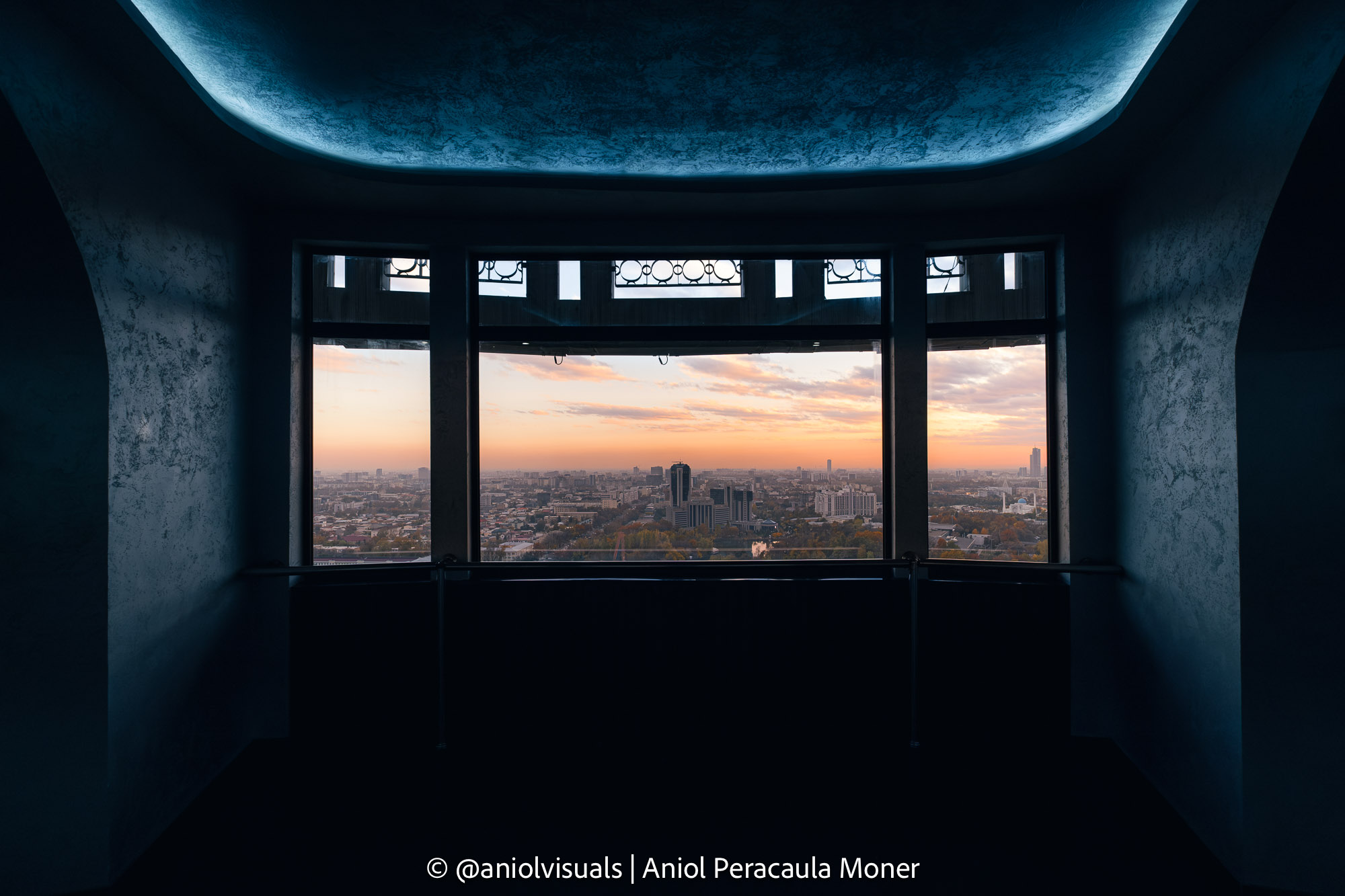
Tashkent is the city of contrasts. On one hand, you have the Chorsu Bazaar, and then, there’s the Tashkent tower. The best viewpoint in the Uzbekistan photography spots guide, and the best (and only) way to see Tashkent from the air.
After paying a small fee, you’ll make it to a closed 360 observatory, with great views over the city, and from where you can admire a really nice sunset. Bonus points if, after sunset, you go down and walk to the Plov Centre (Besh Qozon) for one of the best plov in Tashkent (and Uzbekistan).
Tashkent City Park
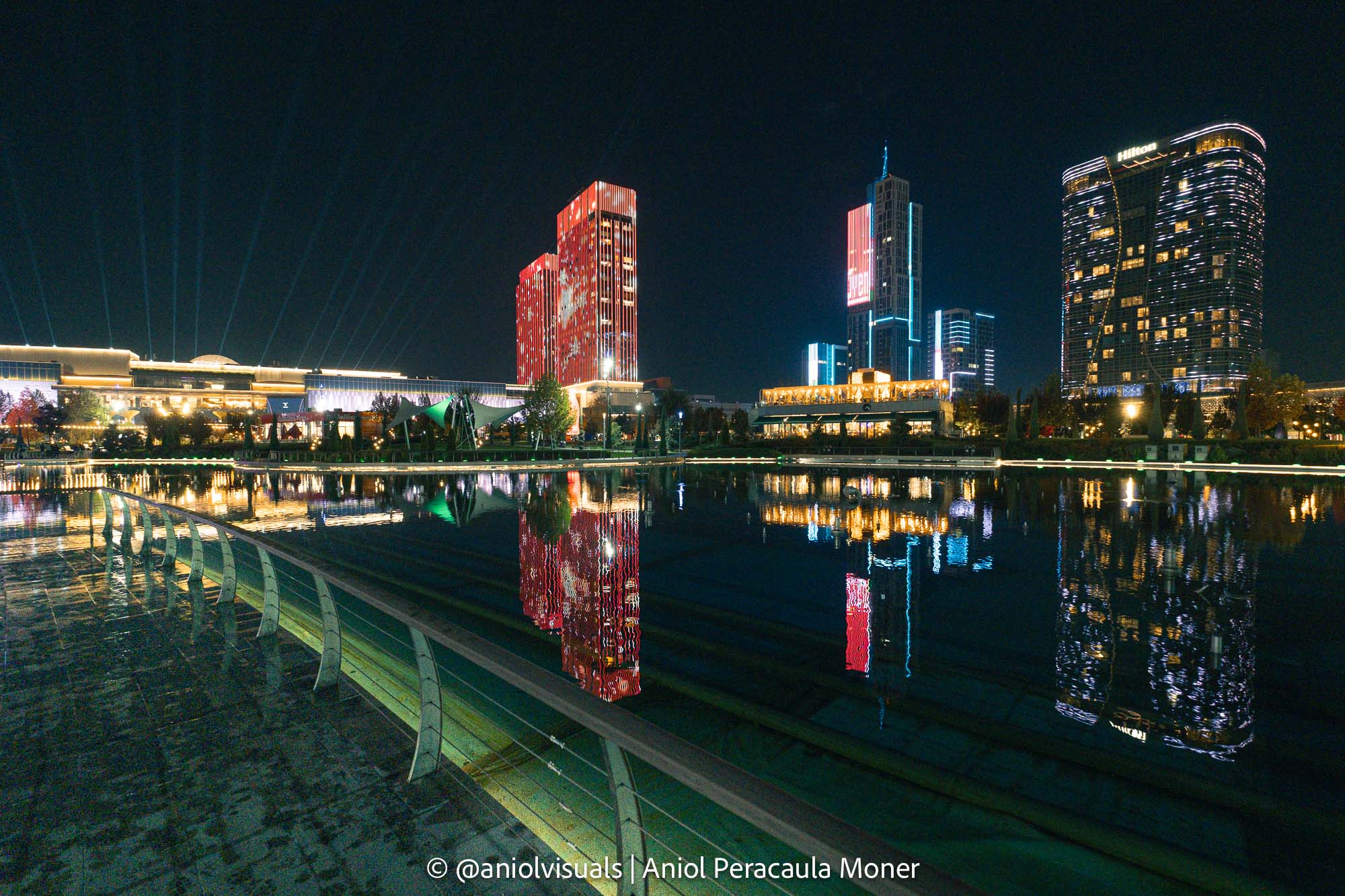
Another of the places that, when you visit and photograph, doesn’t feel like Uzbekistan is the Tashkent City Park. Surrounded by skyscrapers, an enormous shopping mall, and great photo opportunities by the artificial lakes.
This is one of the most expensive areas of the city (at least based on restaurant prices), but a must-visit. I recommend checking it both during the day and at night. One of the most unique Uzbekistan photography spots, based on what everyone imagines Uzbekistan is. A great place to challenge your assumptions about the country.
Hotel Uzbekistan
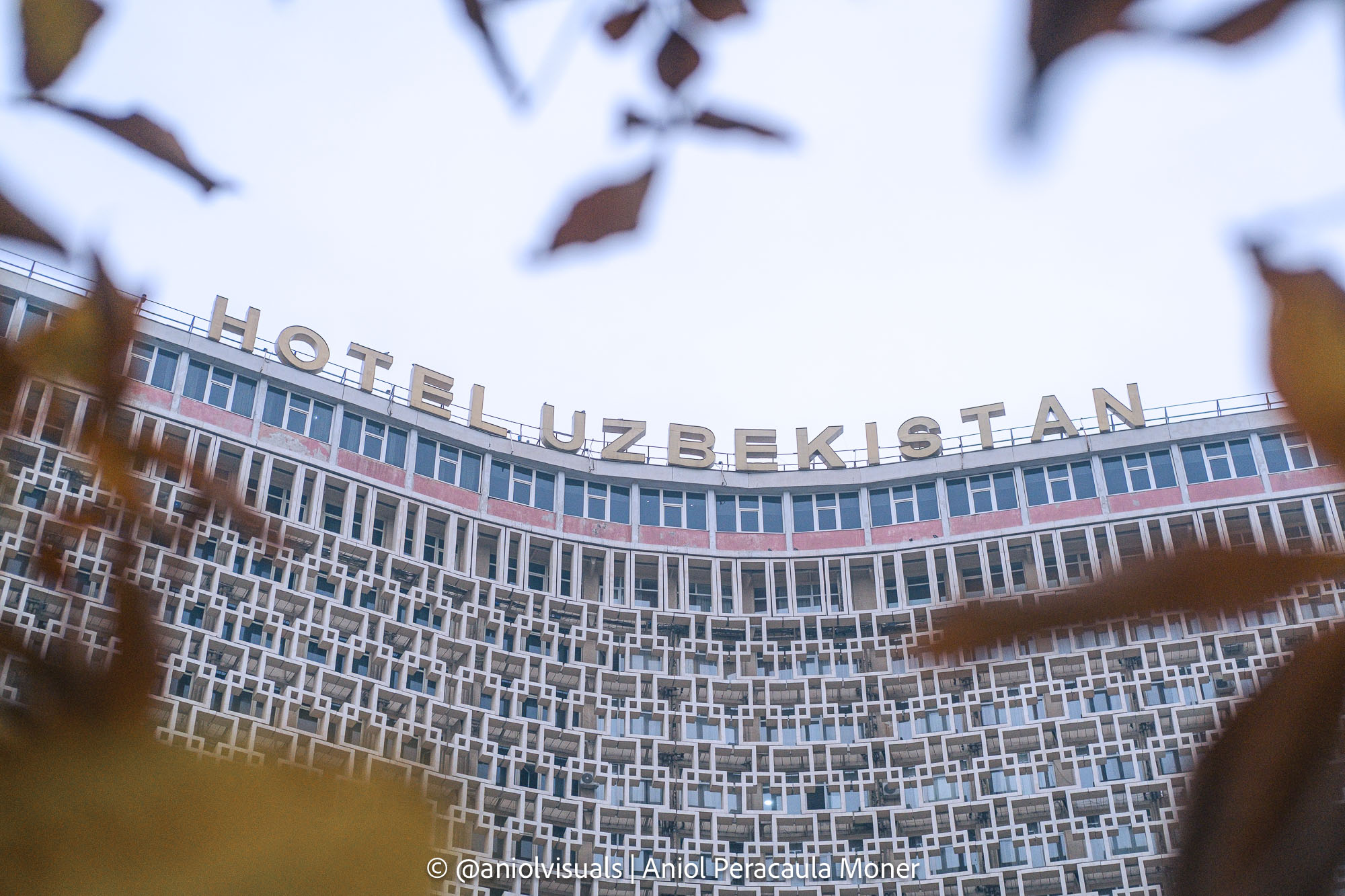
One of the first things I ever saw online about the country, and probably one of the most Instagram-famous Uzbekistan photography spots, is Hotel Uzbekistan in Tashkent. This is an older hotel with a very characteristic façade. tall, and with a honeycomb pattern, can be very interesting from a photography point of view.
You can even stay there. It’s on Booking.com, and reviews are not bad. But at least, make sure to check it from the outside. It’s very characteristic, and cool to see (and photograph).
Amir Temur statue
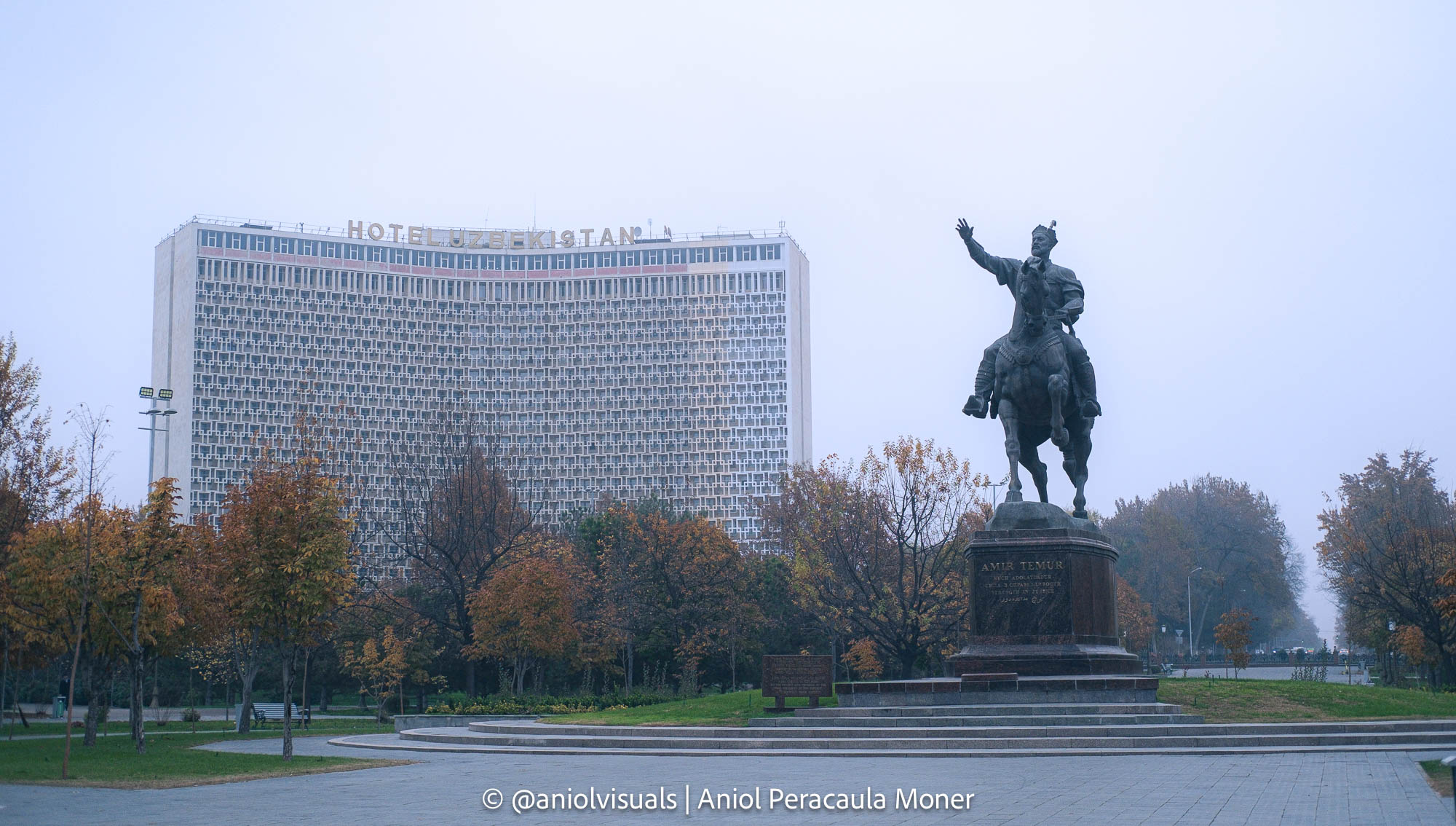
Immediately next to Hotel Uzbekistan, there’s another interesting spot. From a photography point of view, it might not be the most impressive on the list, but any Uzbekistan photography spots list must mention more than once Amir Temur. Amir Temur is one of the most important historical figures in Uzbekistan. Its name is everywhere, and I encourage you to read about its history.
On the photography side, there’s a nice equestrian statue of him in the heart of Tashkent, which can be combined with the Uzbekistan hotel in the background, creating a photo with nice contrasts, showing history, and soviet heritage in one single shot.
Mustakillik Square
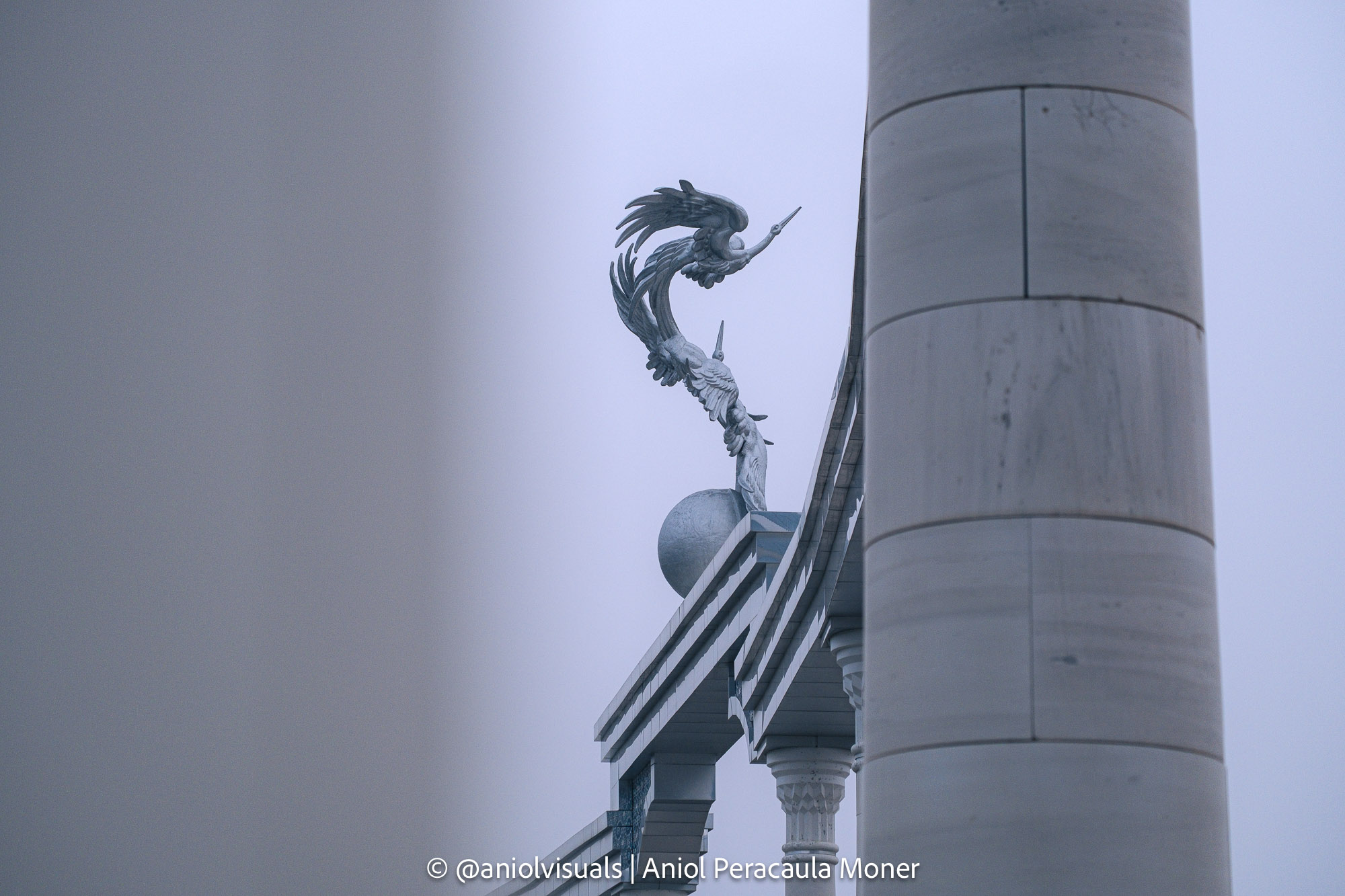
Tashkent has some interesting Squares and monuments. The one I decided to list here is Mustakillik Square. In this square, there’s the Monument of Independence, an extremely photogenic structure. It’s the place where I found the most tourists (which were not a lot), and one that I particularly enjoyed photographing.
Magic City
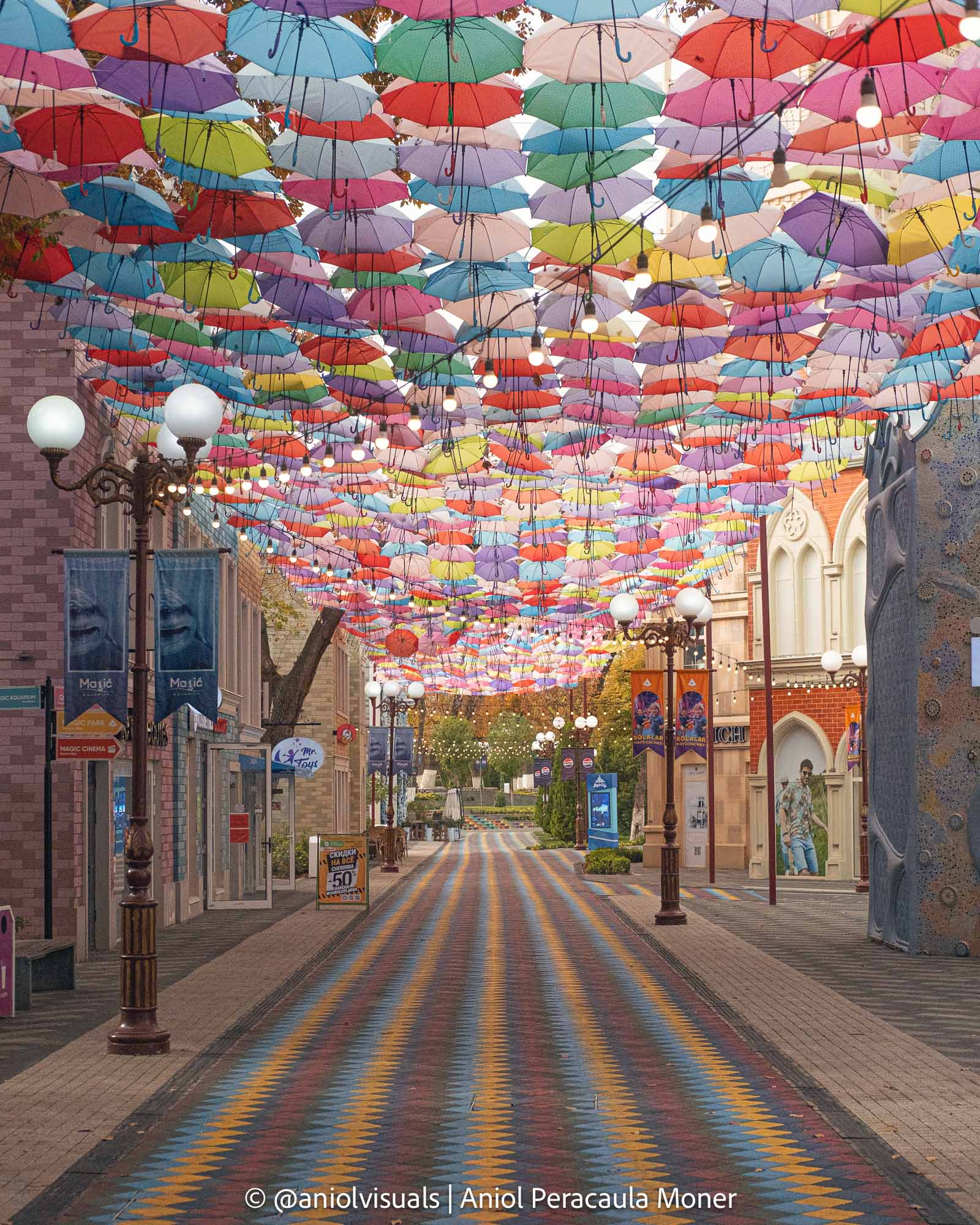
The last of the Tashkent, Uzbekistan photography spots is Magic City. This is a bizarre place. Imagine a Disney park, but without it being Disney. No rollercoasters, but with a castle, colourful streets, many international food options, fake façades, a small-scale recreation of Samarkand’s Registan Square…
A really unique place, which I consider worth a visit. Next to it, there’s a nice park, which makes the trip a bit more complete. Overall, the experience of seeing Magic City is very interesting.
Samarkand photography spots
It’s likely that Samarkand is more famous than Uzbekistan. Mentioned in many books and classical stories, Samarkand was the bridge between the east and the west on the Silk Road. Thus, it’s one of the best Uzbekistan photography spots, a city full of history and photo opportunities. Here I only list a few of the main spots; the full list is available on my dedicated Samarkand photo spots guide. Let’s talk about them.
Registan Square
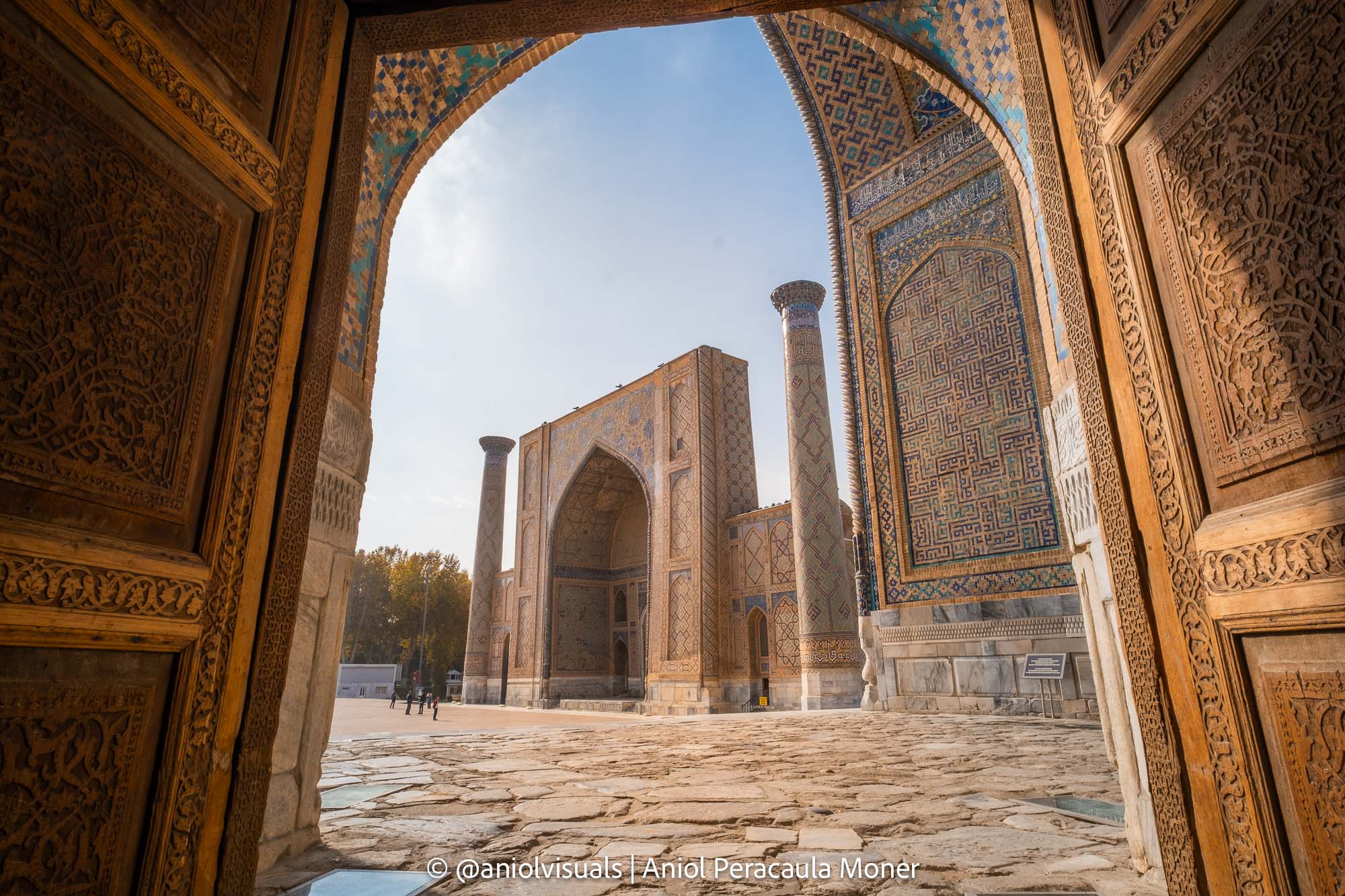
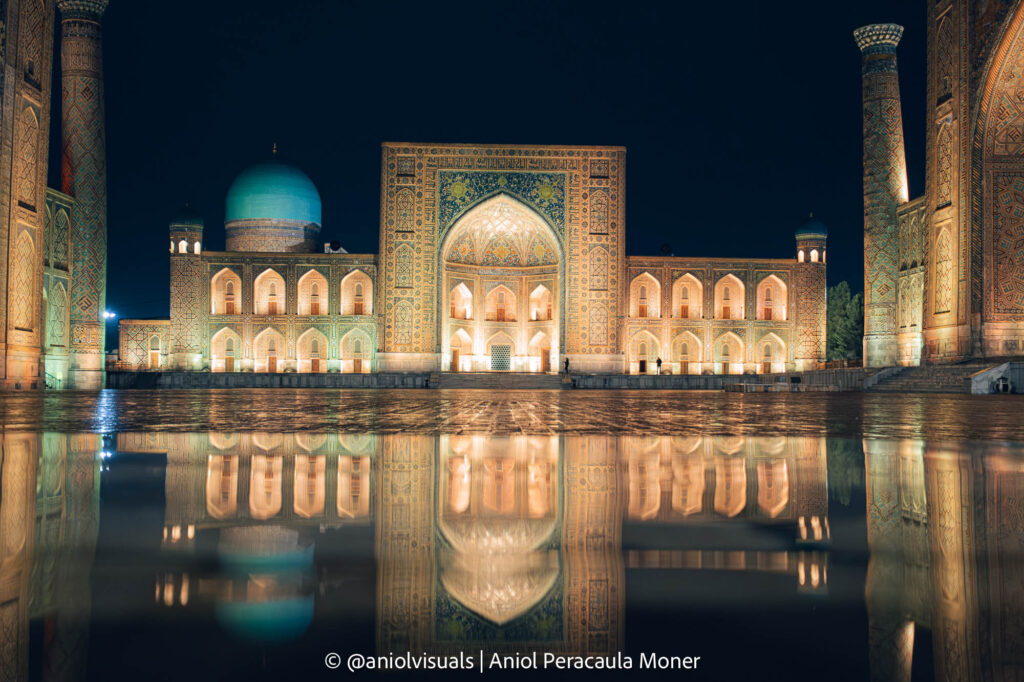
This is THE spot. Any Samarkand or Uzbekistan photography spots list includes it. Registan Square is the heart of Samarkand, where three impressive madrasahs face each other, creating a unique space. It’s as beautiful as you can imagine it. After sunset, the madrasahs are lit up, and there’s a nice light and music show.
It is one of these places that changes drastically between day and night, and it is worth exploring it at both times. It’s a pity to show the beauty of this place in just one image, so make sure to check my Samarkand photography guide, where I cover each madrasah, its photo spots, and details on pricing and best times to visit. Oh, and if it rains, don’t skip it. The reflections can help you create unique photos.

Shah-i-Zinda
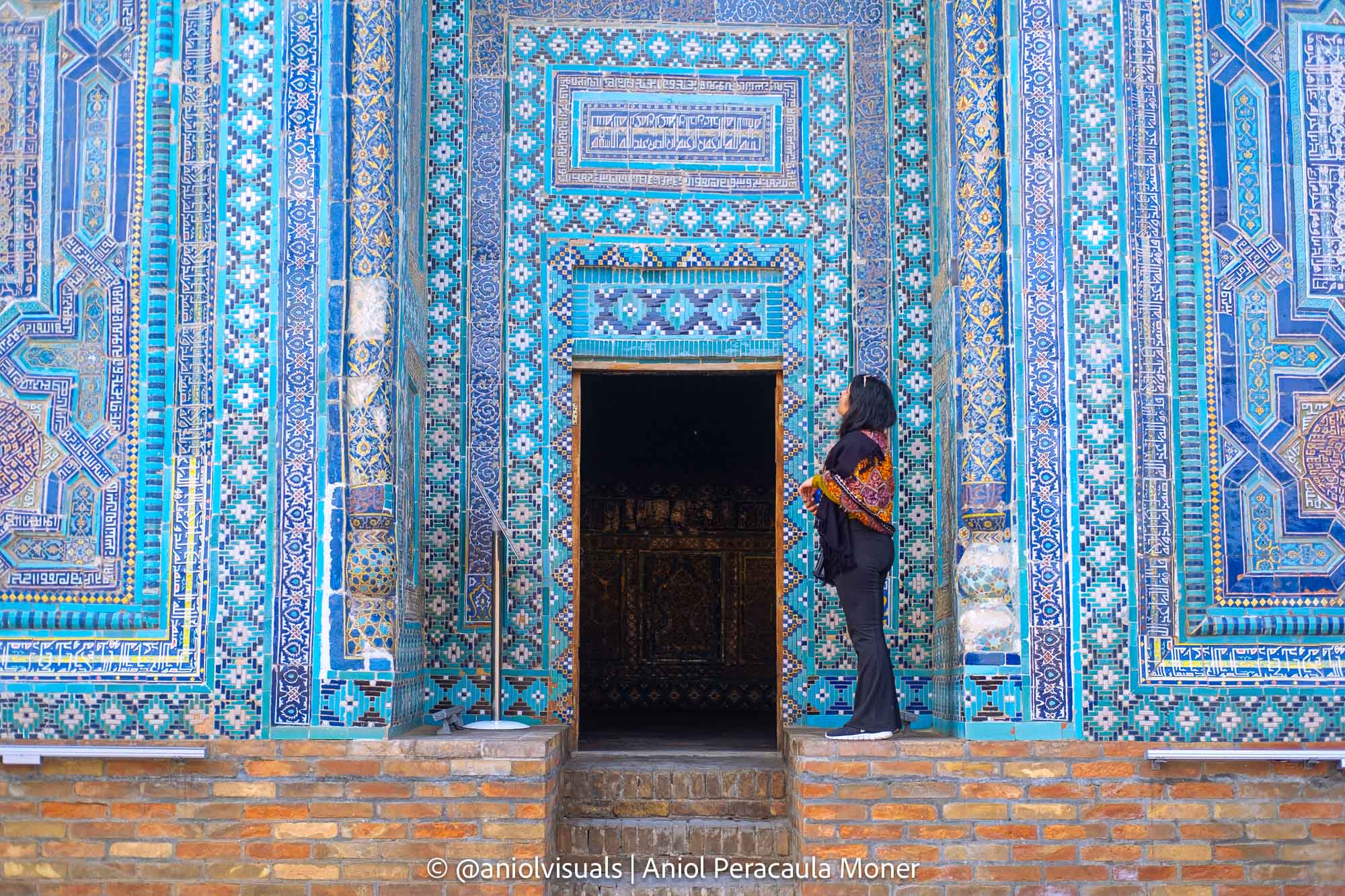
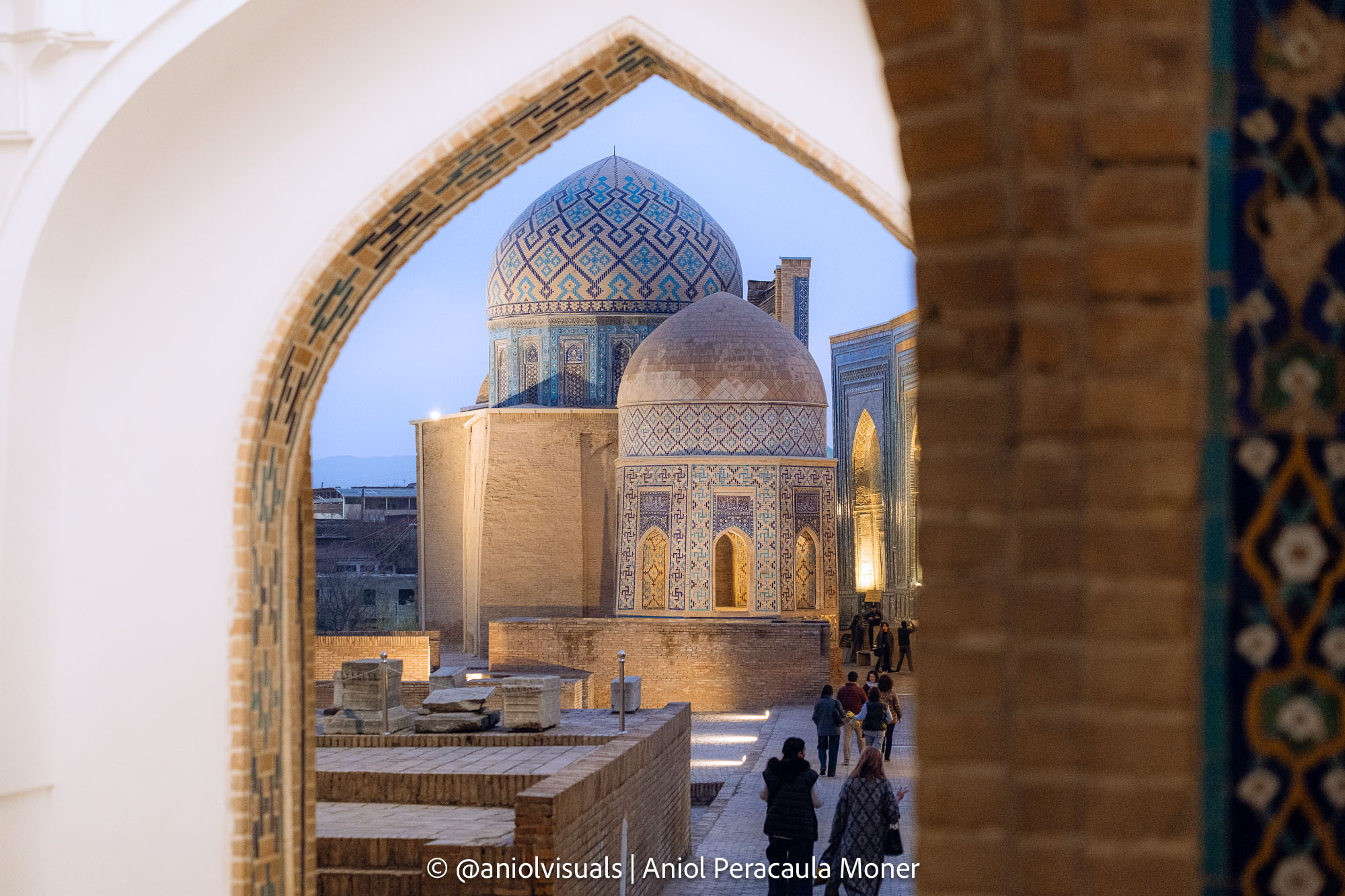
Registan Square might be the most well-known place in Uzbekistan, but my favourite Uzbekistan photography spot (and Samarkand’s, of course) is Shah-i-Zinda. This is a set of mausoleums, tombs, some of them of Amir Timur’s family, and it’s a really unique place. Challenging to photograph because it’s relatively small and quite visited, but a magnificent place.
After sunset, at blue hour, the whole area is illuminated, fewer tourists are in the area, and it’s clear why it’s one of the best Samarkand, Uzbekistan photography spots. Take it easy, don’t rush the visit and explore the interior of each mausoleum. Plenty of hidden details in each of them.
Siyob Bazaar
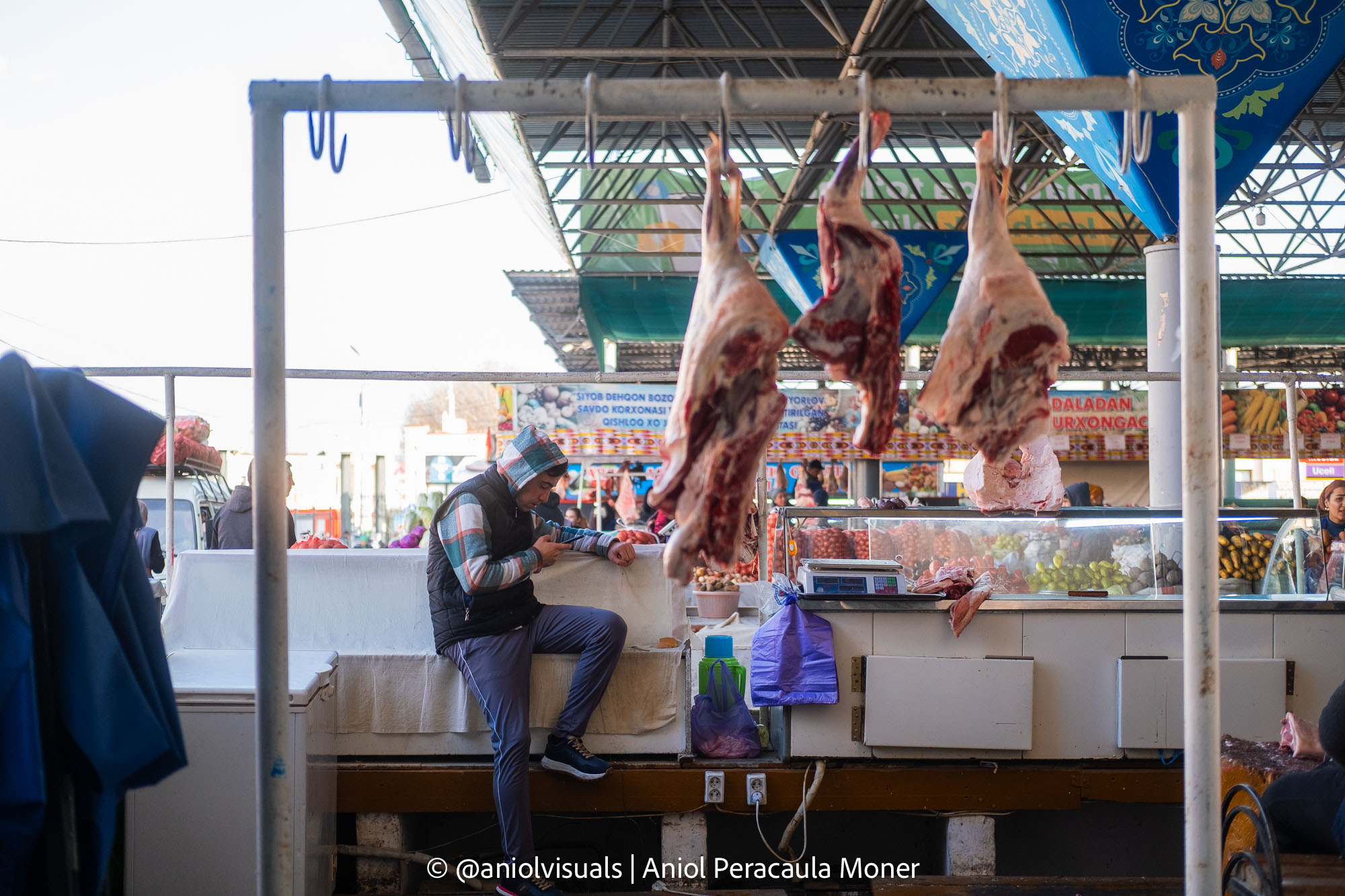
I mentioned earlier in this Uzbekistan photography spots guide that there would be more Bazaars. Here’s the second one. Samarkand’s bazaar is divided into two areas: the touristy one and the authentic one. Both are worth photographing, although they are very different.
It’s a great place to see the traditional Samarkand bread. Bread is almost a religion in Uzbekistan, and Samarkand’s is famous all around the country.
Ruhabad Mausoleum
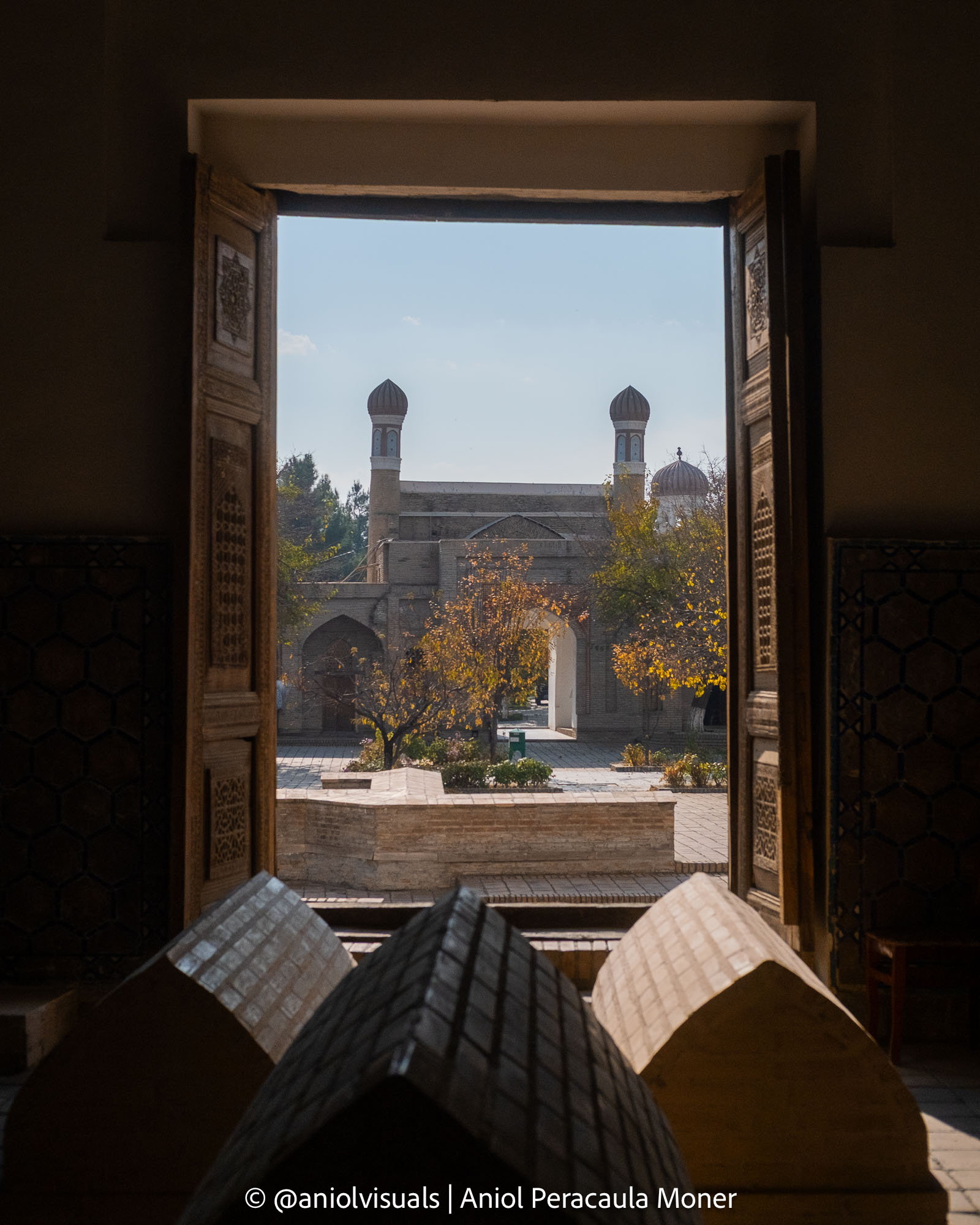
I don’t usually list one-photo spots, but I’ll make an exception with this one. The Ruhabad Mausoleum is nothing special. Small, not very visited,… but it has one photo opportunity that I really like. From the interior of the mausoleum, it’s possible to take a photo like the one below, with the tombs and the view of the gardens around.
It was a spot that surprised me, which is why I listed it in the Uzbekistan photography spots guide. However, even if you don’t want to visit it, go to that area, because the Ruhabad mausoleum is very close to the next spot on this list.
Gur-e-Amir Tomb (Mausoleum of Amir Temur)
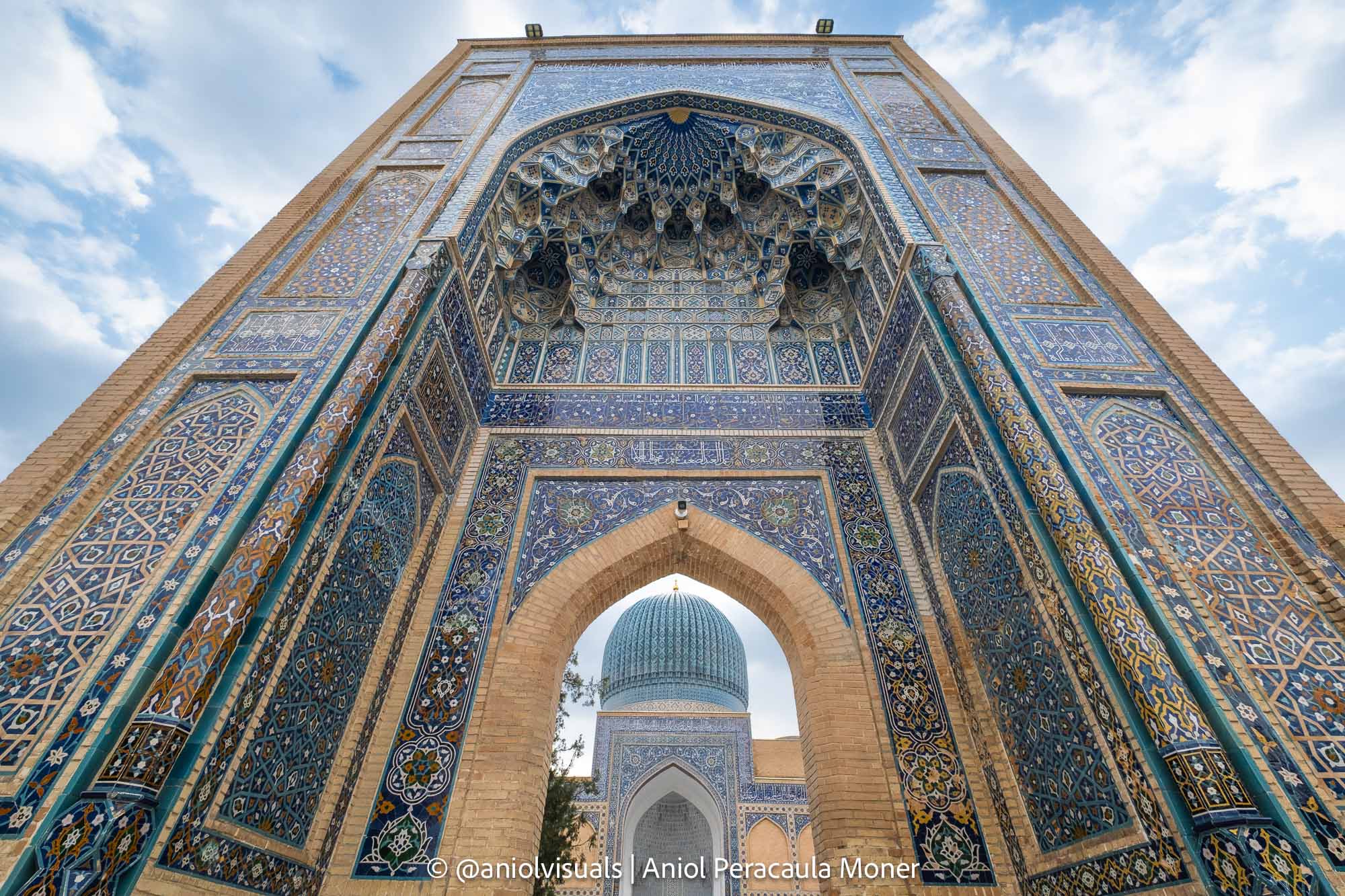
Amir Temur has been mentioned a couple of times in this guide. This is where he was buried. The tomb and mausoleum are at the level of the significance of the figure of Amir Temur. Every detail, room, decoration,… adds up to the experience.
One of the most famous Uzbekistan photography spots is the view of the cupola of the mausoleum from the entrance. If you want to take that photo, you’ll need to wake up early, because it’s where either security or the ones checking the tickets stand. Another option, though, is to get creative and get a photo like the one below.
Street life
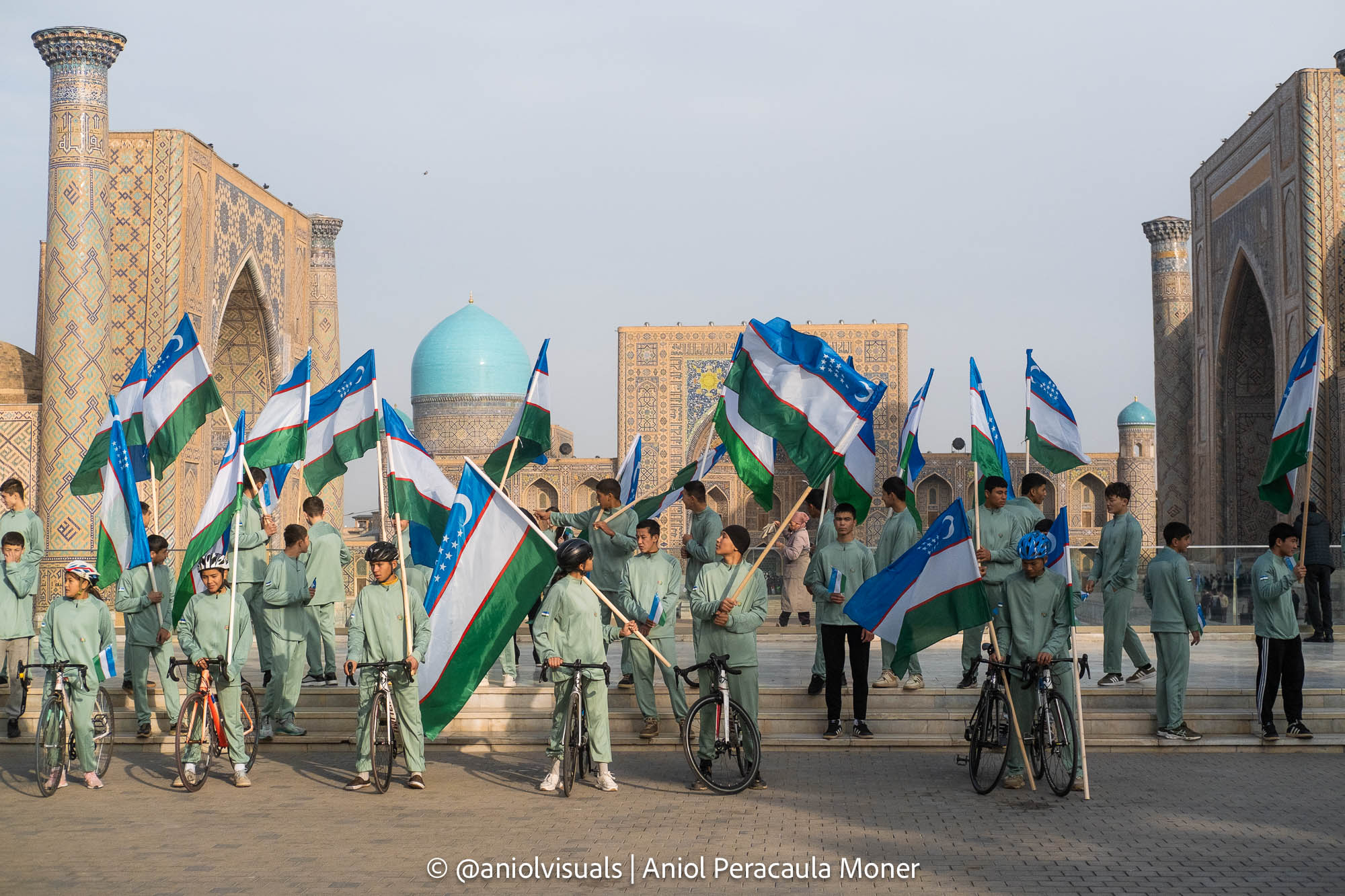
The last of the Samarkand, Uzbekistan, photography spots in this list is not exactly a spot. Some of the cities listed here are arguably more photogenic than Samarkand. Khiva, for example. However, Samarkand had a lot of street life, and I really enjoyed doing some street photography in the area.
People were friendly and open to being photographed, especially the younger ones. I wish I could explore the less touristy areas of the city on another occasion, as Samarkand felt like a city with a lot of personality on its edges.
Bukhara photography spots
The next city on the Uzbekistan photography spots is Bukhara. From the cities listed in this list, it’s the one with the most photography opportunities. Thus, I really do not recommend it as a day trip from Samarkand as many people do. Bukhara deserves its own time. These are the most well-known photo spots, but you can find more photo opportunities and tips in my Bukhara photography spots guide.
Ark of Bukhara
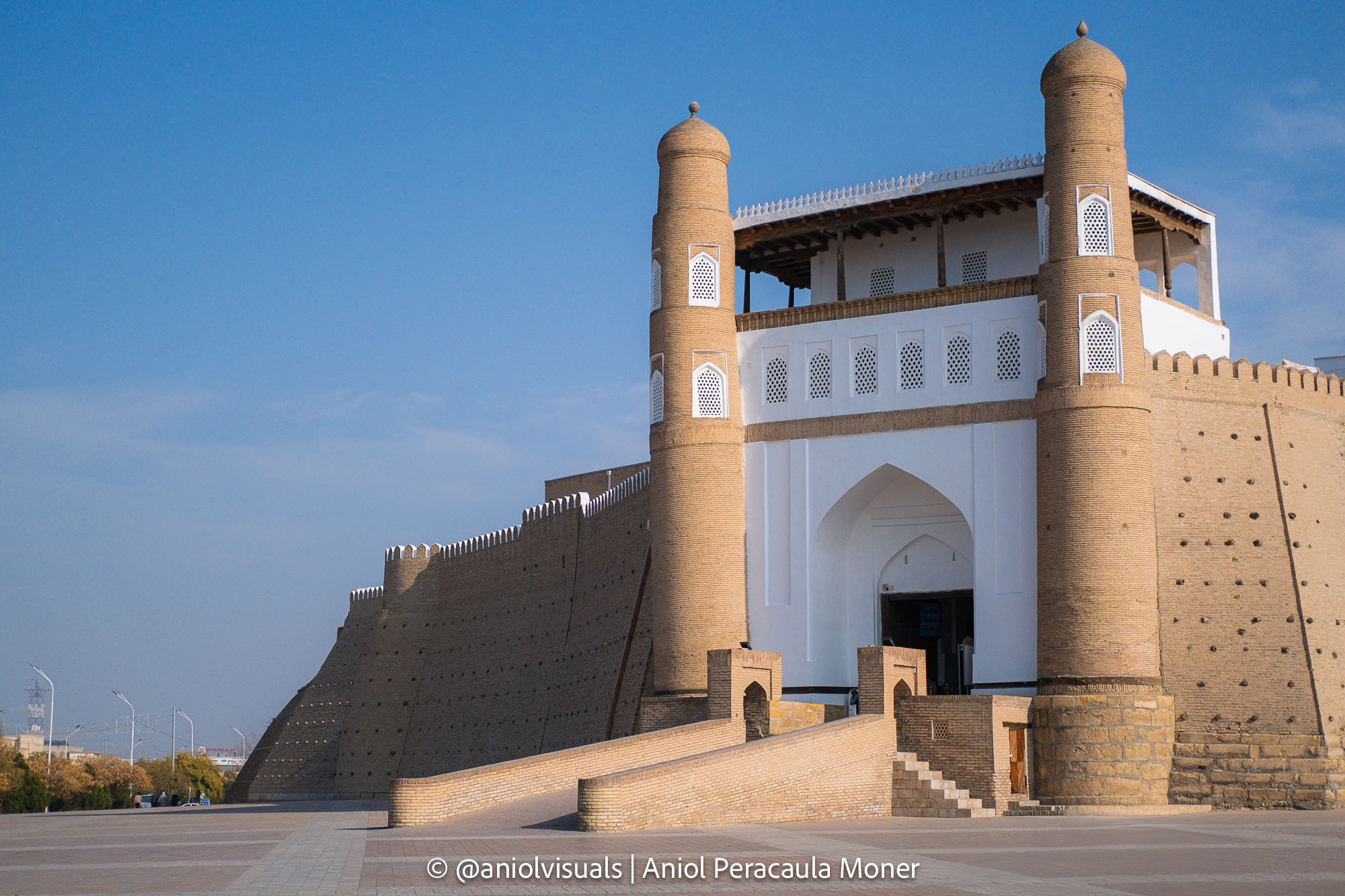
The Ark of Bukhara is a massive fortified area with religious buildings, views over the city, and lots of history. From a photography point of view, it’s difficult to highlight just one thing. The entrance is really beautiful, the details of the Mosque Jome are nice to photograph, and the views over the city are good (although it’s not the best viewpoint in Bukhara).
It’s one of the places that everyone visits in Bukhara. The main problem is that it’s not that big, especially the Mosque and some of the most beautiful spots. Thus, you’ll need to work a bit on how not to include people in your photos, if that’s what you are looking for.
Bukhara Tower
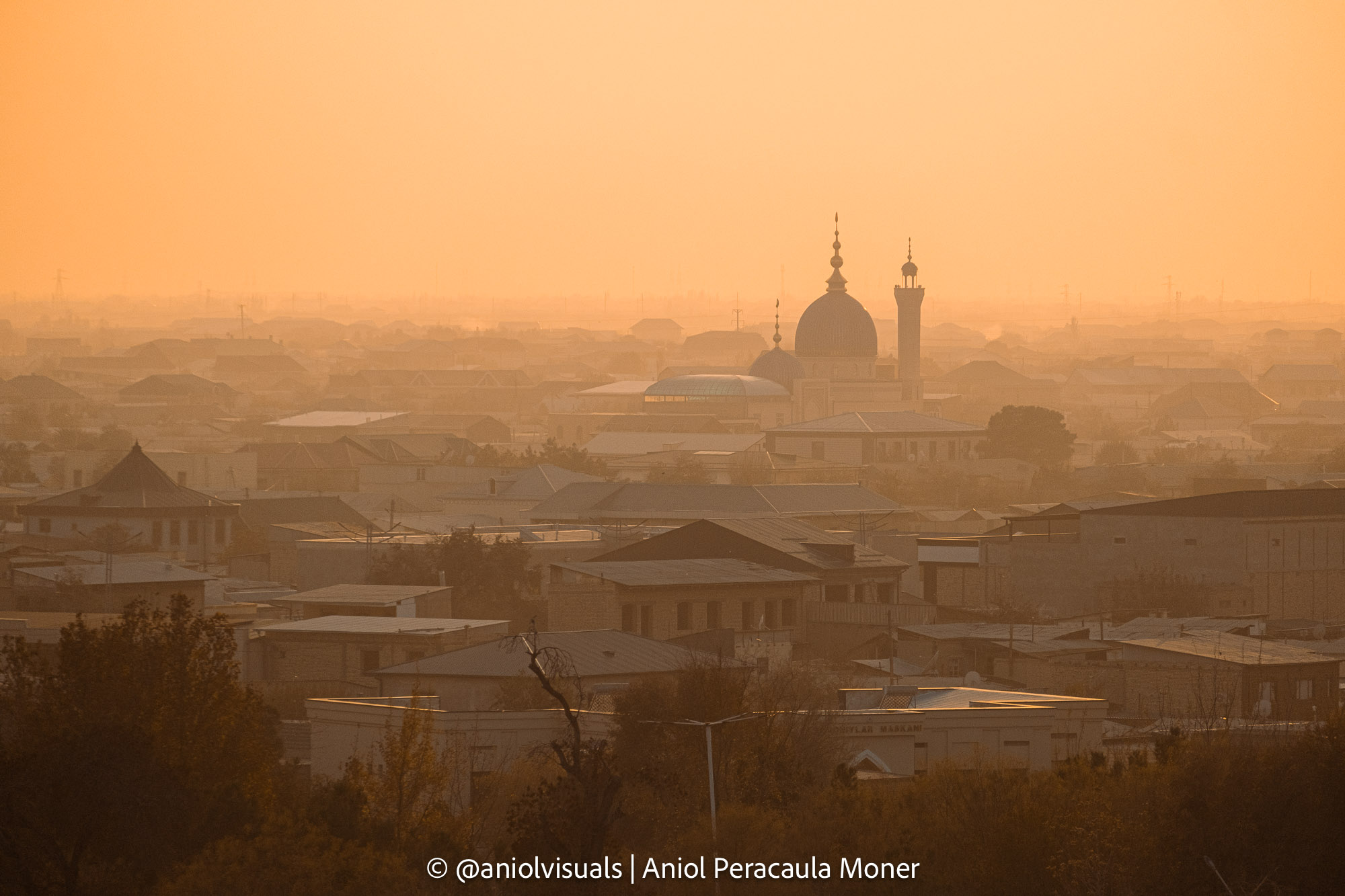
The best viewpoint over Bukhara, and one of the best viewpoints listed in this Uzbekistan photography spots guide, is the Bukhara tower. Located just in front of the Ark of Bukhara, it is the place to watch the sunset from. It’s not the views over the spots listed in this guide that I liked, but over the outskirts of Bukhara.
Mosques in the distance, the golden hour light, and surprisingly, not a lot of people are the perfect ingredients for a great photo spot. If you can, don’t skip it!
Po-i-Kalan (Bukhara central square)
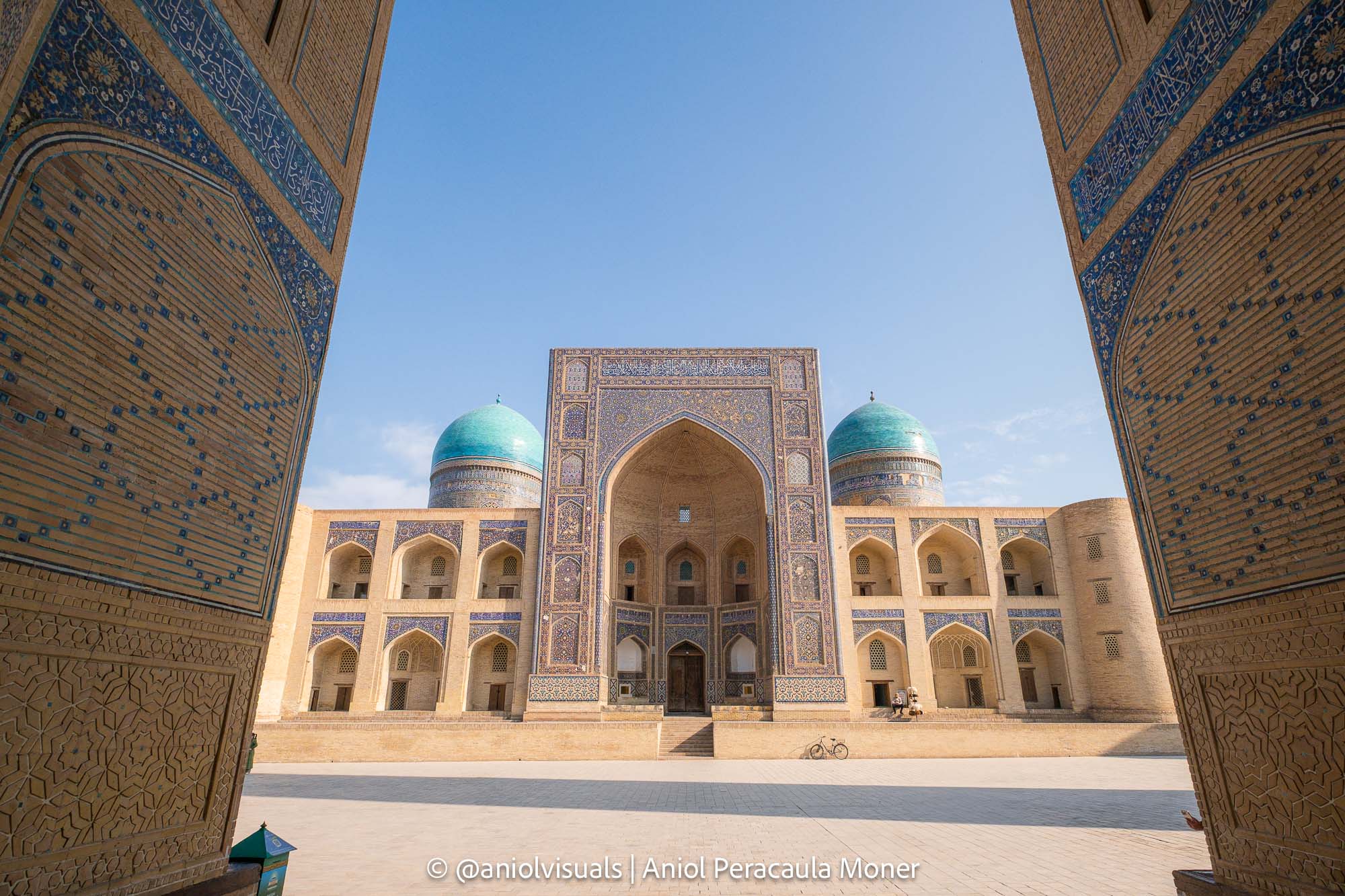
The same way that Samarkand has Registan Square, Bukhara has Po-i-Kalan, and it’s one of the best Uzbekistan photography spots. Instead of 3 madrasahs, in this case, it’s two of them, facing each other, with a 46-meter tower next to them.
One of the two madrasahs can be visited, and like in Samarkand, the whole complex is illuminated at night. To photograph it, though, daytime is better. The main reason for this is that at nighttime, when the square is illuminated, it’s not with white or yellow light. Instead, there’s a mix of red, yellow, and blue lights that make it extremely challenging for photography.
It’s the heart of Bukhara, and a must for anyone visiting Uzbekistan.
Bukhara Bazaars
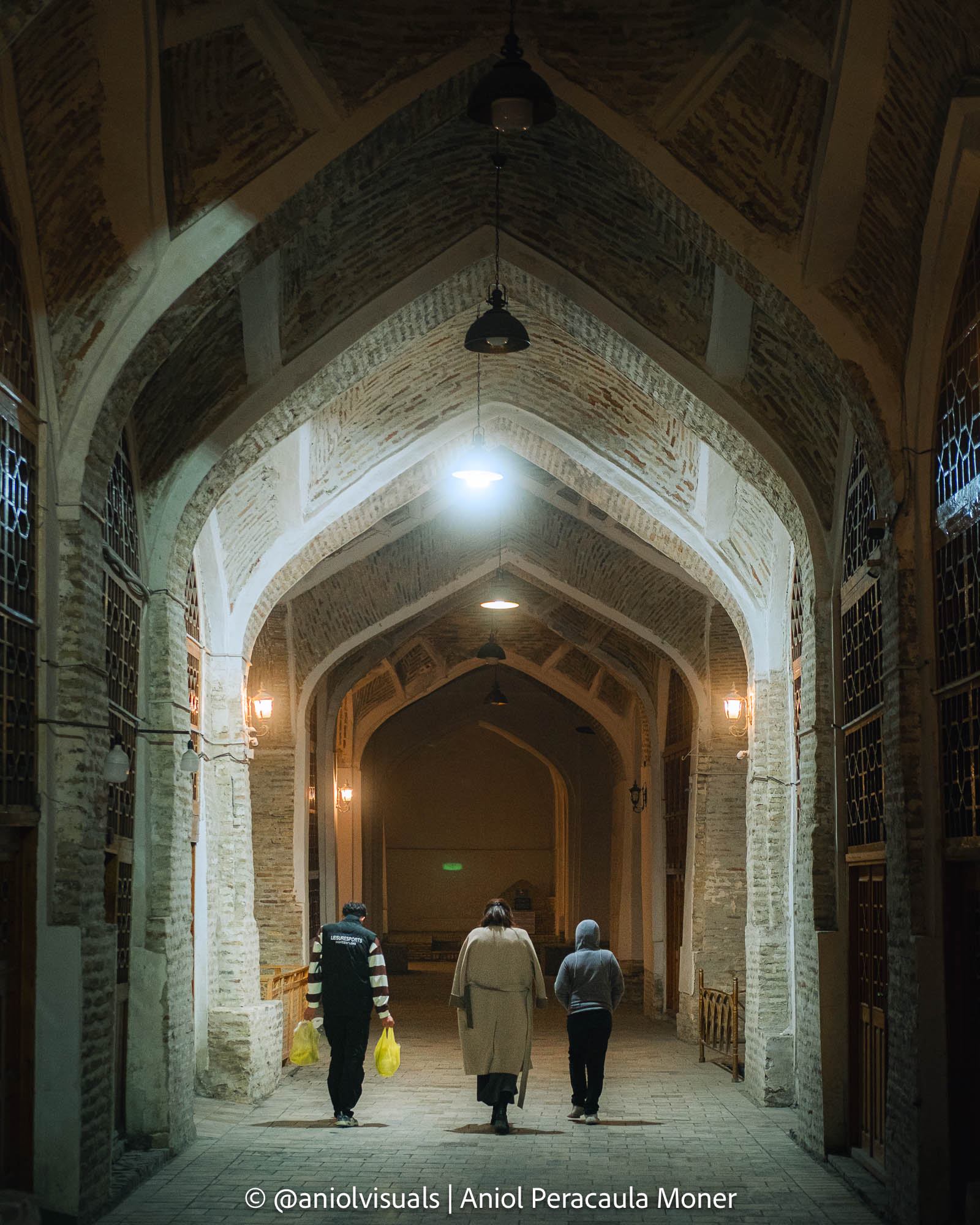
These are the last of the Bazaars listed in this Uzbekistan photography spots guide. Bukhara is a city with plenty of Bazaars and markets. Instead of focusing on a single one, I’ll mention three of them: Toqi Zargaron, Toqi Telpakfurushon, and Toqi Sarrofon. These are different from the ones of Samarkand and Tashkent. These are more touristy, but they are not about the products or the people, but about the buildings. The three markets are in historical buildings, open to everyone and are fantastic for photography.
In my Bukhara, Uzbekistan photography spots guide, I also highlight the Bukhara market (or bazaar), which is a great place for street photography.
Abdulaziz Khan Madrassa and Ulugʻbek Madrasah
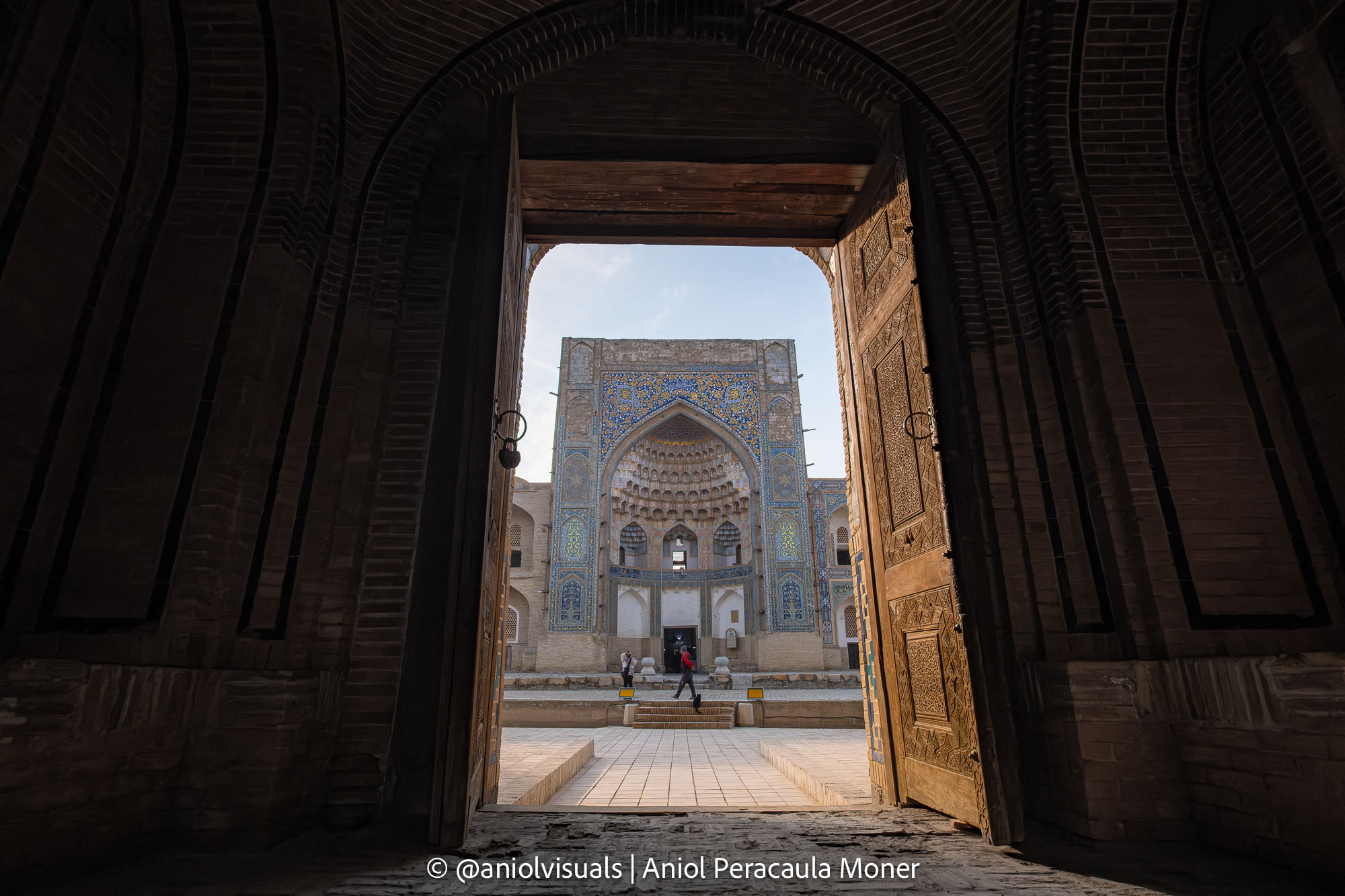
Besides Po-i-Kalan, Bukhara has two other major madrasahs worth photographing. They also face each other and are quite close to Po-i-Kalan. What makes them special is that they are a bit smaller, which makes them easier to photograph.
Most of the religious Uzbekistan photography spots require a really wide-angle lens, and some post-work to make the photos visually appealing. The two madrasahs mentioned here have many little details that are great to capture, and some unique photo opportunities, especially from the interior of one towards the other.
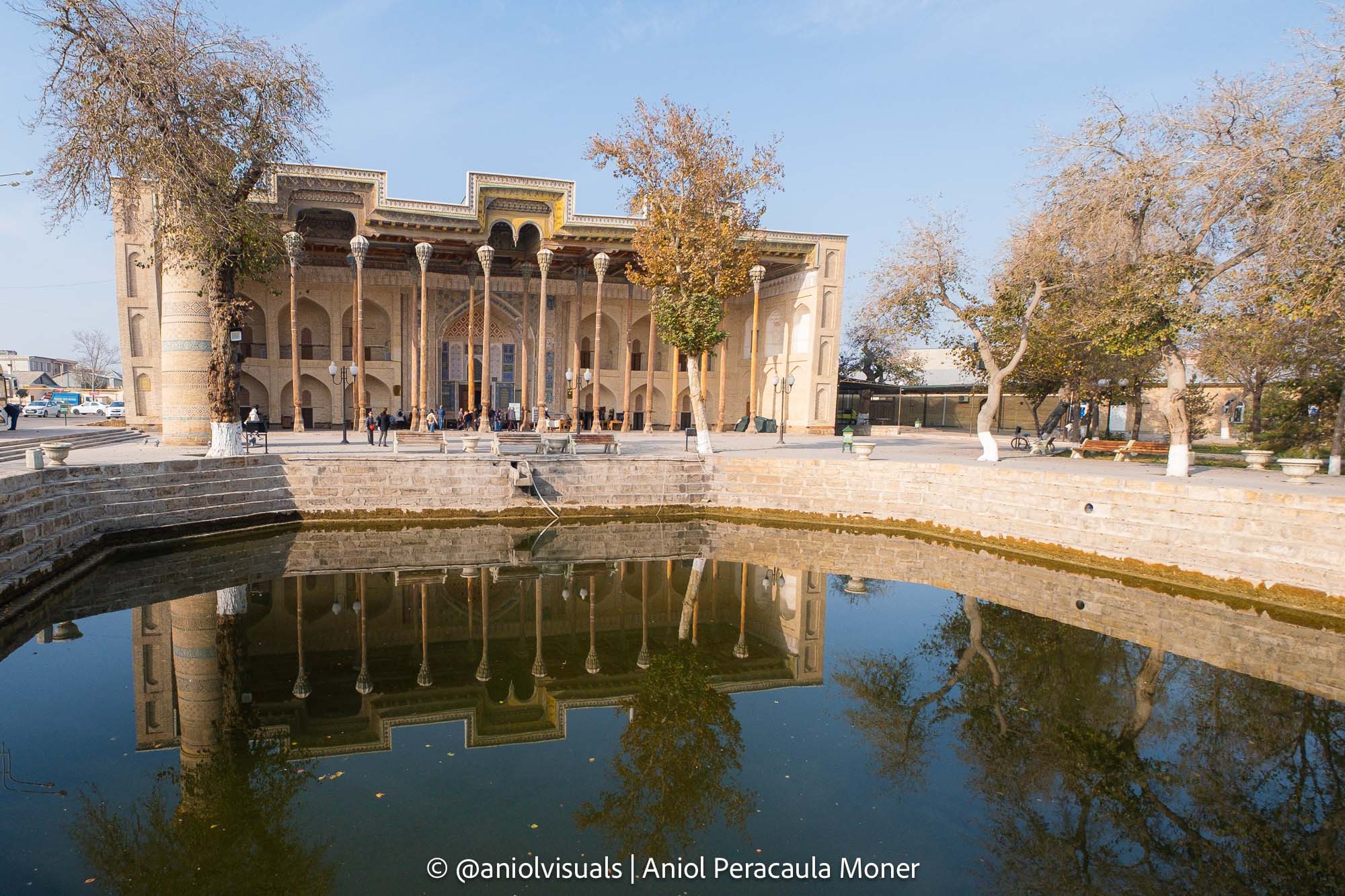
Bolo Hauz Mosque
This is constantly listed in other Bukhara, Uzbekistan, photography spots guides. It’s objectively a very beautiful mosque, especially for the wooden pillars at the entrance and the small pond in front of it. However, it’s not the best mosque in Uzbekistan, as you will find out in the Khiva section below.
It’s very close to the tower of Bukhara, and from there, it’s also possible to get a different view. Visiting the interior is possible, but what I liked the most was its exterior and the details on the wooden pillars.
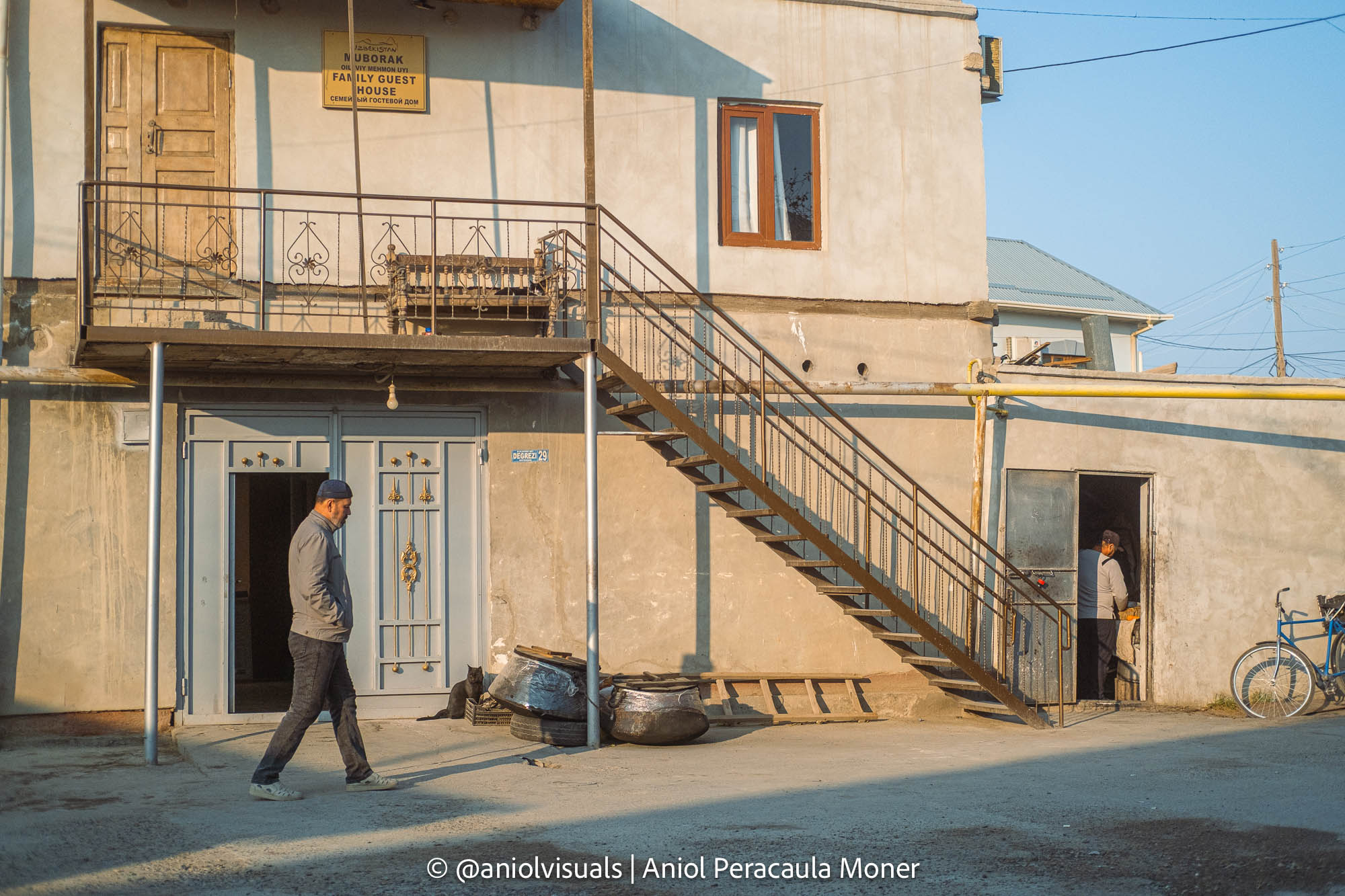
Chor Minor Monument and area
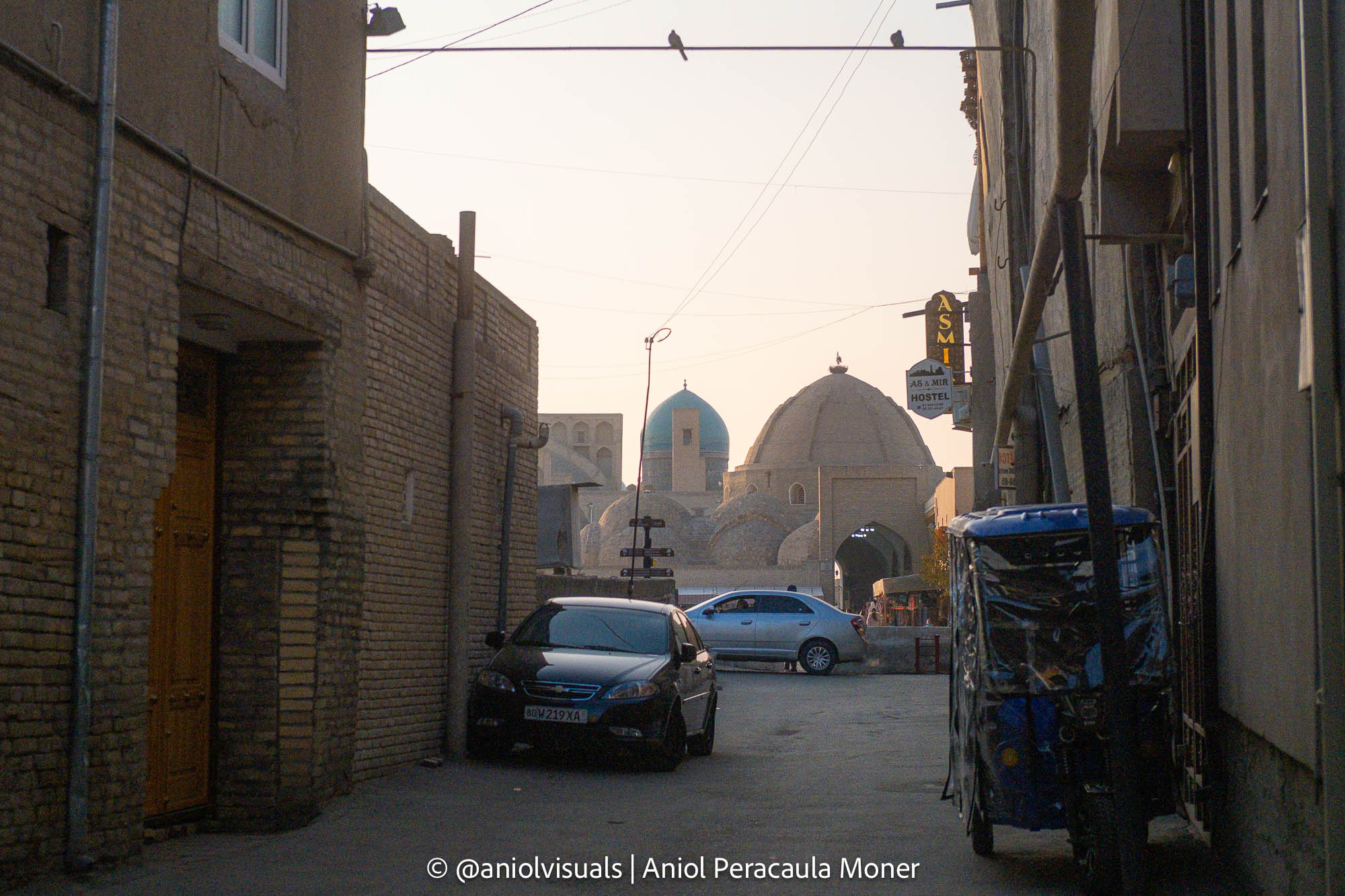
The last photo opportunity on this section of the Uzbekistan photography spots guide is Chor Minor and the area. Chor Minor is a tiny madrasah, with 4 blue-capped towers. It’s extremely photogenic and not that touristy. The reason why I list it here is that it’s within walking distance from the heart of the old town, but it doesn’t feel tourist-oriented.
Thus, the neighbourhood or area where Chor Minor is, is great for some street photography. The streets of most Uzbek cities have similar patterns, and it’s one of the places where I enjoyed photographing them the most.
Khiva photography spots
The next city featured in the Uzbekistan photography spots guide is Khiva. Khiva is a city that some people skip on their trip to Uzbekistan. It’s not that close to Tashkent or Samarkand, and it requires more than 6-7 days in the country to get there. However, in my opinion, it’s a must. It’s the most beautiful old town in Uzbekistan, a walled city, compact, easy to visit and with many great photo opportunities. Check its dedicated photography spots guide, as here I only cover the essential ones.
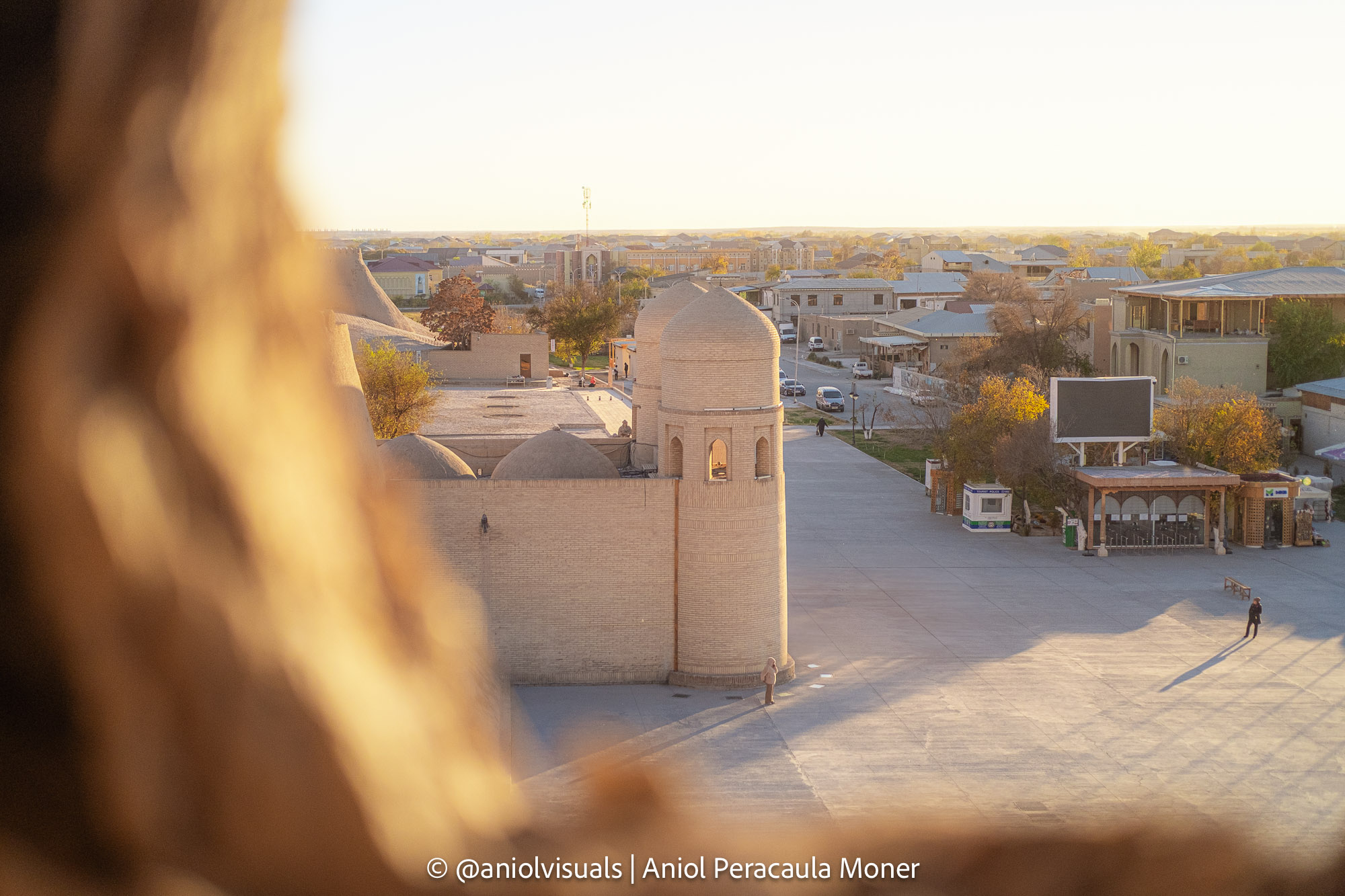
Ichan Kala west gate
The first of the Khiva, Uzbekistan photography spots is literally the gate to the city. To be fair, Khiva is more than Ichan Kala; it’s the walled old town, but it’s also true that the most relevant things to see and photograph are within the walls of the city.
The west gate is the main entrance to the old town, and both during the day and night, it’s a great place to photograph. Its shape can make you think of some old movies or video games, such as Prince of Persia.
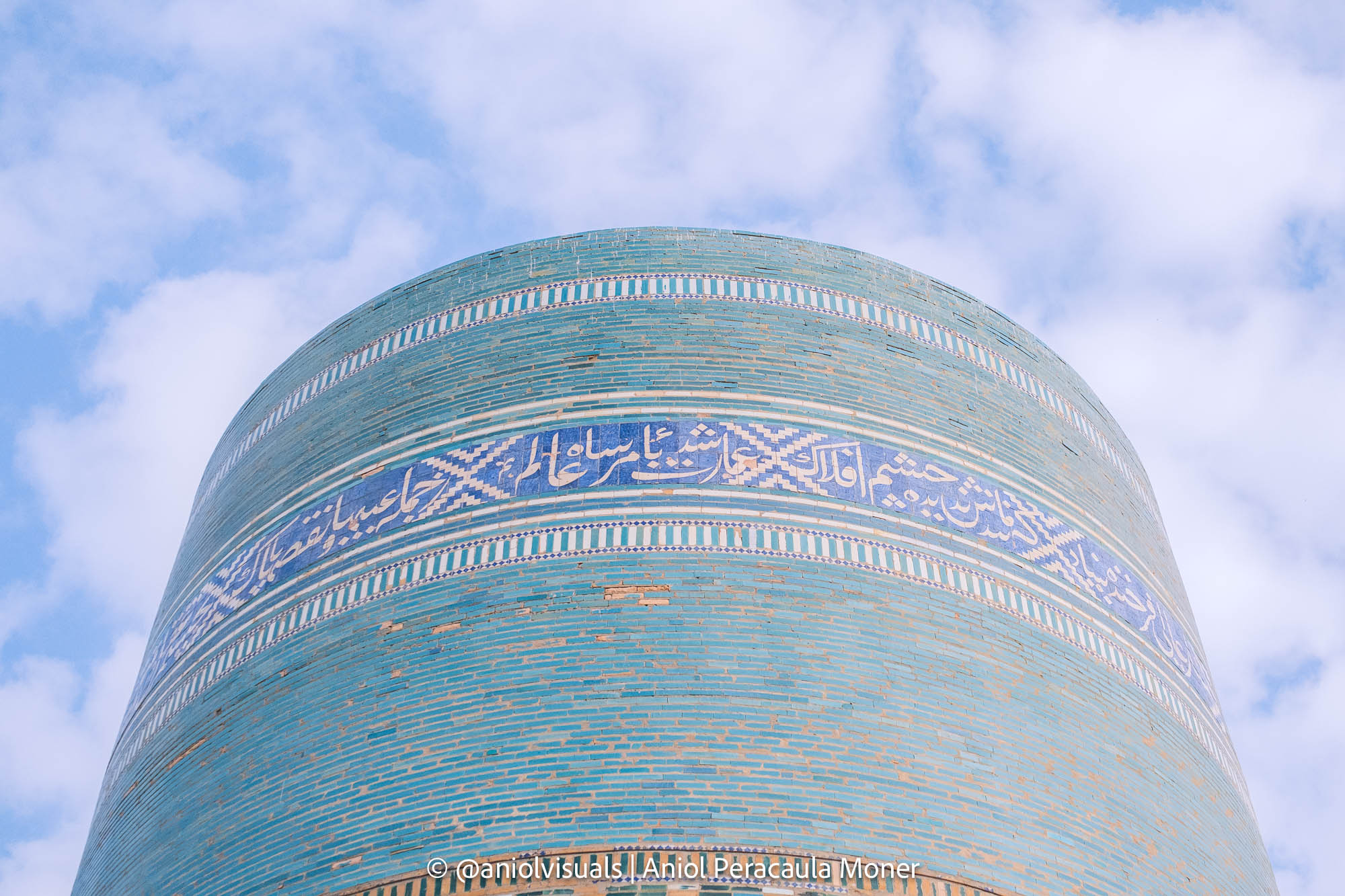
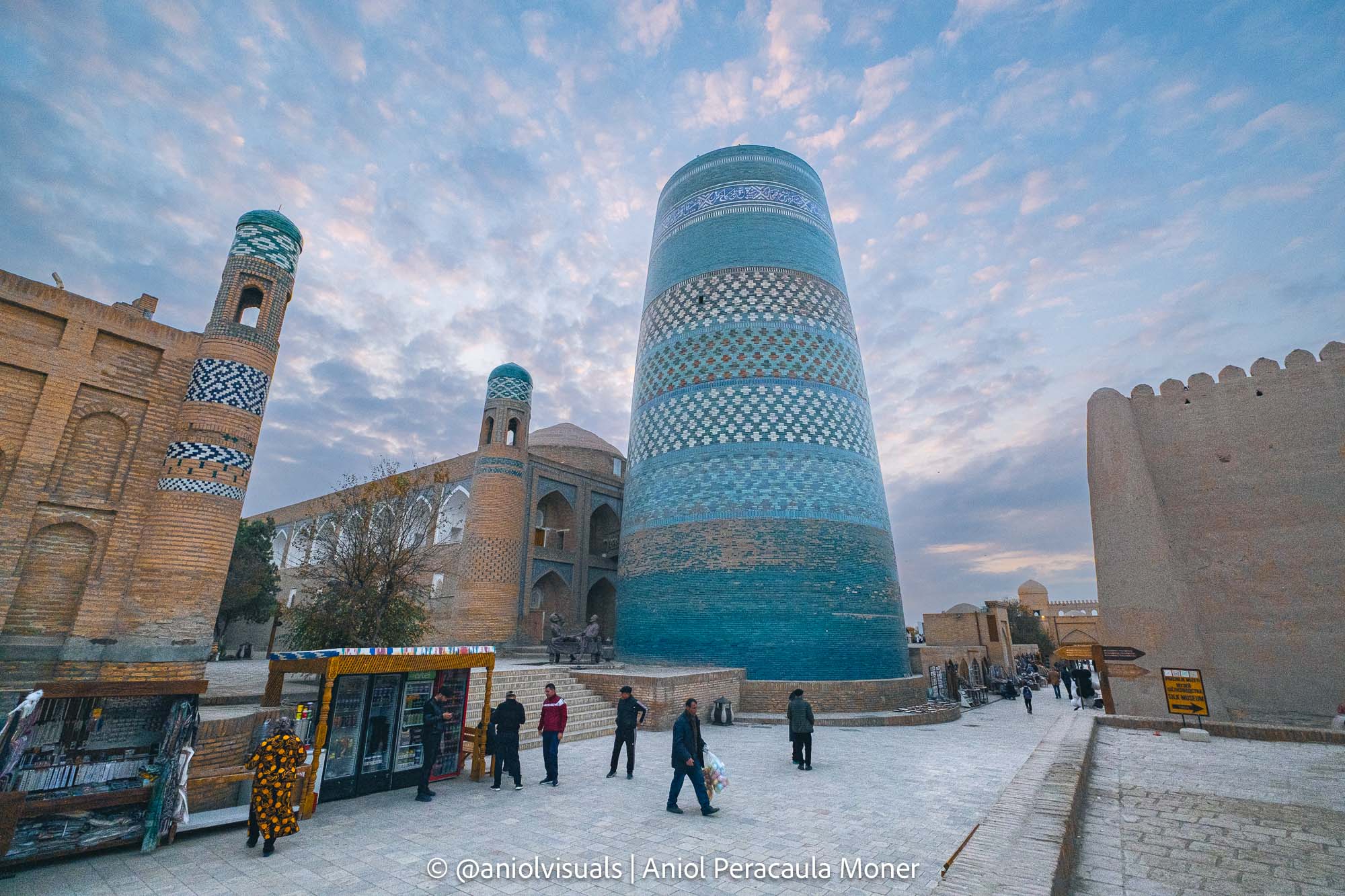
Kalta Minor minaret
This is the most characteristic and photographed element of Khiva. The city is mostly made of a material similar to clay, so many orange and brown tones. However, there’s the Kalta Minor minaret. It’s an unfinished structure of what should have been one of the tallest minarets back when it was built. Its blue tones contrast perfectly with the orange and brown tones of the surrounding buildings and help create amazing photos.
It’s a must for anyone visiting Khiva, and one of the best Uzbekistan photography spots. It can be photographed from many different angles, so don’t limit yourself to the basic frontal view, and look for other opportunities.
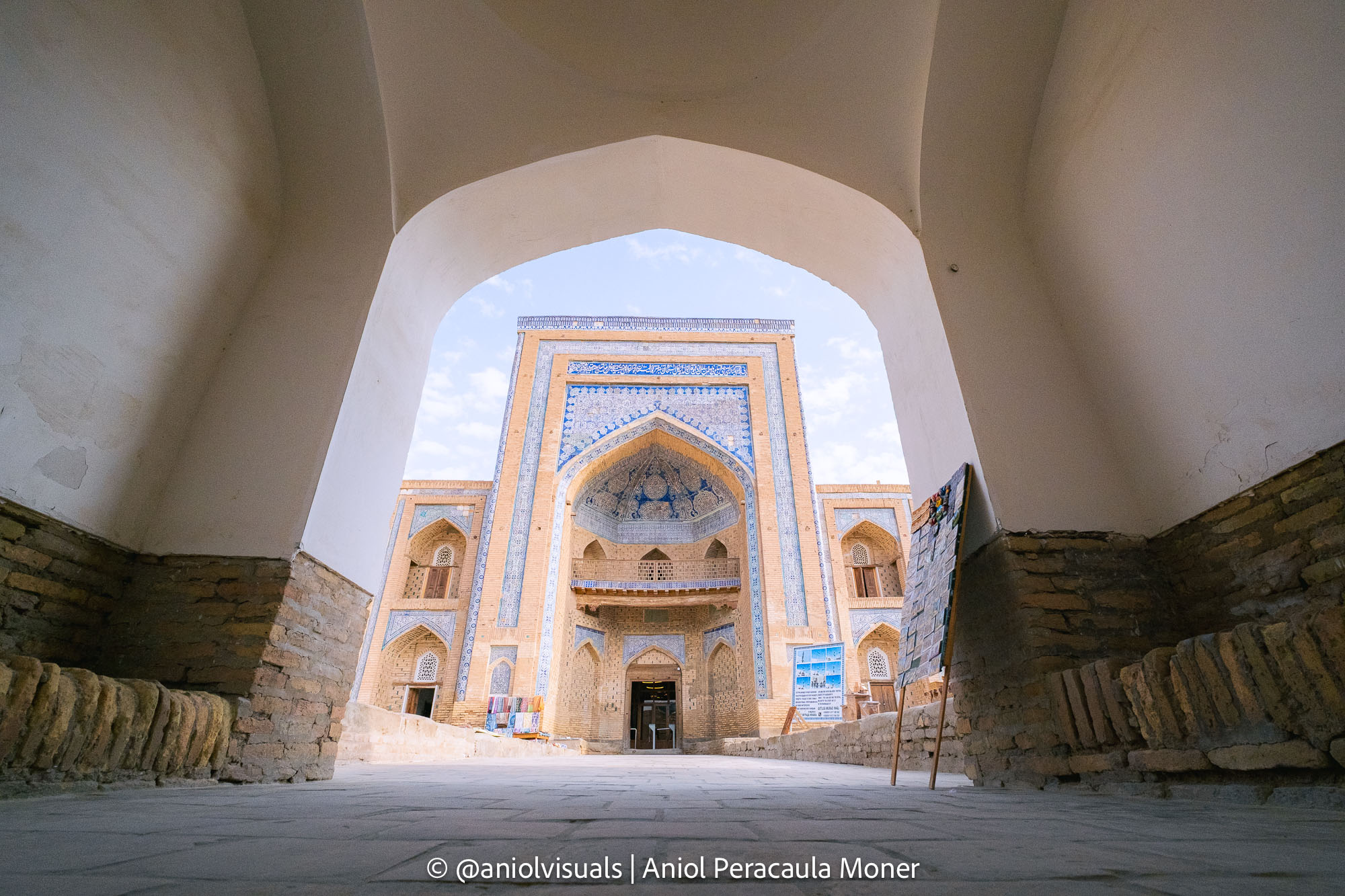
Mohammed Amin Khan Madrassah
There are many madrasahs within the Khiva city walls. However, I only list one in this Uzbekistan photography spots guide. To read about the other ones, check my dedicated Khiva photo spots guide.
I chose the Mohammed Amin Khan Madrassah because it’s the most photographed one in the city. In fact, it’s the one located next to the Kalta Minor minaret, and they are usually photographed together. It’s impossible to miss, and a must when visiting and photographing Khiva.
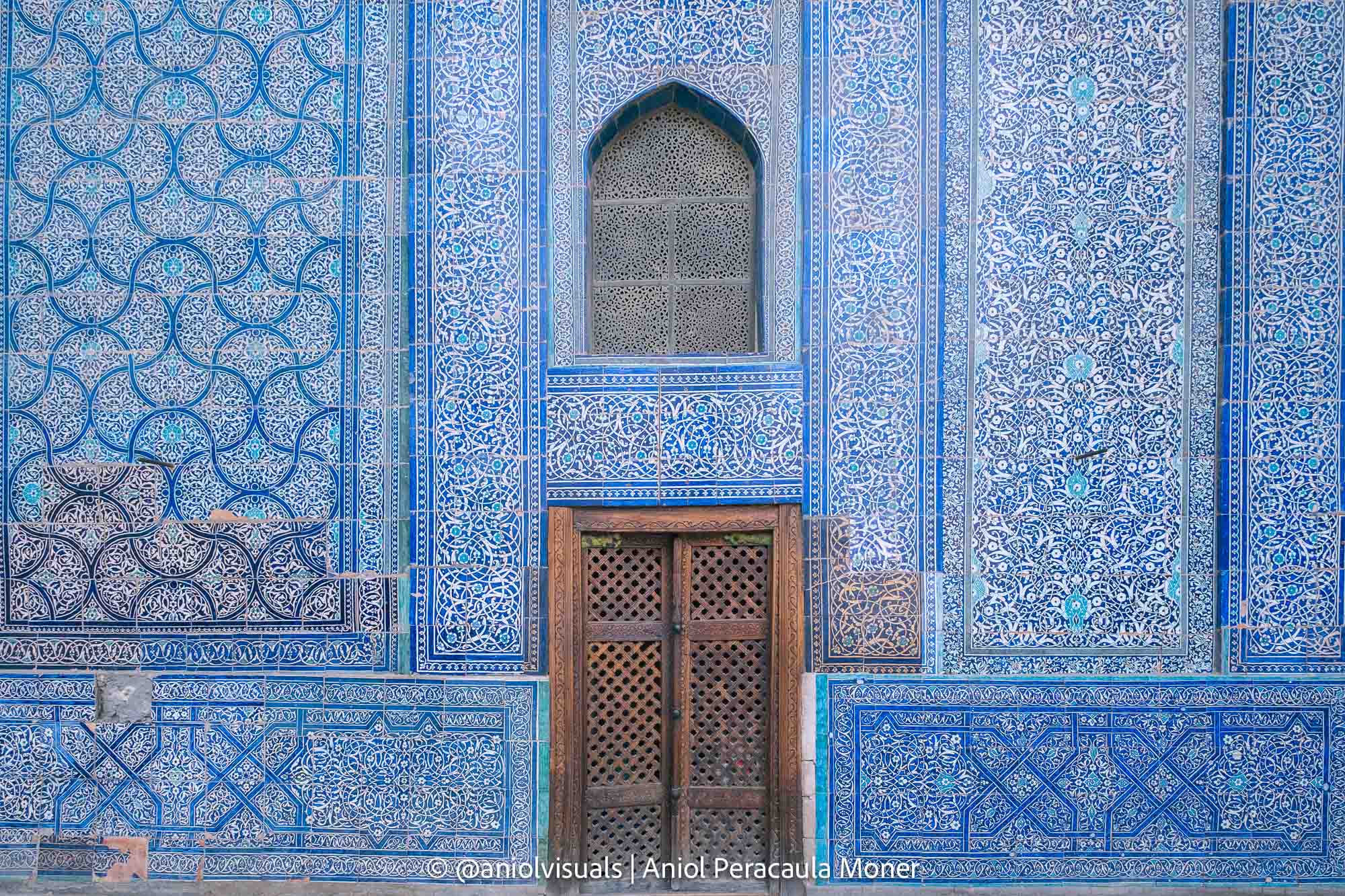
Toshhovli Palace
This is not a very well-known spot in Khiva. However, this is what made me include it in both the Khiva and the Uzbekistan photography spots guide.
What caught my attention about this palace are the blue tones and the photo opportunities that they bring. The fact that it’s not visited by many tourists made it easier to take photos, as finding the right angle can be challenging.
Of course, it could be that when you visit it, there’s a group or more people, but if you get there early or late into the evening, you could even be alone in there.
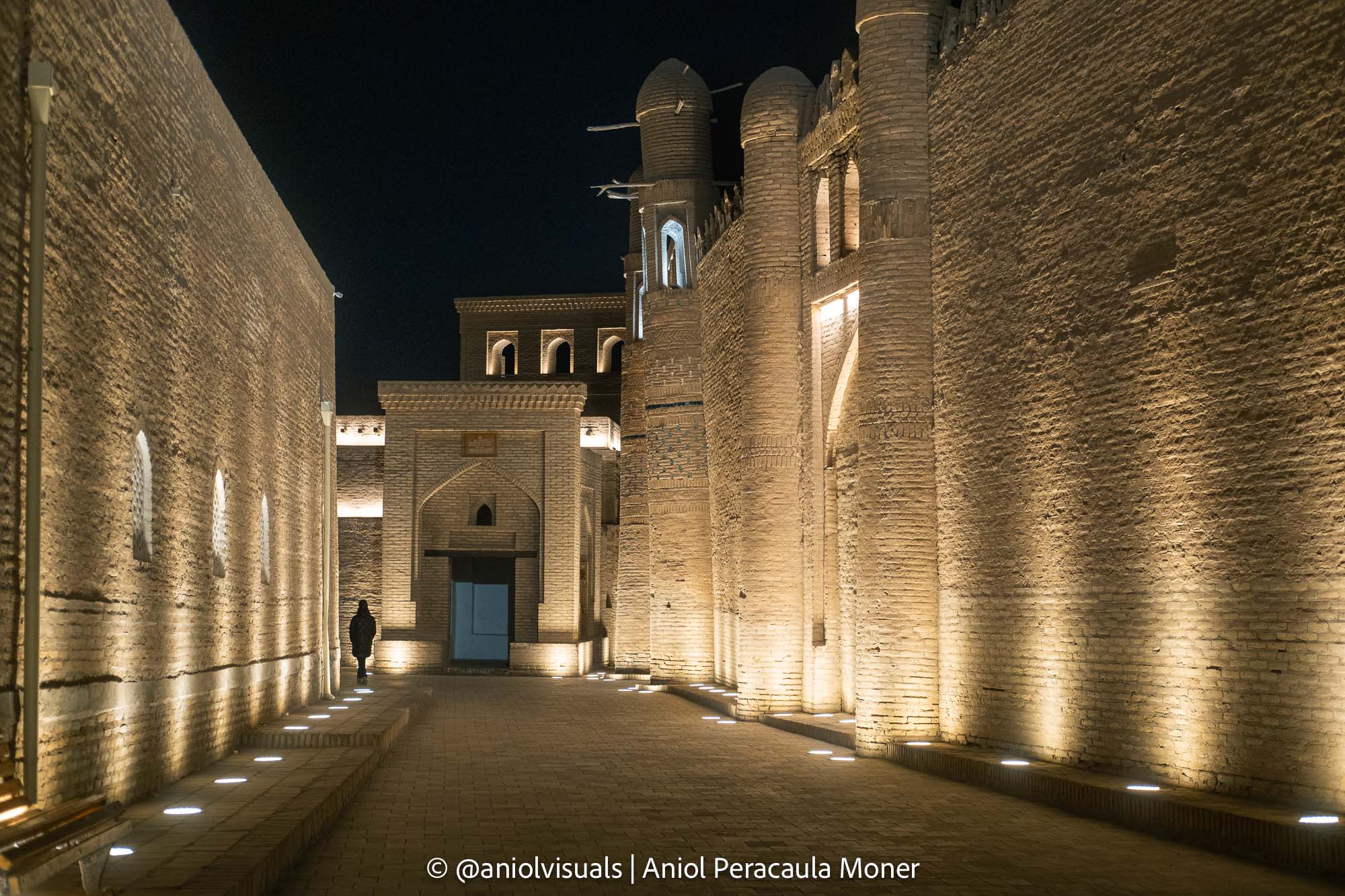
Streets of Khiva
Overall, Khiva is a very photogenic city. Some might even say that it feels fake, but my feeling was that it was very well-restored. Most people walk the exact same streets, but if you take the alleys that only locals walk, you’ll find many photography opportunities. From views over famous buildings or monuments, to daily life scenes.
To get them, though, you’ll need to avoid the busy hours of the day. If you wake up early or wait a bit after the sun goes down, photo opportunities are everywhere.
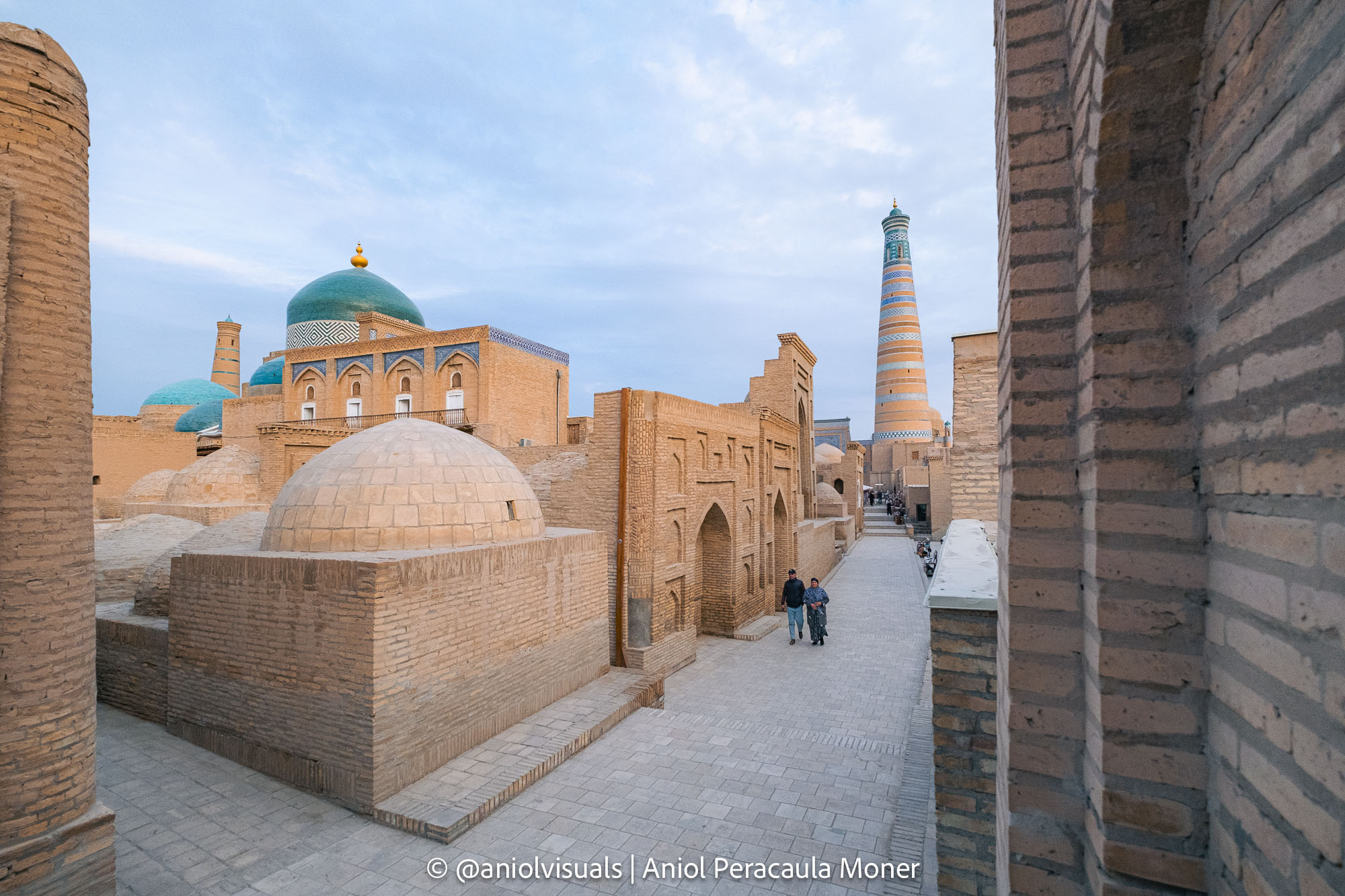
Islam Khoja Minaret
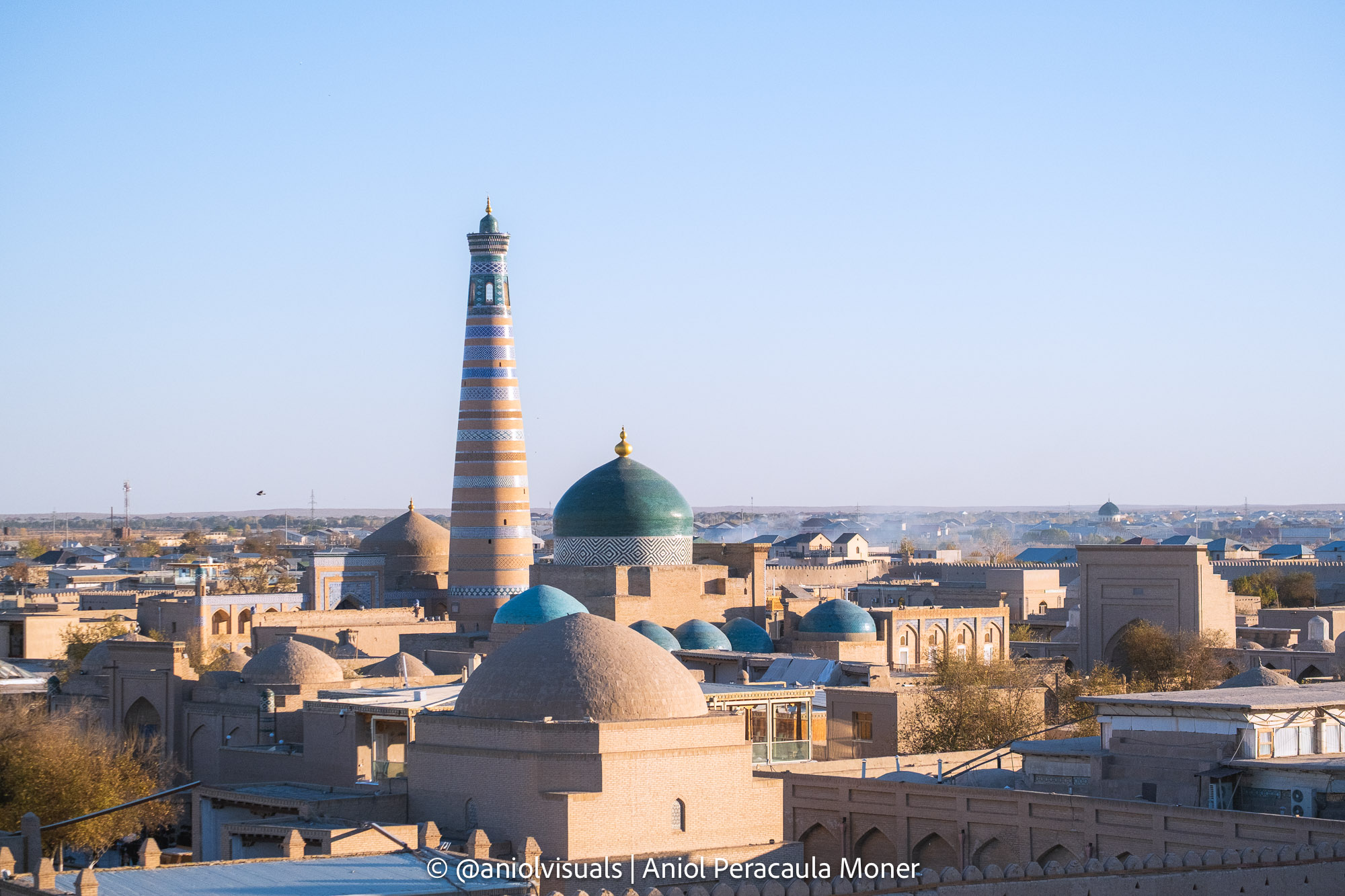
This is the tallest Minaret in Khiva and in all of Uzbekistan. It’s one of the most photographed scenes in the city, and is frequently listed in Uzbekistan photography spots guides. My recommendation is to watch it from below and from a distance. It’s possible to climb it, but if you go to the top, although the views are nice, you miss the main element, which is the minaret.
To get nice photos of the minaret, taking some distance is key. Being such a tall structure, photos from below it can be distorted or with a weird composition. Look at the nearby streets, from some of them you can take really nice photos of the minaret. Oh, or check the next spot.
Kuhna Ark viewpoint
This is the best viewpoint in Khiva. Kuhna Ark is a fortress within the Ichan Kala, the walled old town. From its tallest point, you can get a fantastic view over many of the Khiva, Uzbekistan photography spots listed in this guide. The west gate is at your feet, the Islam Khoja Minaret stands tall in the distance, and the Kalta Minor Minaret can be clearly seen.
It’s the most expensive entry fee I paid in Khiva (and maybe Uzbekistan), but it was worth it. While I am writing these lines, you had to pay to access the Kuhna Ark (worth a visit), and a ticket on top to get to the viewpoint. Paying only the basic ticket is ok, because the fortress is nice, but I strongly recommend paying the full ticket. It’s expensive for Uzbek standards, but in total, it was less than 20$.
Juma Mosque
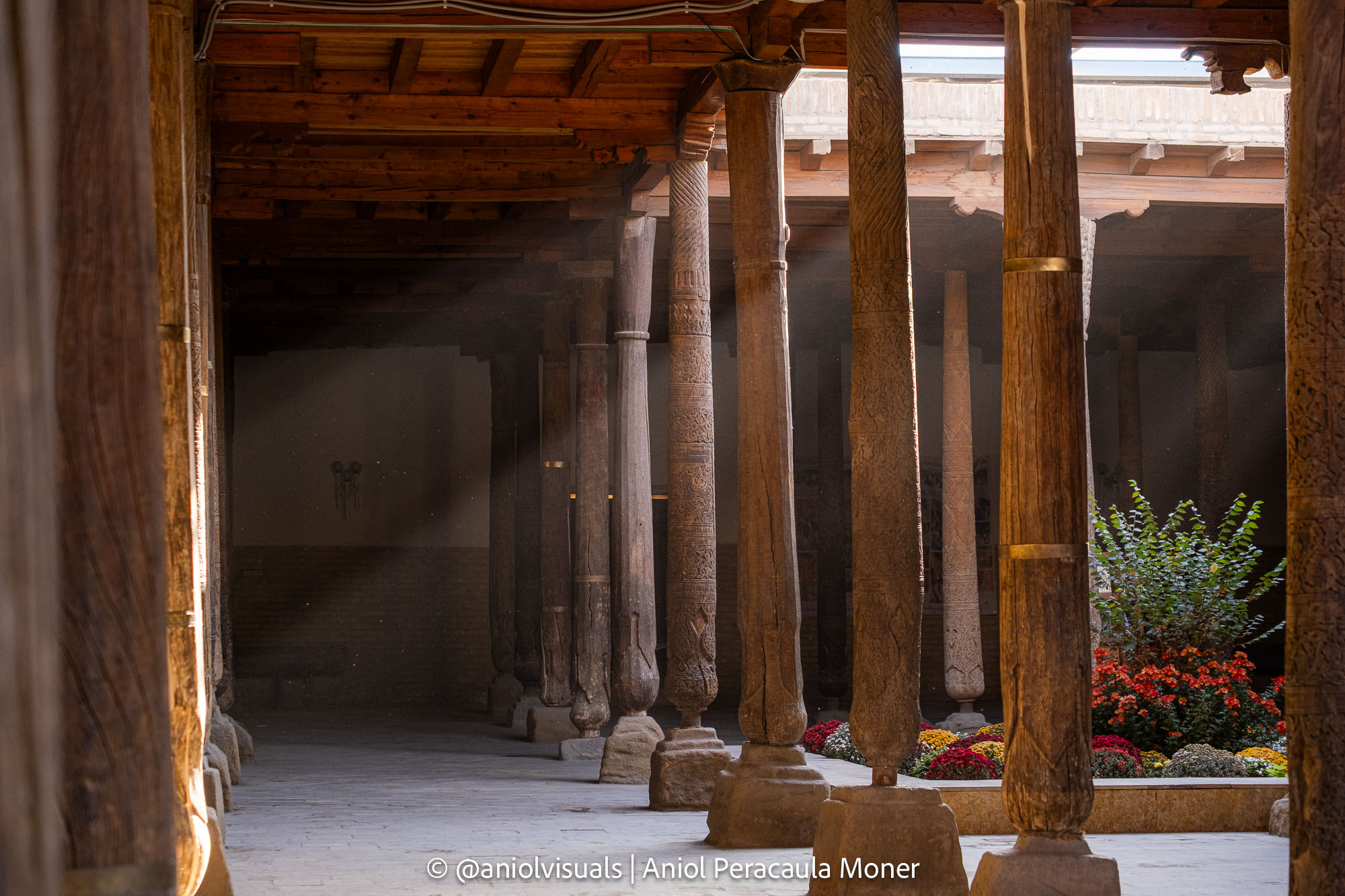
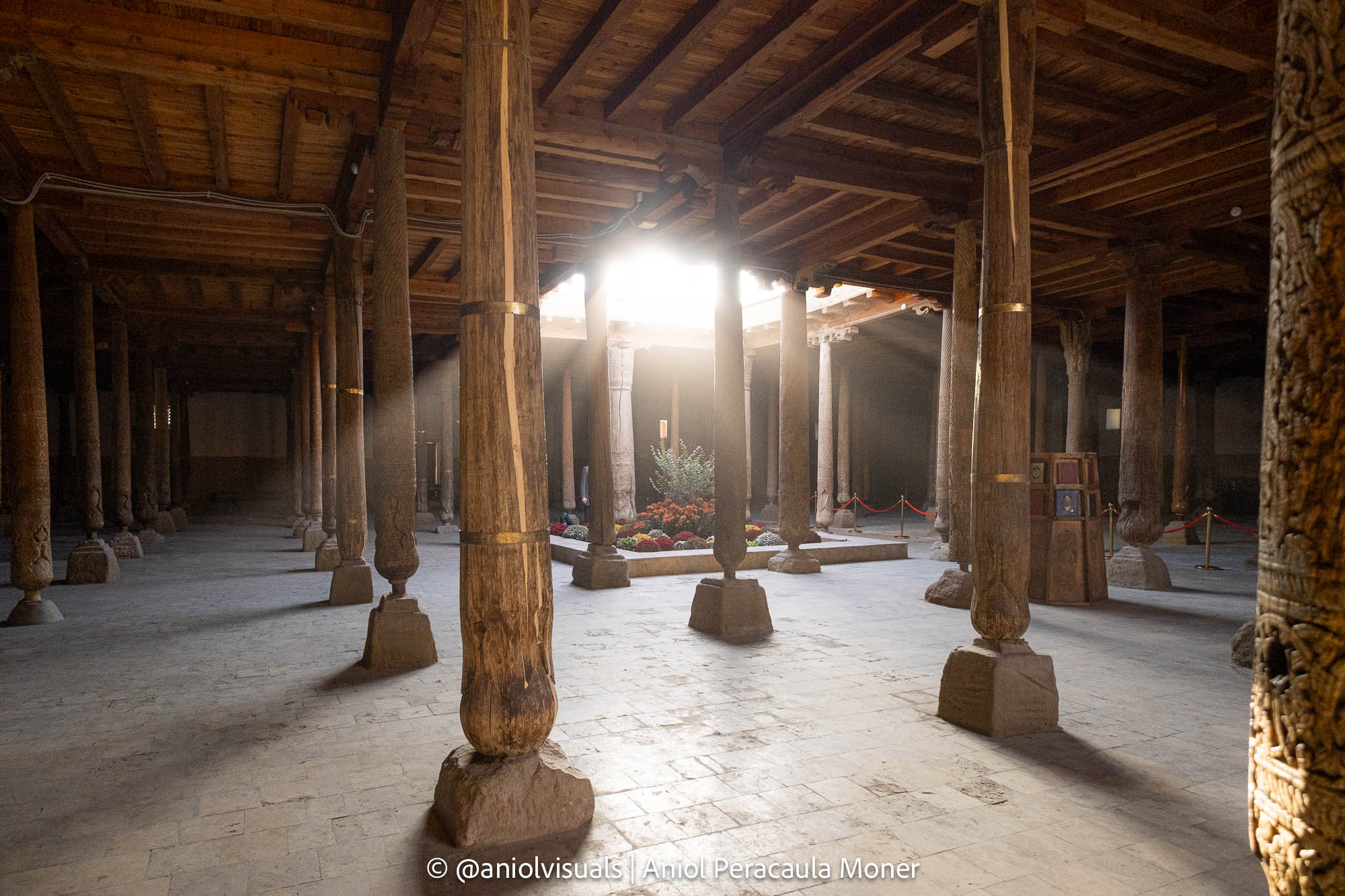
This is the most beautiful mosque I’ve visited in Uzbekistan, and one of the most unique ones I’ve ever visited. What makes it unique is that it’s a small mosque, but with the whole structure sustained over 200 wooden pillars, some of them being centuries old.
The main problem with the Juma mosque is that it is small. This means that one or two tourist groups make the experience of taking photos almost impossible. Thus, go there exactly when they open their doors. You’ll be alone, and if you’re lucky and it’s a sunny day, the light beams illuminating part of the mosque are the perfect way to give a unique touch to your photos.
It’s one of the best Uzbekistan photography spots, and if you are with someone who likes being in the photos, you can take amazing portraits there. I don’t know if it’s allowed, as it’s a religious building, but if they allow it, be respectful.
City walls
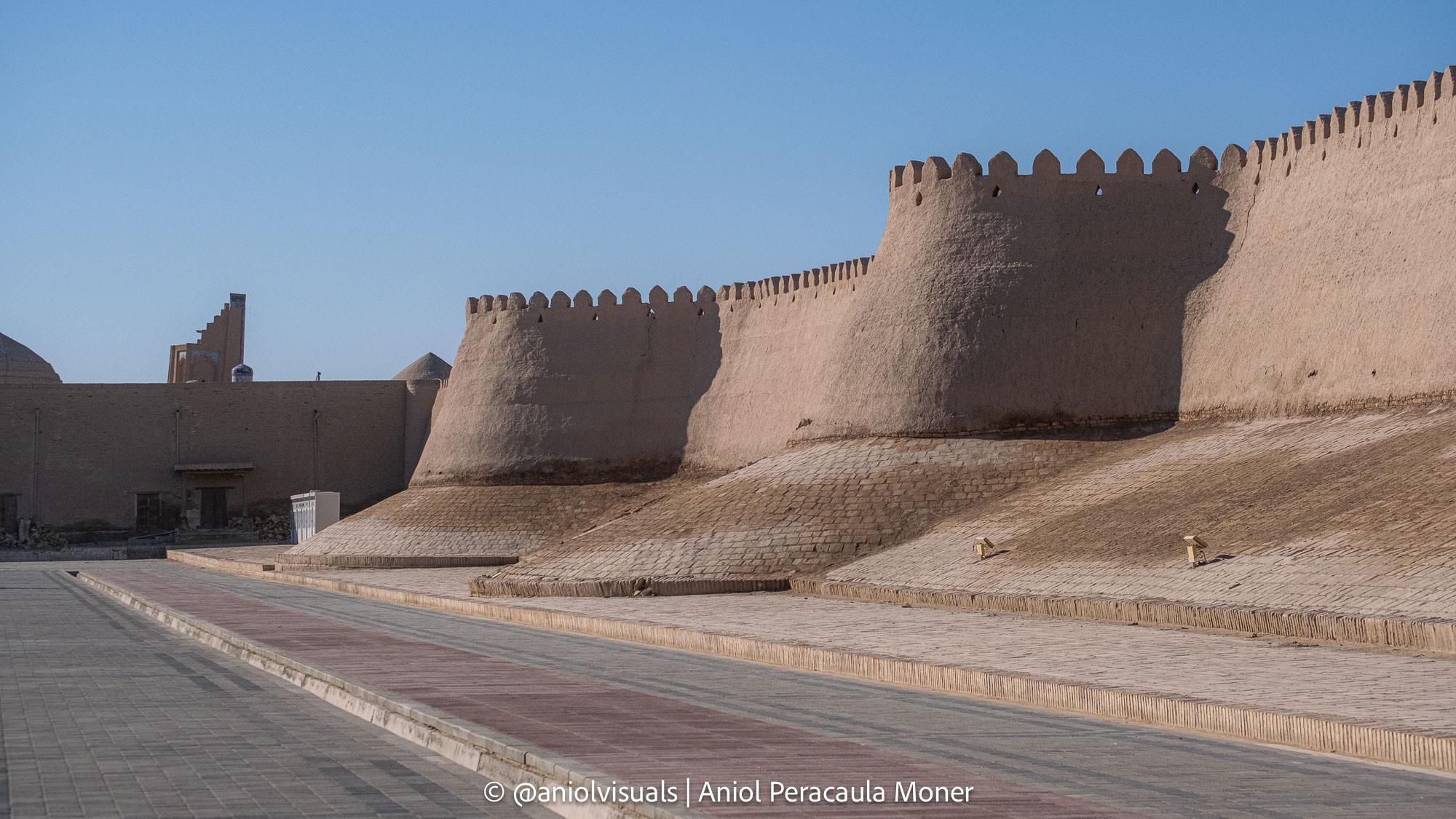
The last of the Khiva, Uzbekistan, photography spots are the city walls. Probably, this will be the first photo you take there, even if it’s a quick iPhone shot. The city walls of Khiva are really impressive, and if you have not seen Bukhara when you get there, the size and state of the walls will surprise you.
City walls can be tricky to shoot at, since either you take basic horizontal shots, or weird vertical ones, that don’t make a lot of sense in terms of composition. A great way to take a different photo of the city walls is from Kuhna Ark’s viewpoint. From there, you’ll be above them and can capture the silhouette of the walls.
Aral Sea photography spots
This is getting serious. Khiva might be outside the usual path on first-time Uzbekistan trips, but the Aral Sea is next level. The only way to get to what’s left of the water is with a guided tour, and it can get really expensive. If that’s what you’re after, go for it. However, in this Uzbekistan photography spots guide, I am focusing on what everyone can do. Go to Nukus, take the local bus, and get to Moynaq, which used to be a coastal town, and now is home to one of the most unique Ship cemeteries in the world. Find out more about it on my dedicated photography guide!
Ship cemetery
This is the most famous photo spot in this area of the country. I strongly recommend checking my dedicated guide, as it’s not as easy to get there as it is to get around the rest of the country. But back to the ship cemetery.
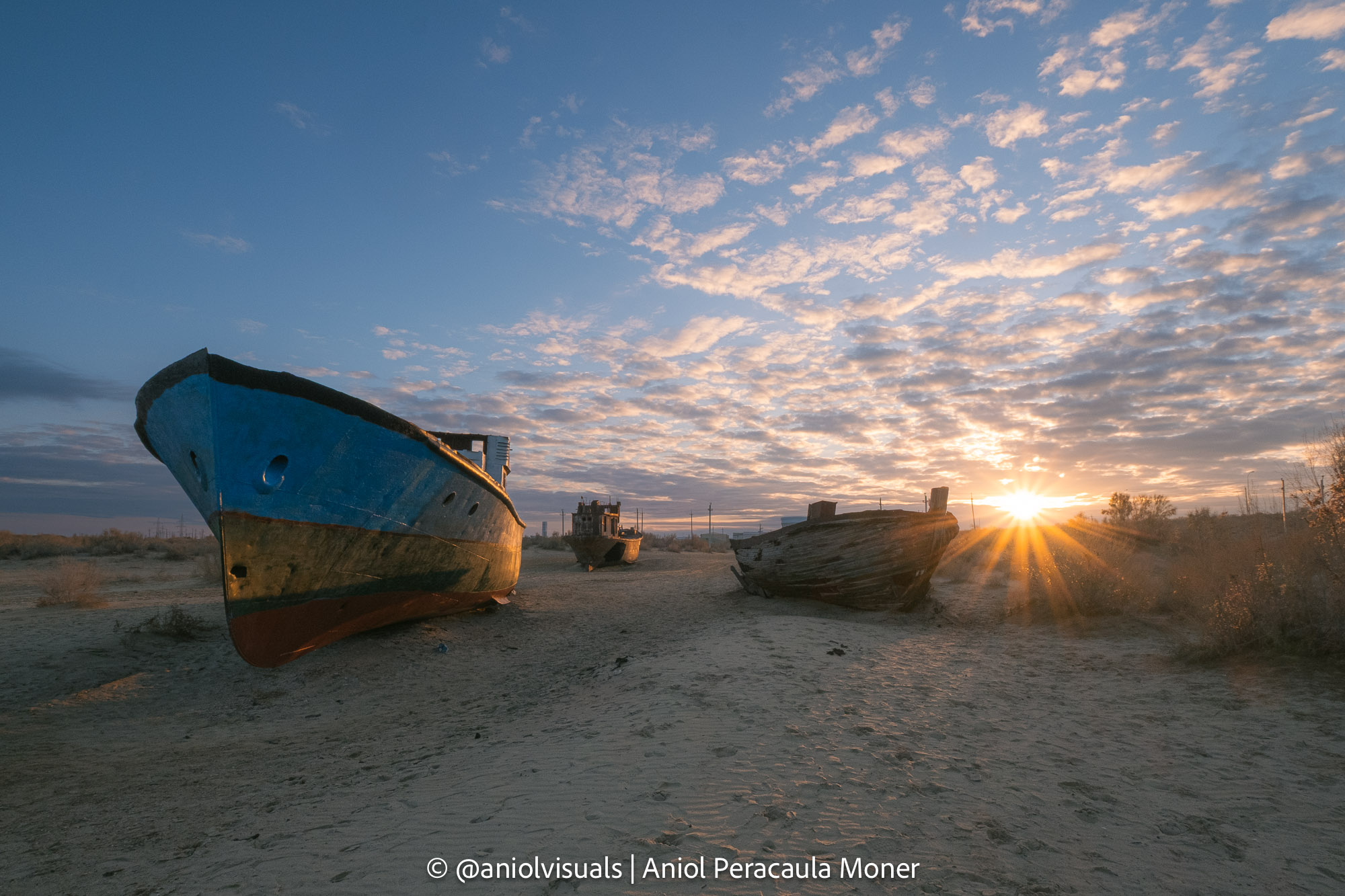
It is located in the village of Moynaq (see below), and it’s one of the most unique Uzbekistan photography spots. A set of abandoned ships, some of them showing clear signs of rust and structural damage, that, when the sea disappeared, stayed where the Moynaq port used to be.
A sunset by the now desert, once a sea, is an experience I recommend to anyone reading this.
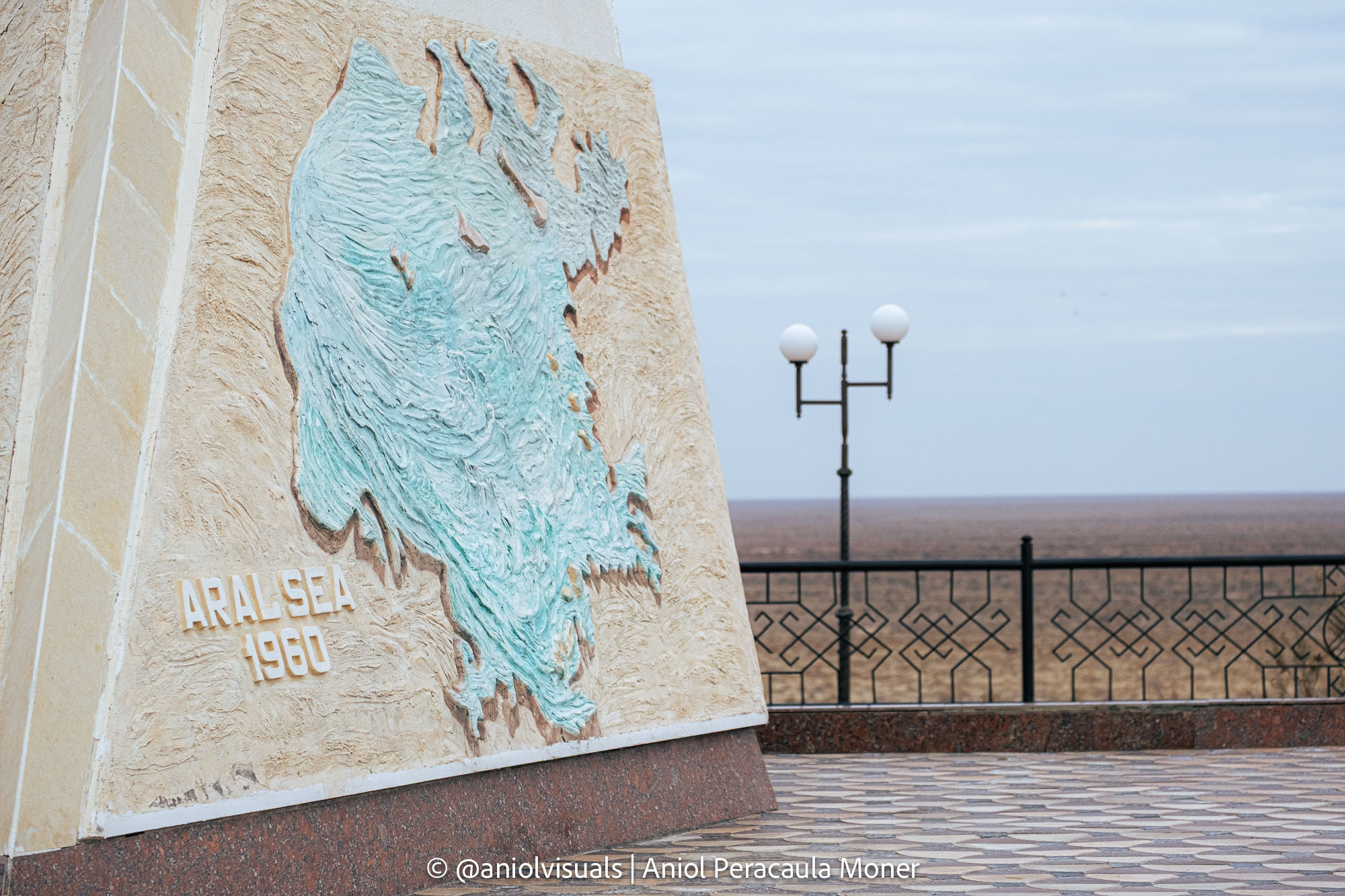
Aral Sea viewpoint and memorial
If you visit the ship cemetery, walk the set of stairs that’s next to it and get to the viewpoint and memorial. This is a surreal spot. It used to be a cliff overlooking the ocean, and from there you see an empty desert that used to be the sea. If you look around, you’ll see the Moynaq houses in the distance, following an imaginary coastal line.
Photos from the viewpoint are quite unique. Without the right light conditions, it can be a bit difficult to take good photos, but it’s worth getting there.
Moynaq: the village and its daily life
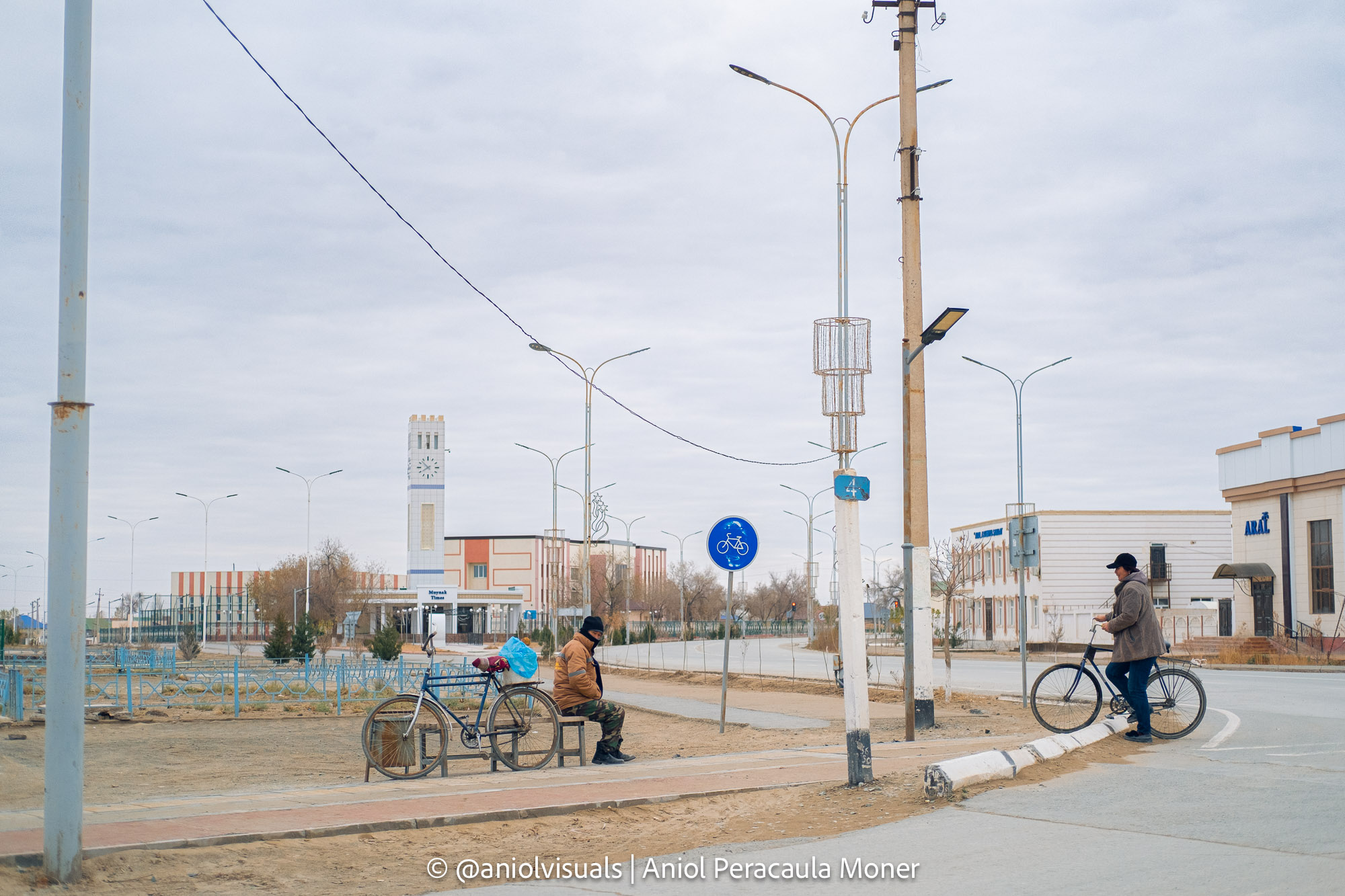
Moynaq is the village where the Aral Sea used to be. Nowadays, it’s a village in the middle of the desert. The change that this village has experienced in the last 30-40 years has been enormous, and it has left a huge toll on its economy and social life.
Thus, it’s a unique Uzbekistan photography spot. I visited in the fall months, so it was already cold, and I felt it matched well with the vibe of the village. I took quite a few unique photos, and I recommend walking around a bit if you have the time when visiting the Aral Sea.
Nukus photography spots
The last section on the Uzbekistan photography spots guide is about Nukus. Nukus is outside the main tourist path in Uzbekistan. You will only go there if you are planning on visiting the Aral Sea. But if you manage to get there and have a few hours to spare, please, do not miss the last spot on this list. I also talk about it in the Aral Sea guide!
Mizdakhan Necropolis
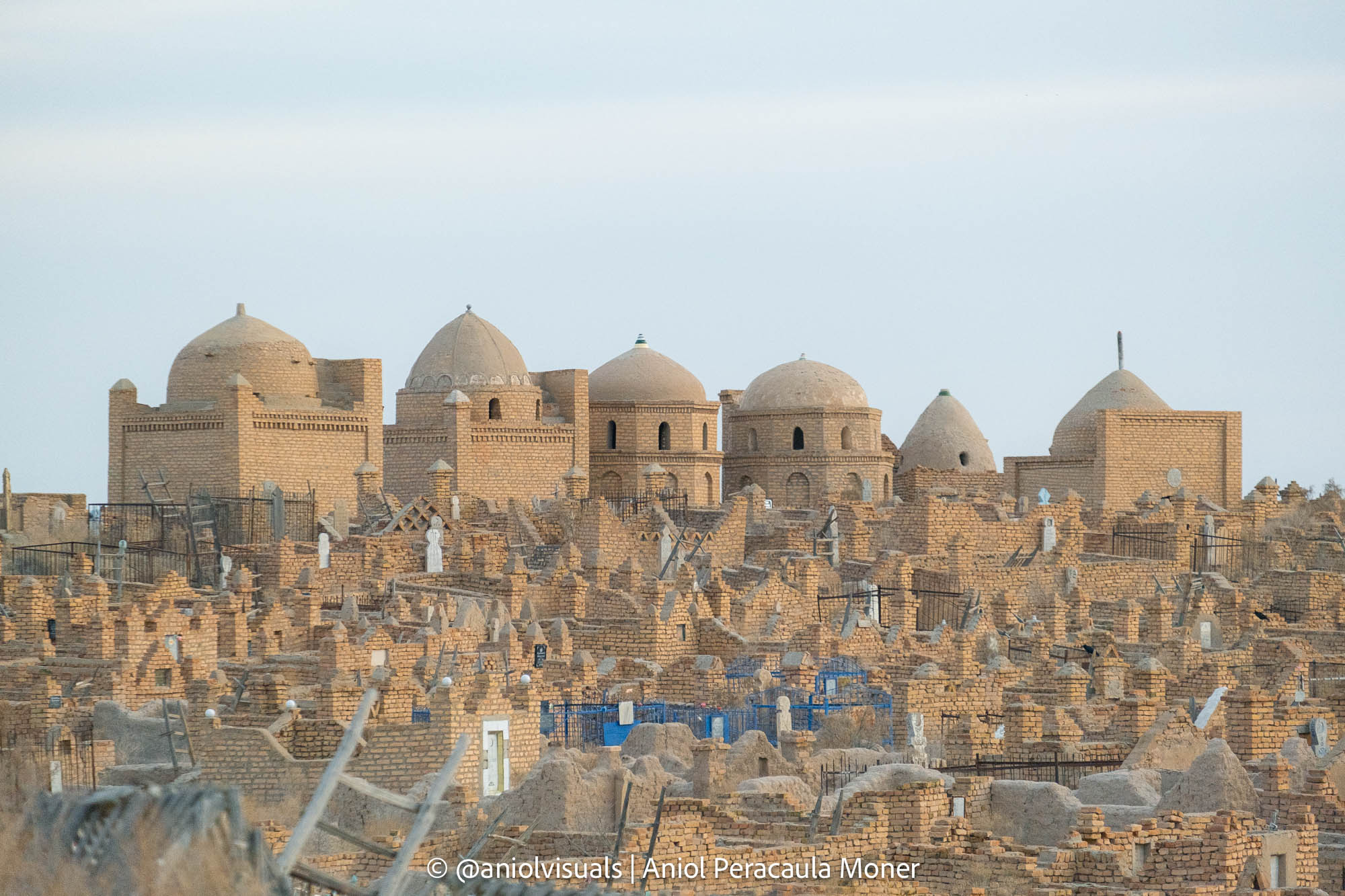
This is the last spot of the Uzbekistan photography spots guide. Some people leave the less relevant or beautiful spots for last. Not here. The Mizdakhan Necropolis is a place that seems taken from an Indiana Jones movie. An old necropolis, with hundreds of thousands of tombs, and at some points, wherever you look, all you can see are mausoleums and tombs.
Moreover, there are a few selected mausoleums that are open to the general public. These are amazing and quite well preserved. I strongly recommend Mizdakhan Necropolis if you want to visit a non-touristy place, but with a ton of history. The reason why we need to still invest in understanding where we come from, that there are many open questions about the history and origins of the necropolis.
Getting there is a bit tricky, but I explain all you need to know about it on my Aral Sea photography guide.
This concludes my Uzbekistan photography spots guide. If you are planning a trip to Uzbekistan and want one-on-one counsel on how to best organise your trip, schedule a call with me using the link below. For more travel and photography inspiration, follow me on Instagram! @aniolvisuals.
10 best Samarkand photography spots: a complete guide
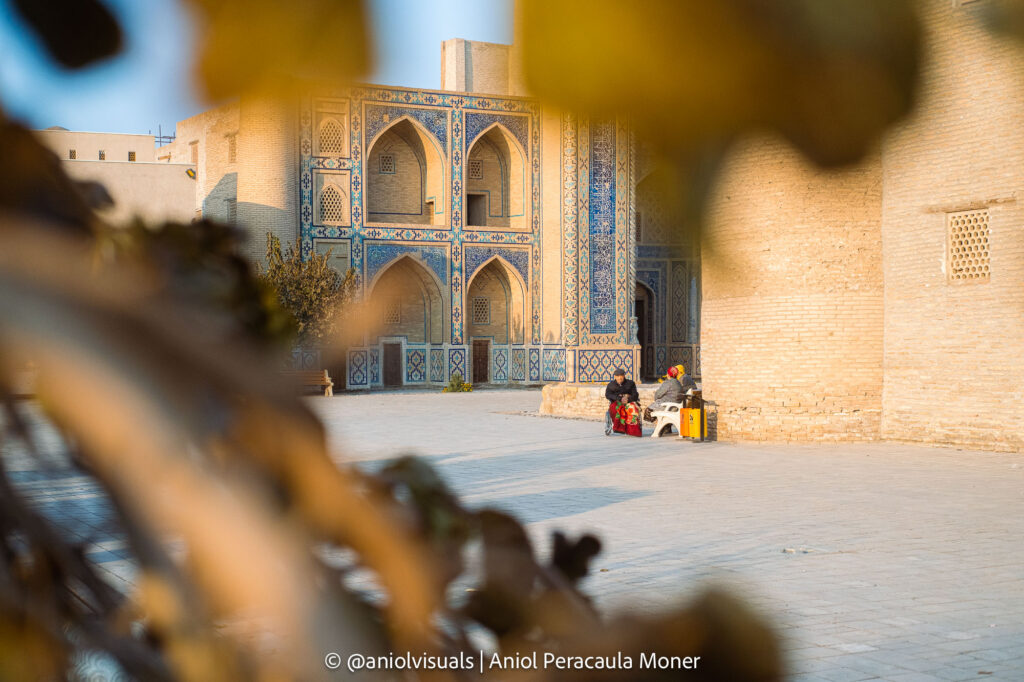
18 best Bukhara photography spots: a complete guide
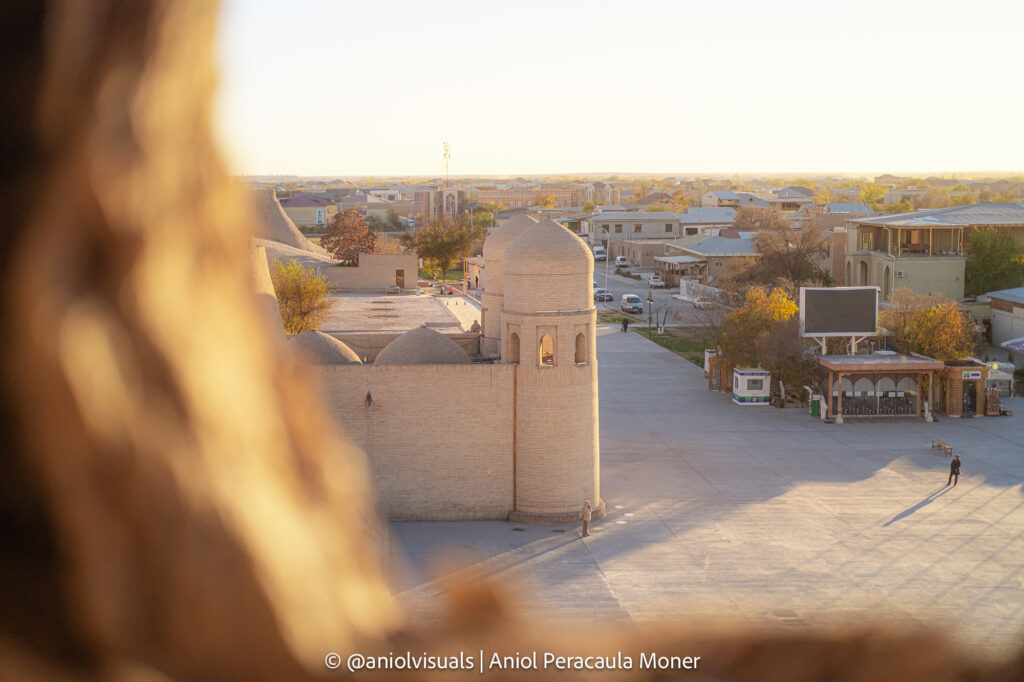
Best Khiva photography spots and photo opportunities: a complete guide
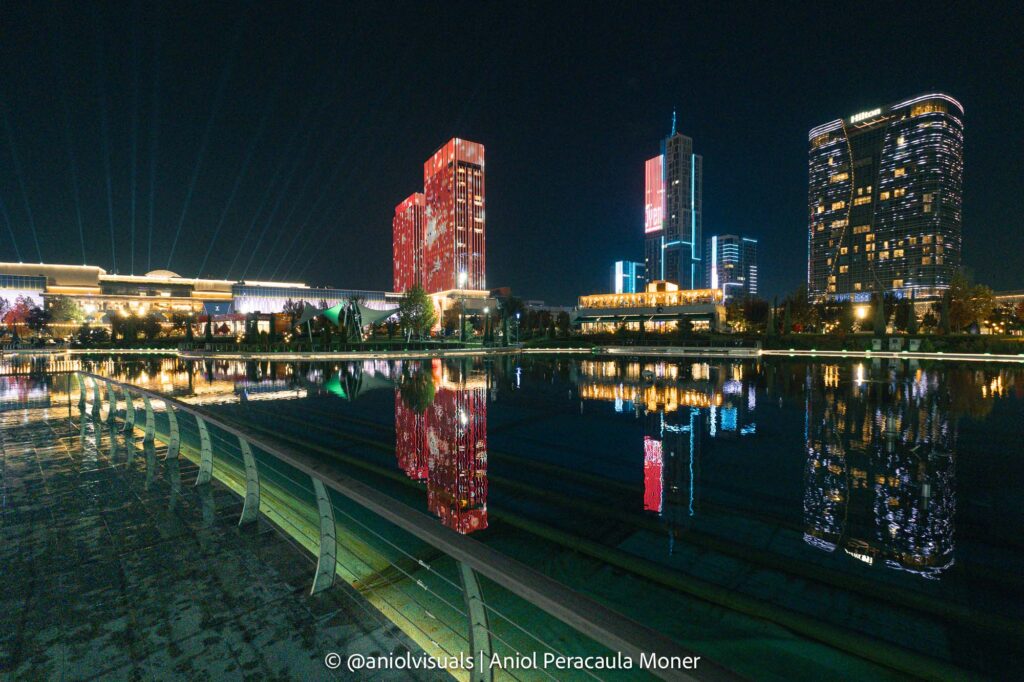
10 best Tashkent photography spots: an ultimate travel guide
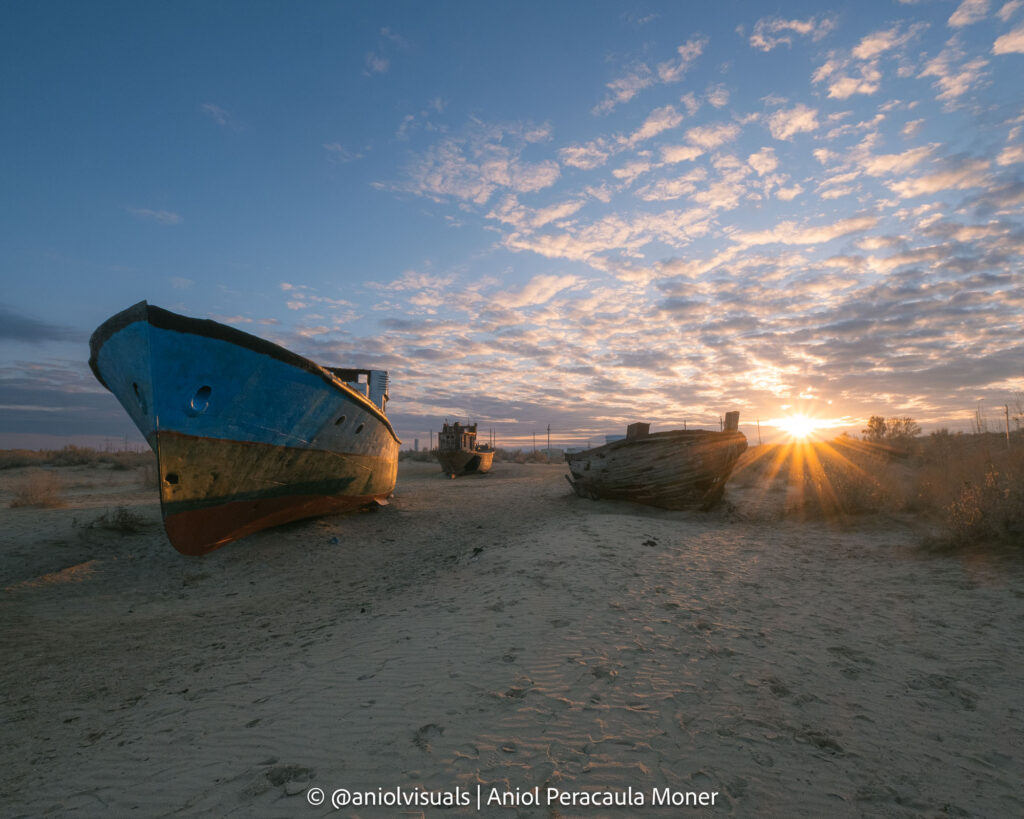
Moynaq and Aral sea photography spots: a complete guide