Discover Asia’s richest country with this Singapore travel photography guide. Find out what to photograph and how to get off the beaten path and take unique photos.
Singapore is one of the most common layover destinations in Asia. With the most laureated airport in the world, millions of tourists visit Singapore before accessing other popular destinations in Southeast Asia. Being a very small country, it is common to have 24 or 48-hour layovers in Singapore, with enough time to see some of the most photographed places in Asia. Singapore is an amazing place to photograph, despite being the most expensive country in Asia. In this Singapore photography guide, you will find some of my favourite photo spots, areas and some hidden gems I found during my trip to Singapore.
How to photograph Singapore: practical tips
Before deep-diving into the Singapore photography spots and areas, this is some practical information about Singapore and photographing Singapore I would have appreciated reading before getting there.
Is it worth it to visit and photograph Singapore?
At the end of this article, you will see I have a love-hate relationship with Singapore. It is an amazing country, with some sights I haven’t seen anywhere else in the world. I took amazing photos there, and I can’t say I don’t recommend it. However,… Singapore doesn’t feel very authentic. I had plenty of time to explore the city, more than what most people recommend, and still, I think I did not find the real Singapore. I left the city centre and explored some less common areas, but I felt that it wasn’t real enough.
Be prepared for a city that feels and acts like a metropolis but with most of its attractions built for tourists and not (as in some of its neighbouring countries), as part of their heritage. Of course, it has to do with the fact that it is a young country. This is not meant to discourage you from visiting Singapore, but if you expect to find a city like Tokyo or Taipei, with secret alleys and unseen photography opportunities, this is not what you will find in Singapore.
How many days do I need to photograph Singapore?
This is a great question. Singapore is expensive, especially when it comes to accommodation. I think this really depends on what you want to see and when. Marina Bay at night is a must, and a whole day is not enough to cover some of the diverse areas of the city. Moreover, Singapore has a great nightlife, so if you are into it, don’t miss it.
Considering this, 24-48 hours should be enough to take some great photos of Singapore. Yet, I spent 4 full days in the country, plus one morning at the airport. I am sure you have seen some images of it, but it is a must for any photographer.
Where should I stay in Singapore as a photographer?
As I mentioned above, Singapore is expensive, so this will depend on your budget. Even shared hostels are more expensive than 4-star hotel rooms in other Southeast Asia countries.
Try mapping all the spots you are interested in, and find a metro station that serves most of them. Walking is a must, but the weather can make it challenging. It is hot and humid all year round in Singapore. I stayed near Boat Quay, which was close to Marina Bay, but also Singapore Chinatown, one of the areas I was interested in the most.
What gear do I need to photograph Singapore?
This is for me, the most important aspect of this set of tips, and a must in any Singapore photography guide. Singapore is humid and hot, and I don’t recommend carrying extra gear. However, unfortunately, I can say I used all the lenses I brought. Unlike in other cities, where I looked at the statistics and found out that I only used the 35mm, here I can say that there are three types of lenses you need: wide-angle, portrait and zoom.
It’s quite clear why you need a wide-angle lens. The architecture of the city, with massive structures, is asking for it. For the portrait (something between 35-50mm), if you want to capture the street life of the city, you will make good use of it. And given that it is a big and busy city, I used the zoom lenses a lot for street photography. Either for capturing details or removing distracting elements from some scenes, it was quite useful.
What I would recommend, though, is to avoid carrying a bag with multiple lenses. It is what I did, and it was awful. I usually don’t mind the extra weight. In Singapore, though, I remember the few times I left without my camera bag as the best moments of the trip.
How photography-friendly is Singapore?
I can’t answer this question if you bring a tripod, as I was travelling as light as possible. However, Singapore is a big city, and people are used to tourists taking photos. Even in some more unusual areas, no one even looked at me while I was framing a shot or waiting for the right moment. As usual, though, make sure to respect the people and the city.
Singapore Changi Airport photography guide
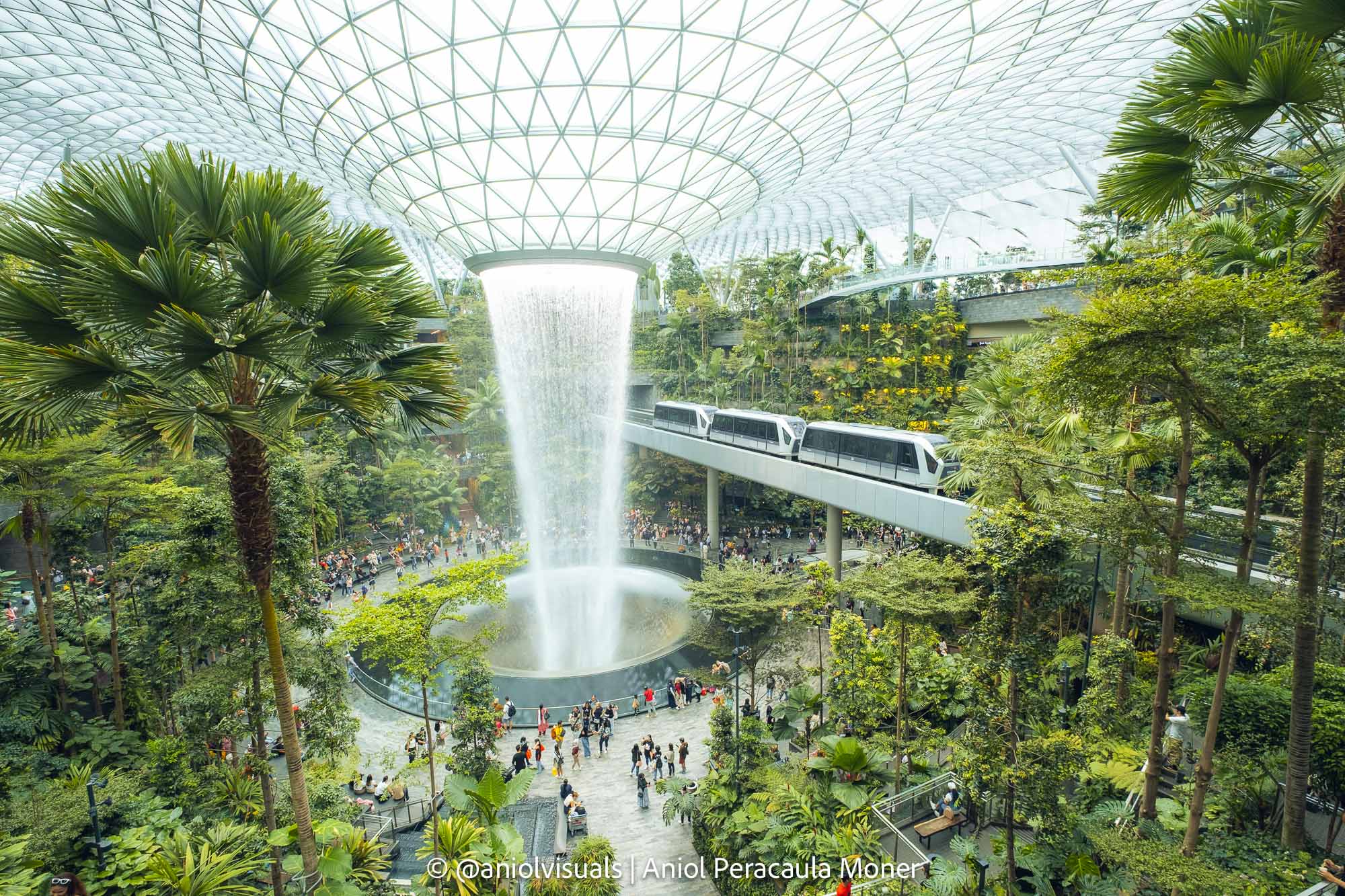
It is unusual for me to start with my favourite spot, but I have to say what I liked the most about Singapore was its airport. Chances are that you will fly to and from there, unless you cross into Malaysia by land. Singapore’s airport is worldwide famous for the Jewel, the giant indoor waterfall. The truth is, the airport has some other interesting spots, but I will mainly focus on the Jewel.
VERY IMPORTANT: The jewel is inside the airport, but not after the boarding pass check. You can get there without a boarding pass as a morning trip from the city if you want. Don’t forget to check it at some point and save some time for it, as it is quite big and offers great photo opportunities.
The Jewel is free to visit, but some of its best photo spots are in the Canopy Park and the Mastercard Canopy Bridge. It is a bit overpriced, but if you want fewer tourists, different photo opportunities, and have enough time, it’s worth checking it.
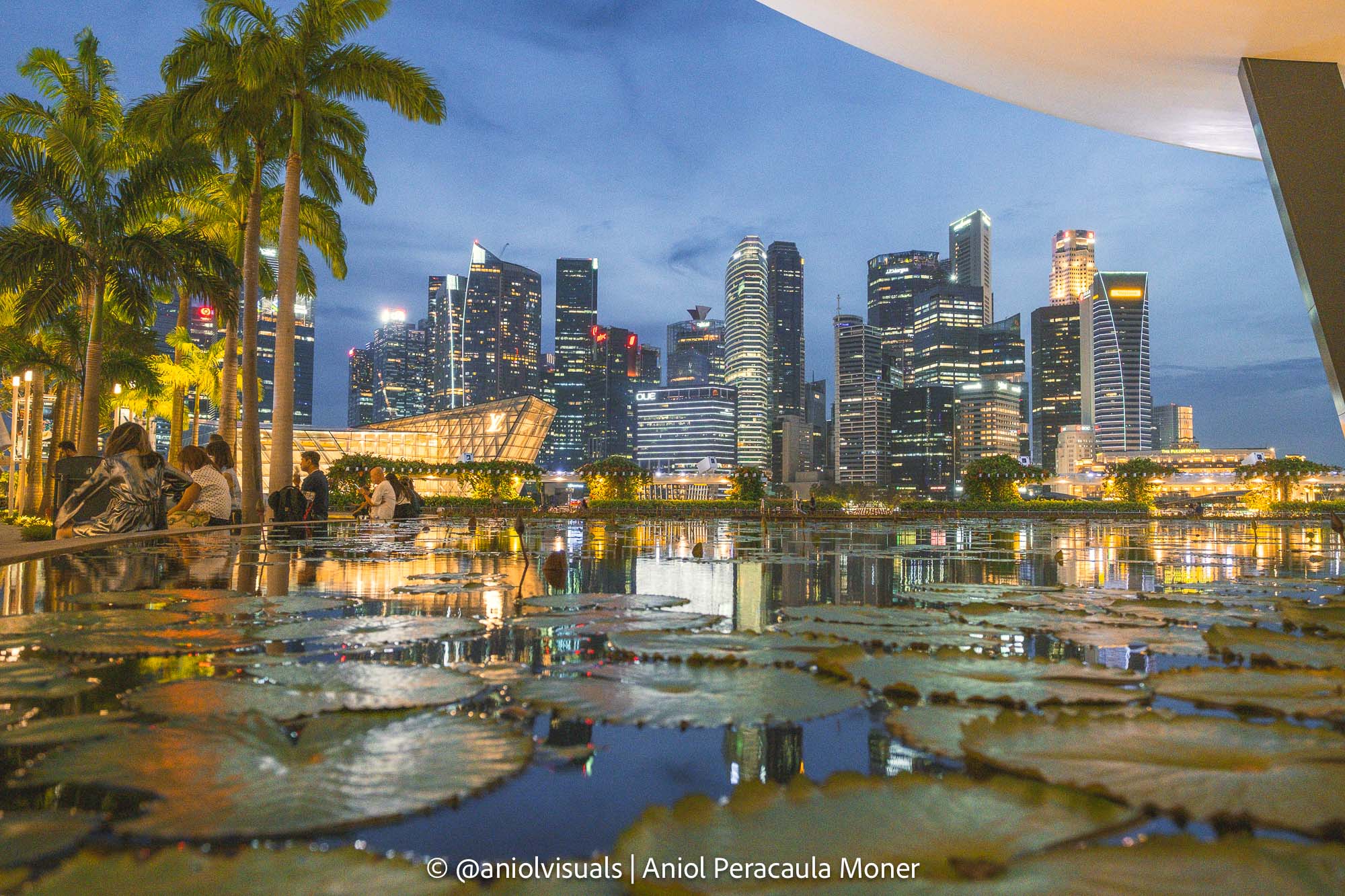
Marina Bay photography guide: spots and best areas
Marina Bay is THE most well-known area of Singapore. The unique Marina Bay Sands hotel can be seen from almost every point of this sort of lake (although it has direct access to the sea).
Marina Bay is too big and has many photo opportunities to talk about it in a single point, so I will divide it into 5 areas.
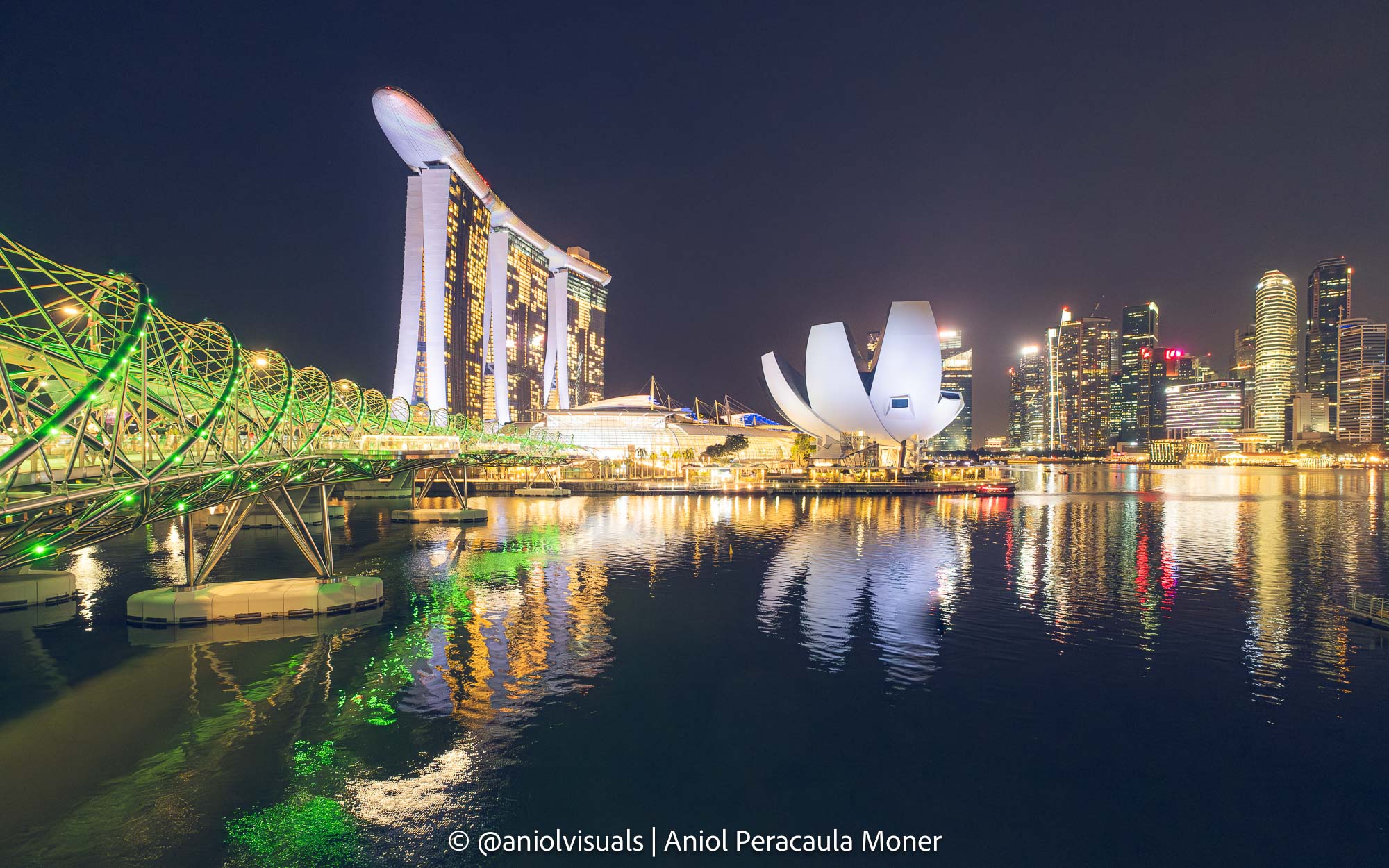
Marina Bay Sands and the Helix Bridge
This is the most commonly taken photo of the area. Almost every night, there is a laser show at blue hour/early night, and hordes of tourists gather to admire it.
Taking photos of the Marina Bay Sands Hotel and the Helix Bridge is very easy. Just cross the bridge, and either in the middle of it or after it, take the photo. Of course, this is a photo that everyone has, but to be honest, it is a great view.
Gardens by the Bay
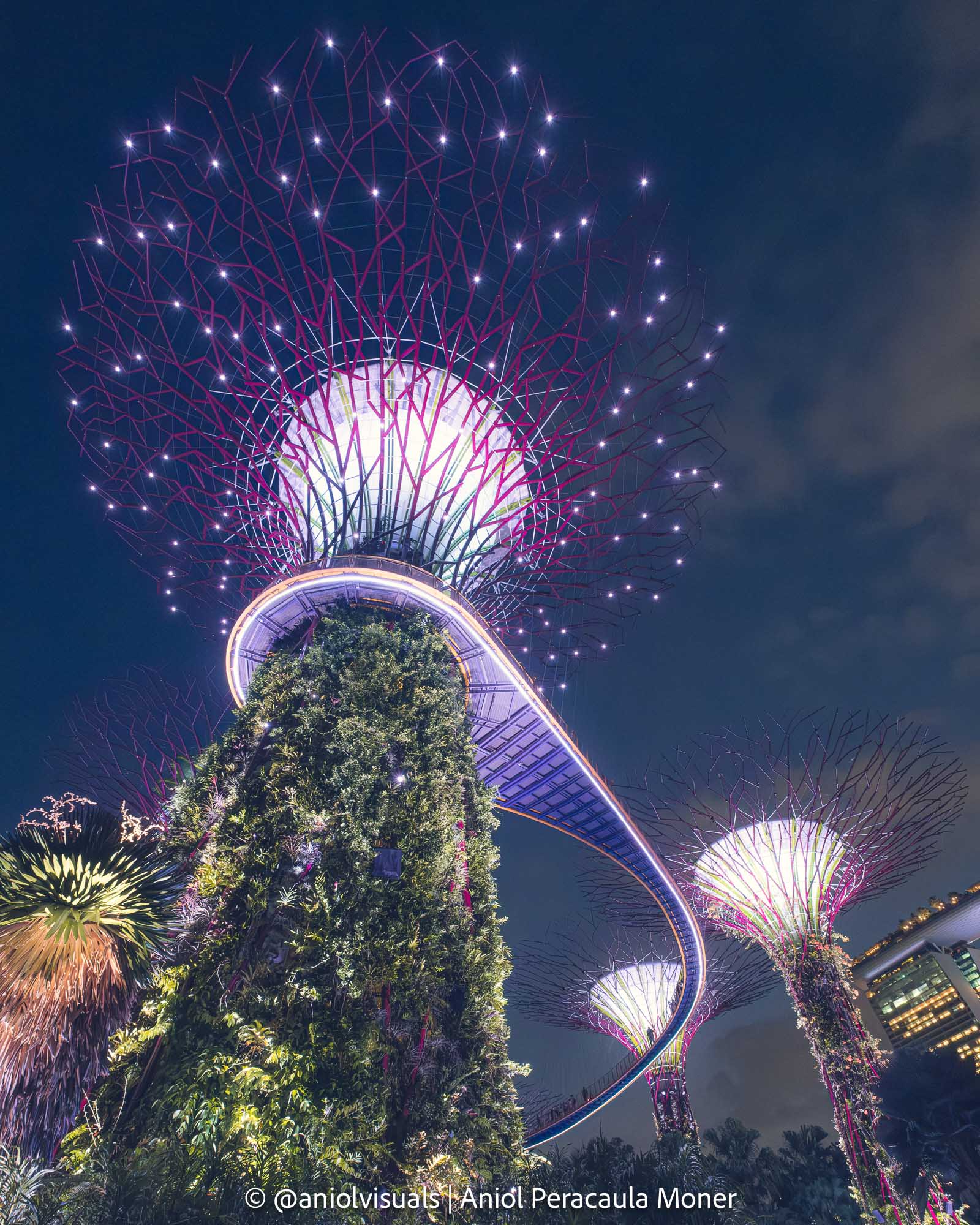
The Gardens by the Bay are another of the most visited areas of Marina Bay. Without any doubt, the best moment to visit them is at night, when the lights and music show happens. It is not easy to take good or unique photos. I struggled a lot with the tree structures, as it was difficult to get great compositions. The trees overlap with others, there are a lot of people,… I would recommend being there beforehand, testing one or multiple locations and then shooting.
The photos below was taken handheld, but it is a place where having a tripod would help.
Art Science Museum
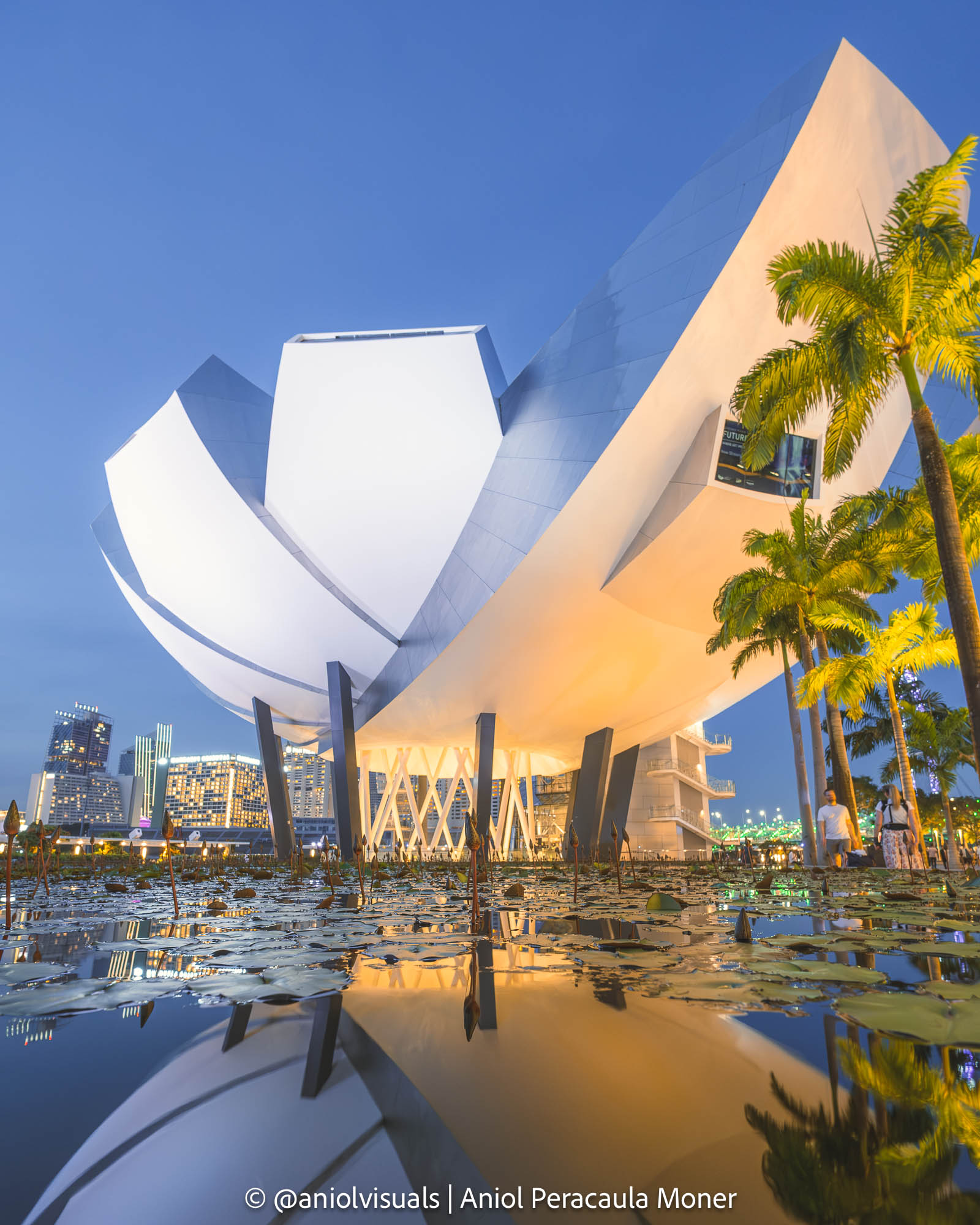
I could have included it in the Marina Bay Sands and Helix Bridge section, but I believe it deserves its own section in this Singapore photography guide. This was one of the buildings I enjoyed taking photos of the most. Sometimes overlooked, as it is next to the Marina Bay Sands, the Art and Science Museum is a fantastic Singapore photography spot.
Unlike the other buildings, it is not so massive that you need to get far away to take nice photos, which means you can be more creative with your photos. As with all previous spots, it is after sunset when the city is at its best.
Cloud Forest and Flower Dome
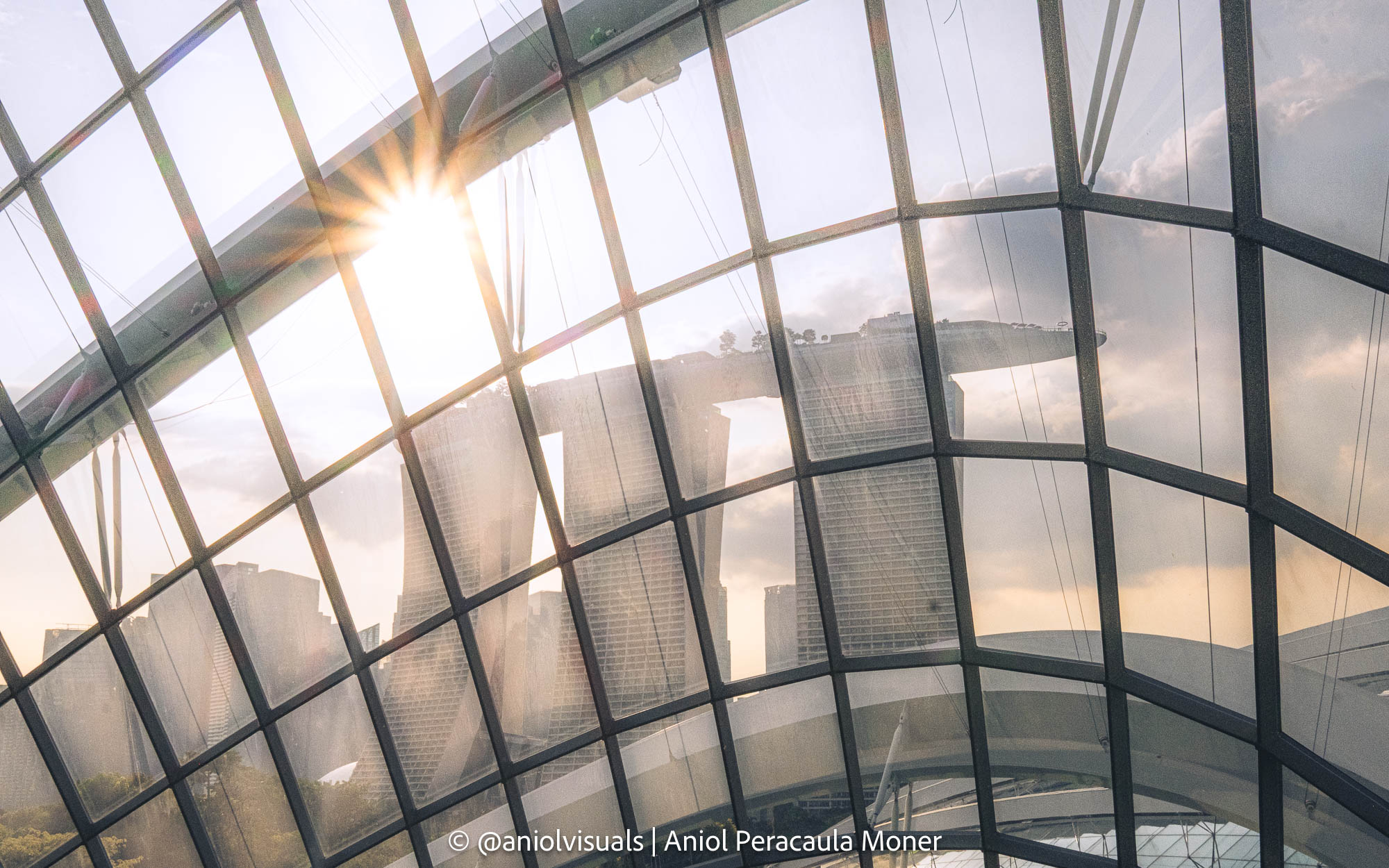
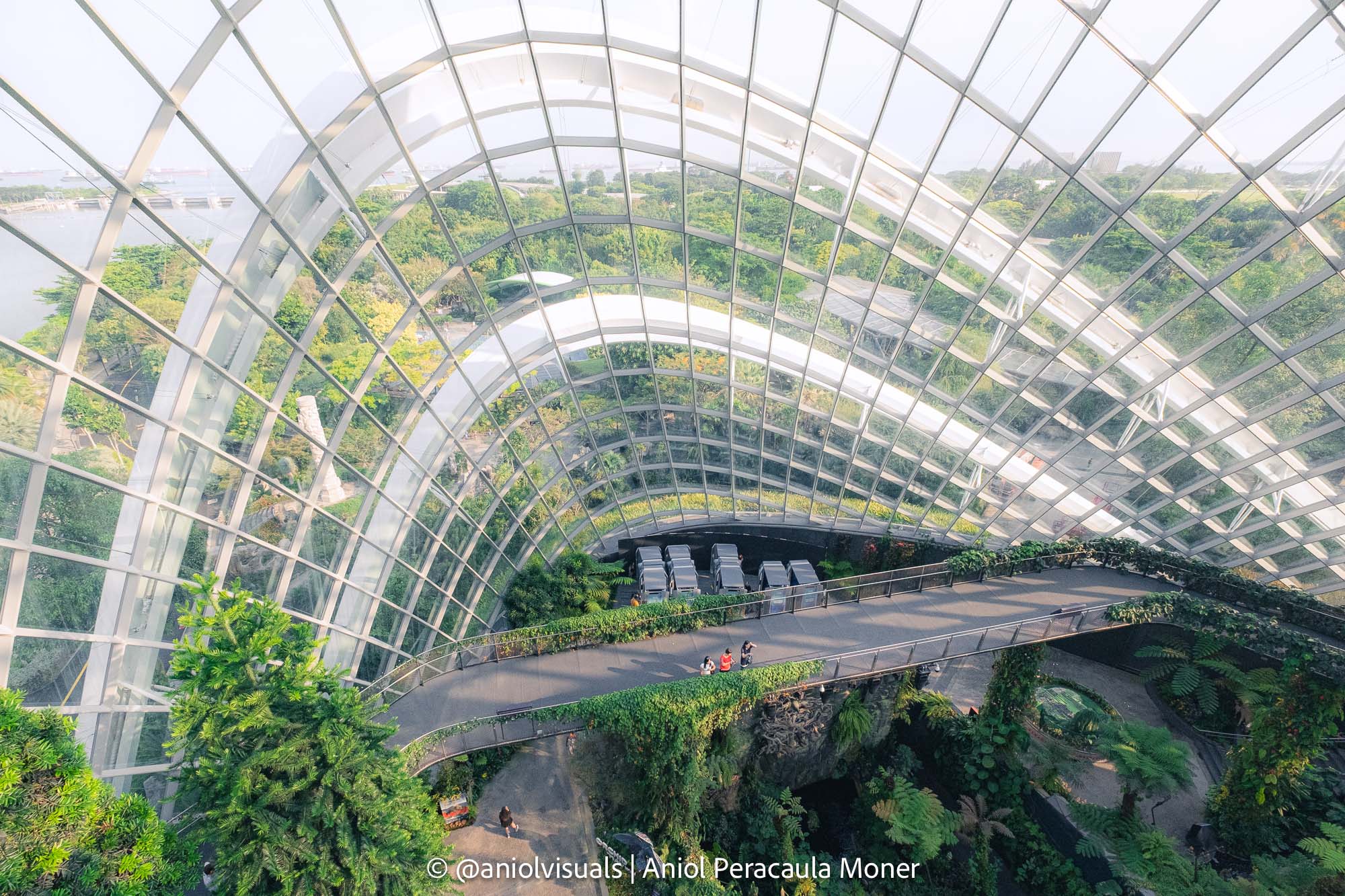
It’s probably the most expensive ticket I’ve paid for in Singapore. And the Cloud Forest was 100% worth it. The Cloud Forest and Flower Dome are two massive glass buildings with gardens inside. We are not talking about small gardens, we are talking about gardens with waterfalls, escalators, elevators, and some unique flowers.
While I 100% recommend the Cloud Forest, the Flower Dome wasn’t as interesting as its larger brother. The combined ticket is for you if you want to visit both of them, but otherwise, you can skip it. If you visit it, I would first visit the Flower Dome and then the Cloud Forest, as it is way more impressive.
Fullerton area
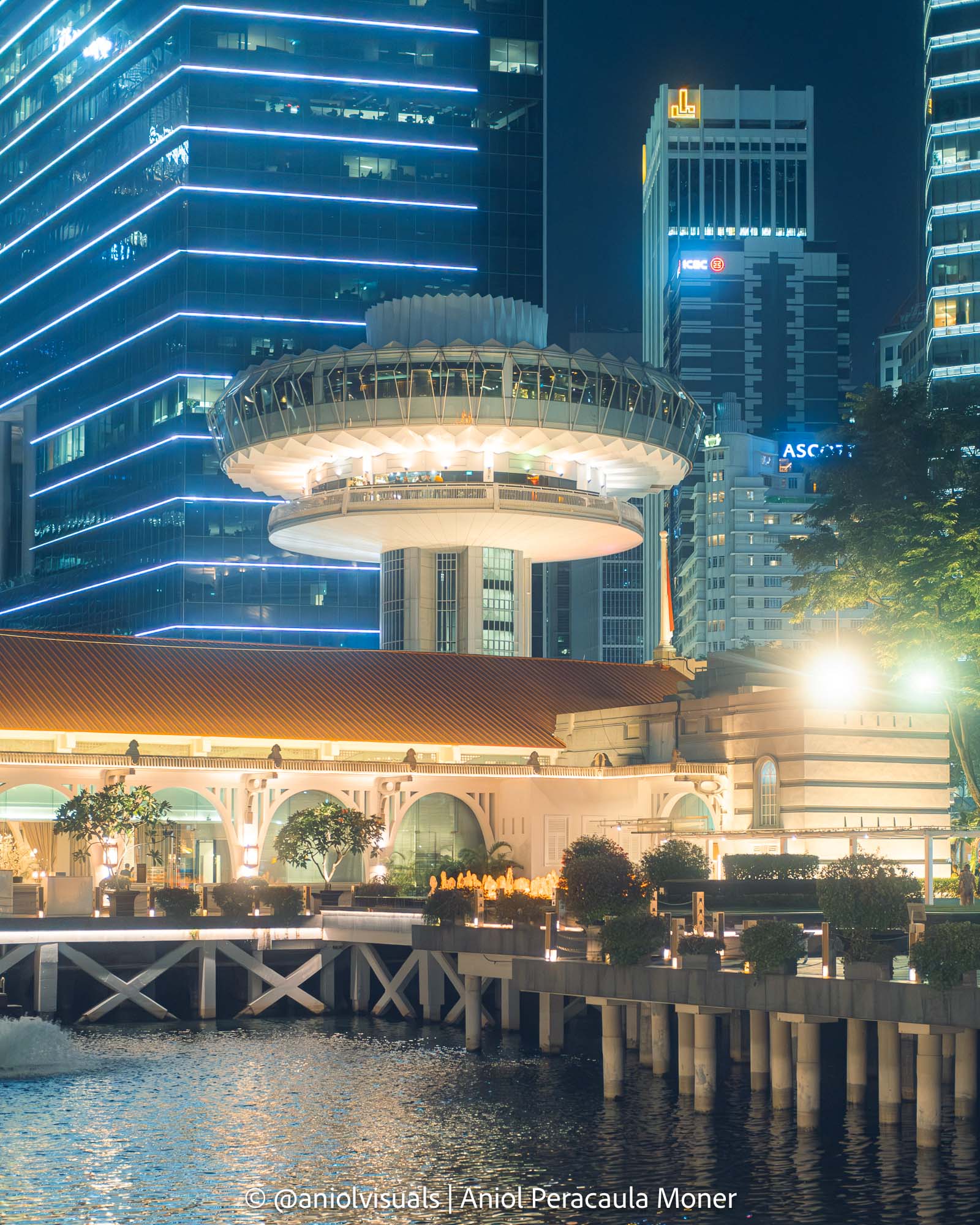
After taking photos of the main buildings of Marina Bay, I walked towards the Raffles Place metro station, and when I was getting close, I saw the Fullerton Hotel and decided to continue walking. It was a great decision, as from there you can take photos of the tallest buildings of the Singapore skyline from its feet.
Moreover, it has a different view of the bay and a couple of unique buildings, like the UFO-shaped structure you can see below.
Apple Marina Bay Sands
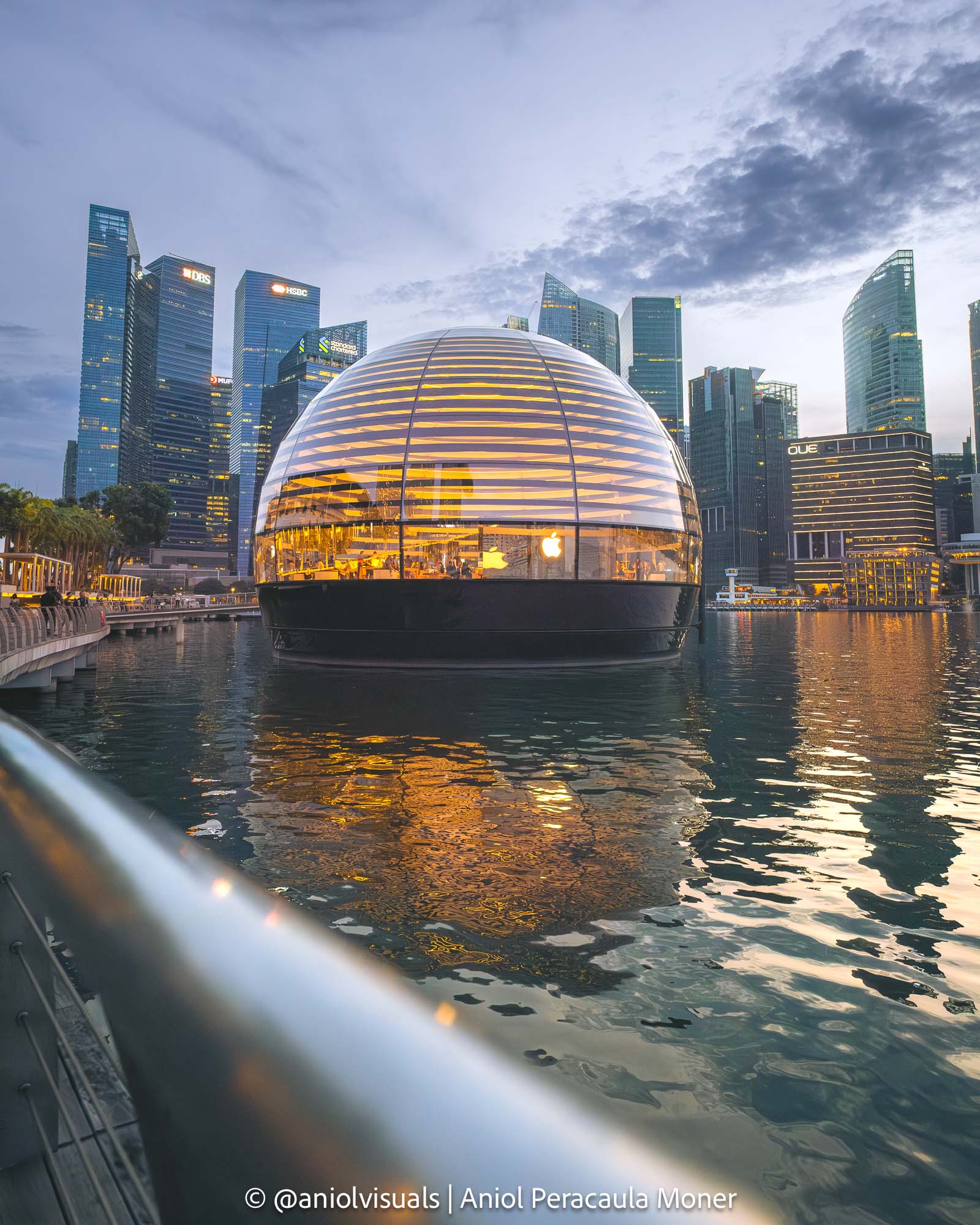
On this Singapore photography guide, I feature two spots that are Apple Stores. The first one is this one, located in front of the Marina Bay Sands Shopping mall. What makes it worth for photography is that the shop is in the water. There’s a small bridge that connects it to the land, but you can also access it underwater. The building has a really distinct circular shape, and makes for a great photo with the Singapore skyline behind.
Louis Vuitton store
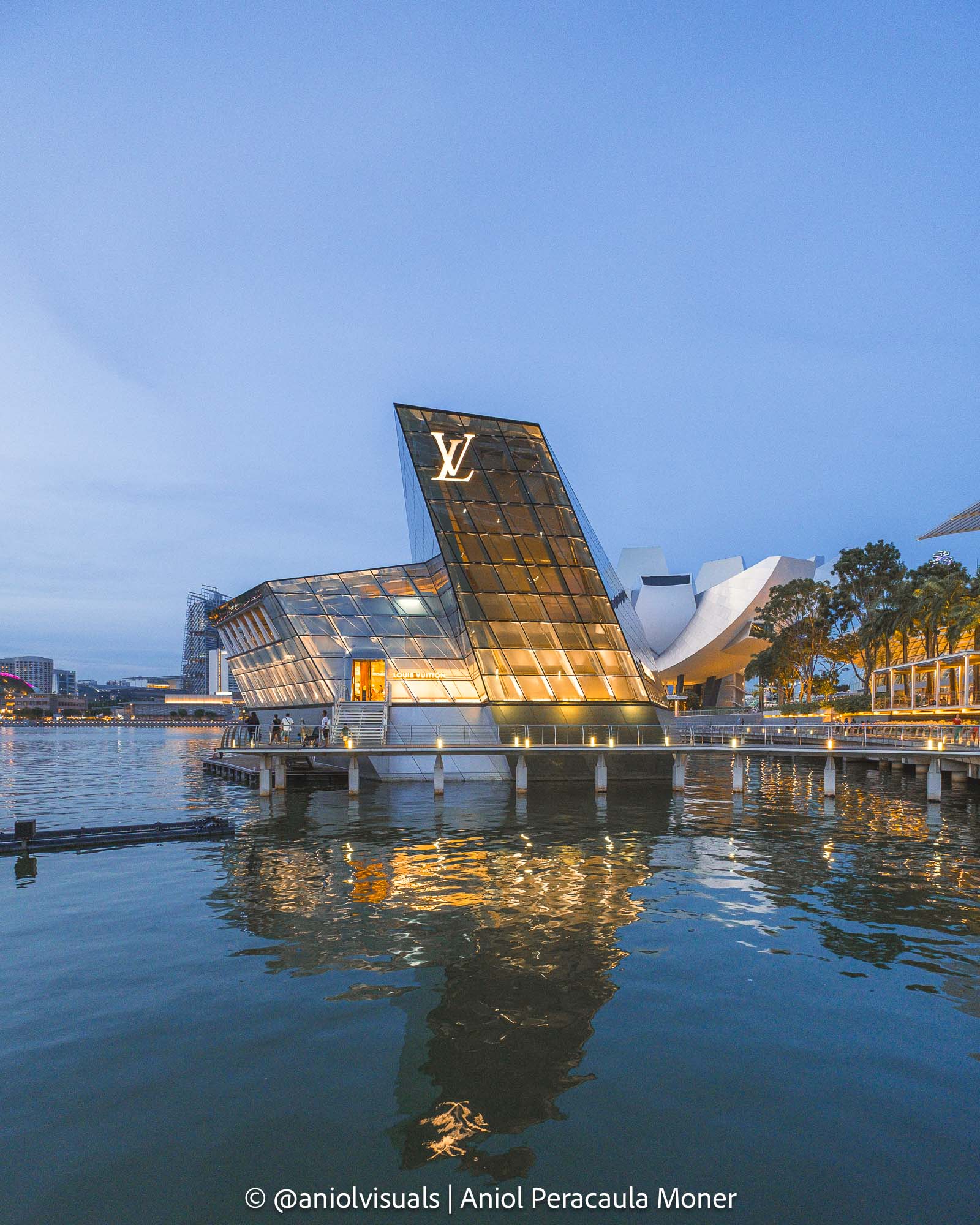
Another interesting building very close to Marina Bay Sands Apple store is the Louis Vuitton store. The building has a very characteristic shape, it almost looks like the L of LV, the logo of the brand. Like the Apple Store, it is located in the water, and it’s possible to capture it with a nice reflection. It can be difficult to isolate it from the Art Science museum, but it’s a cool spot.
Marina Bay promenade
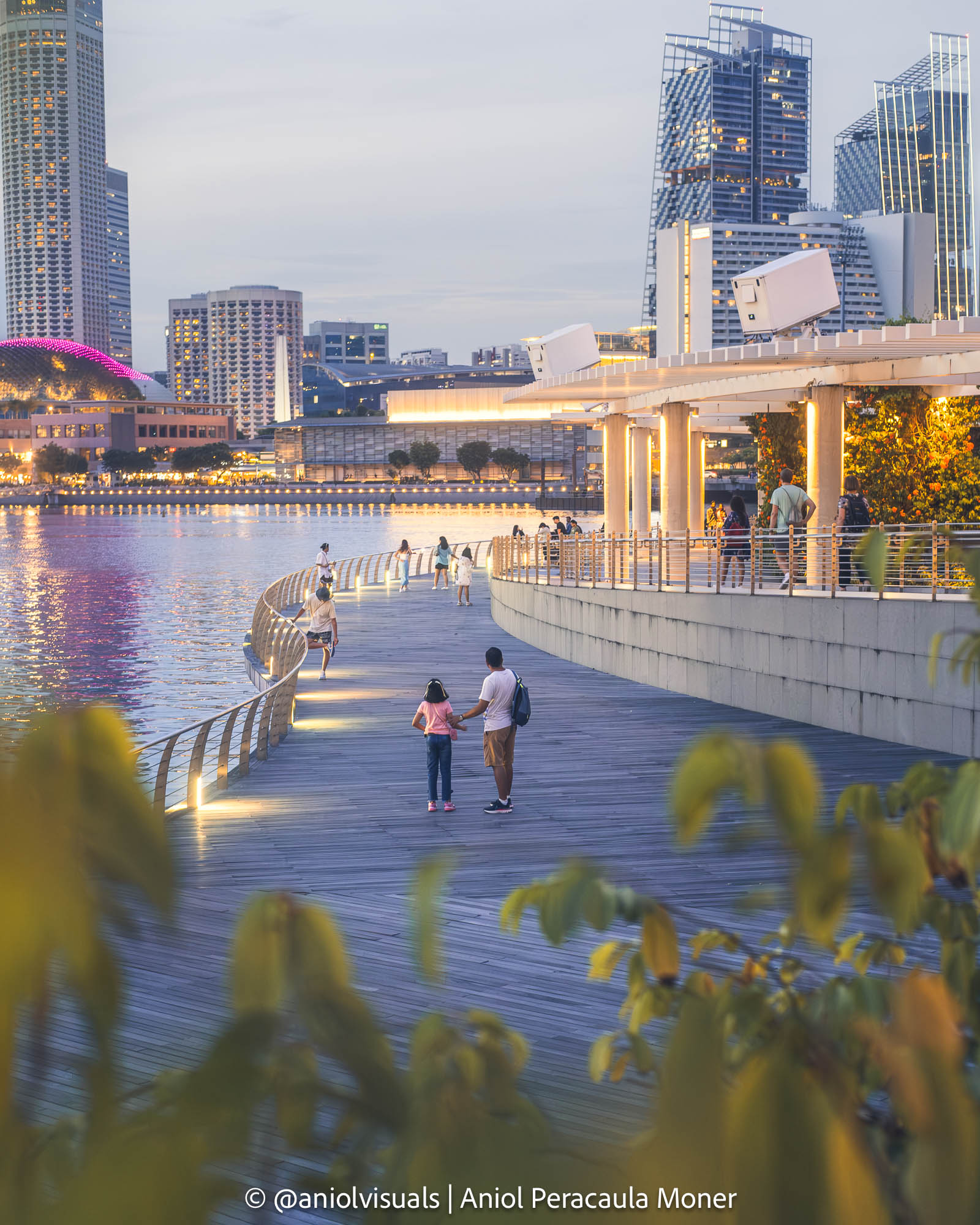
This is a more generic spot. In front of the Marina Bay Shopping mall, there’s a nice promenade, where some of the spots above are. However, the area is perfect for people watching, and for capturing some less specific images.
I enjoyed walking around the area and taking some photos of the people walking by while the sun was going down. The area is full of lights, and I recommend not focusing only on the main spots, but also on the whole area, as this is how you will be able to take different images.
Singapore shopping malls photography spots
The weather in Singapore is not its best asset. It is humid and hot, a bad combination if you ask me. Especially if you bring a backpack with all your camera gear. Thus, the city is full of shopping malls, with great temperatures, and unexpectedly, some interesting photography spots. Some of my favourite ones are:
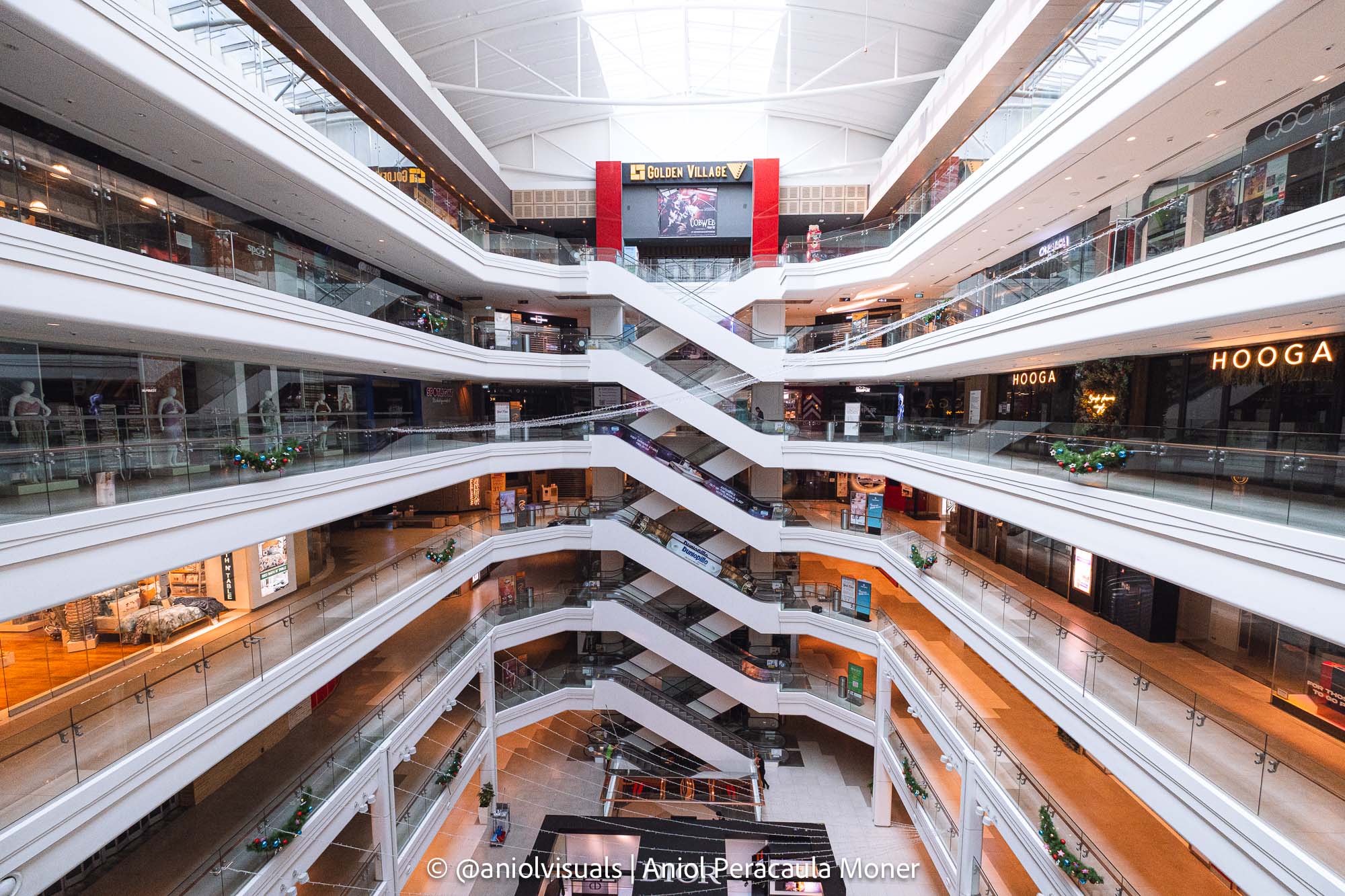
Plaza Singapura
This is a massive shopping mall (like most of the ones listed here), and what made it interesting for me was the set of escalators that ascend and descend the 6 floors of the mall. I were there pretty early in the morning, so I am not sure if it gets crazy busy at peak hours.
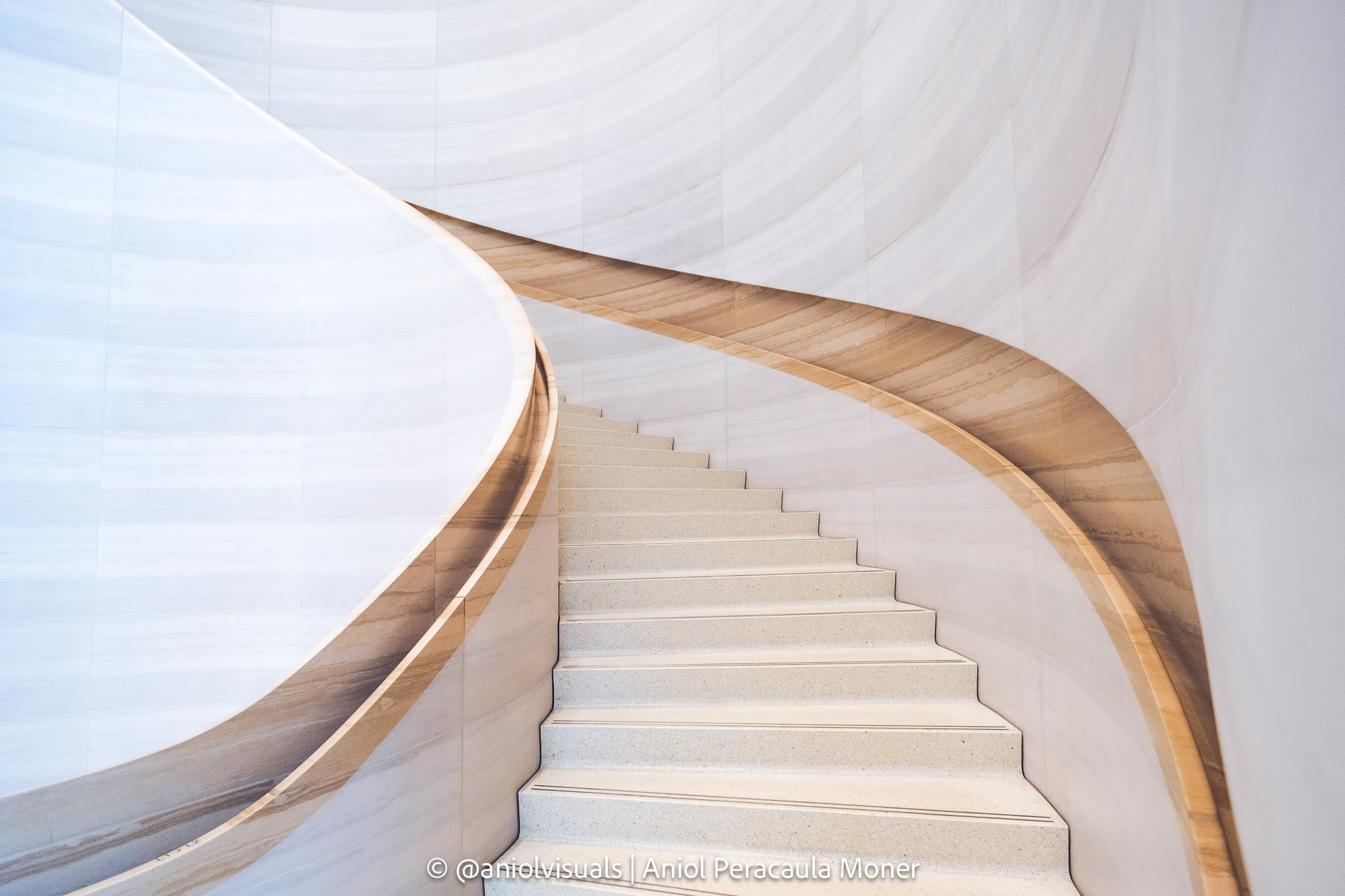
Apple Orchard Road
Yes, another Apple Store. The white and wood tones of the stairs that go to the first floor made me wish I had a model with me when I was taking the photo. Minimalistic and an unexpectedly great photography spot to include in this Singapore guide.
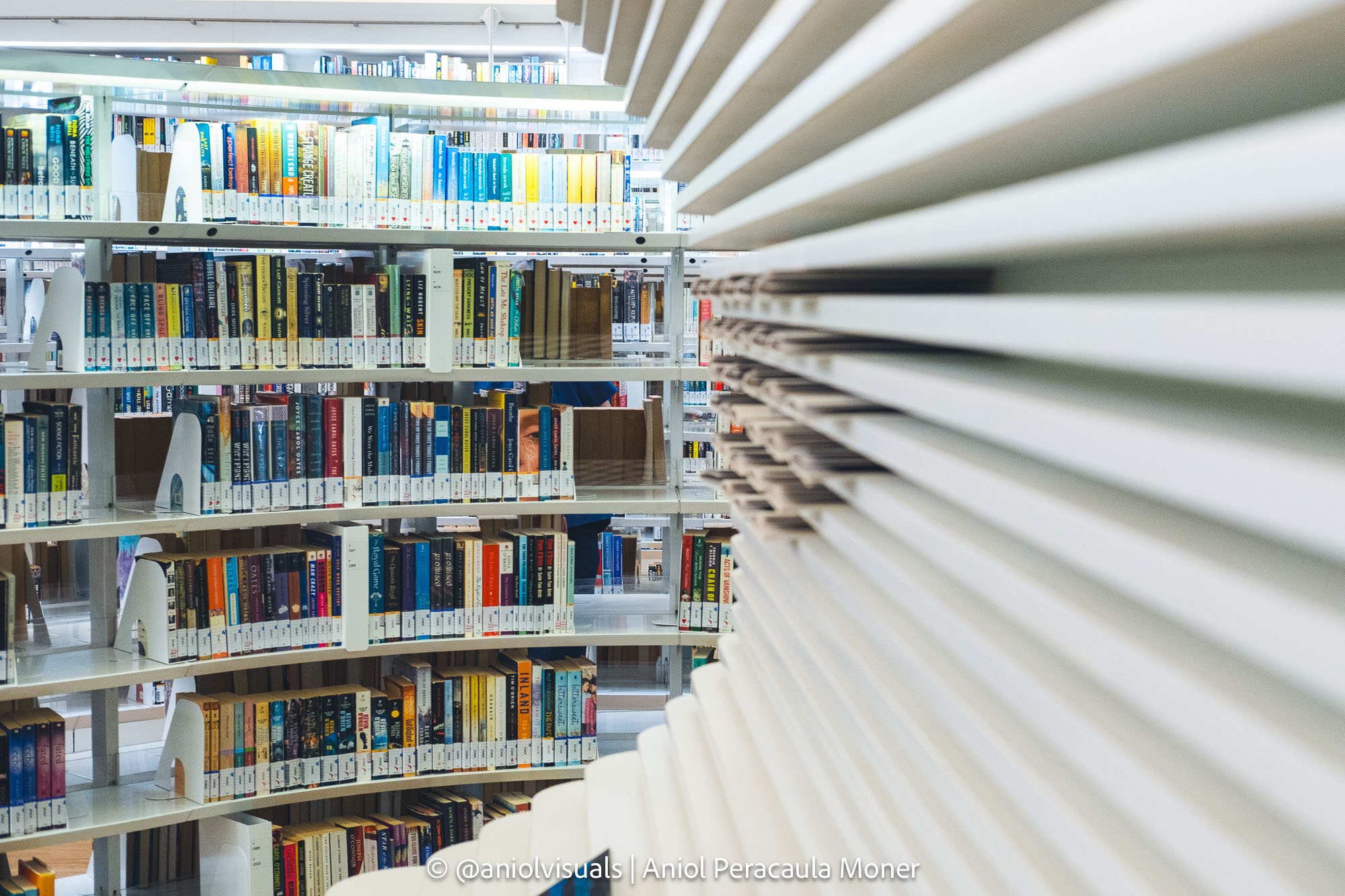
Library @Orchard
I guess this falls into the shopping malls category. However, it is a proper library, although located inside a shopping mall. What makes it special is the unique structure of the bookshelf, with its wavy shape. Of course, people go there to read, relax, and study… so be respectful if you are taking photos in the library.
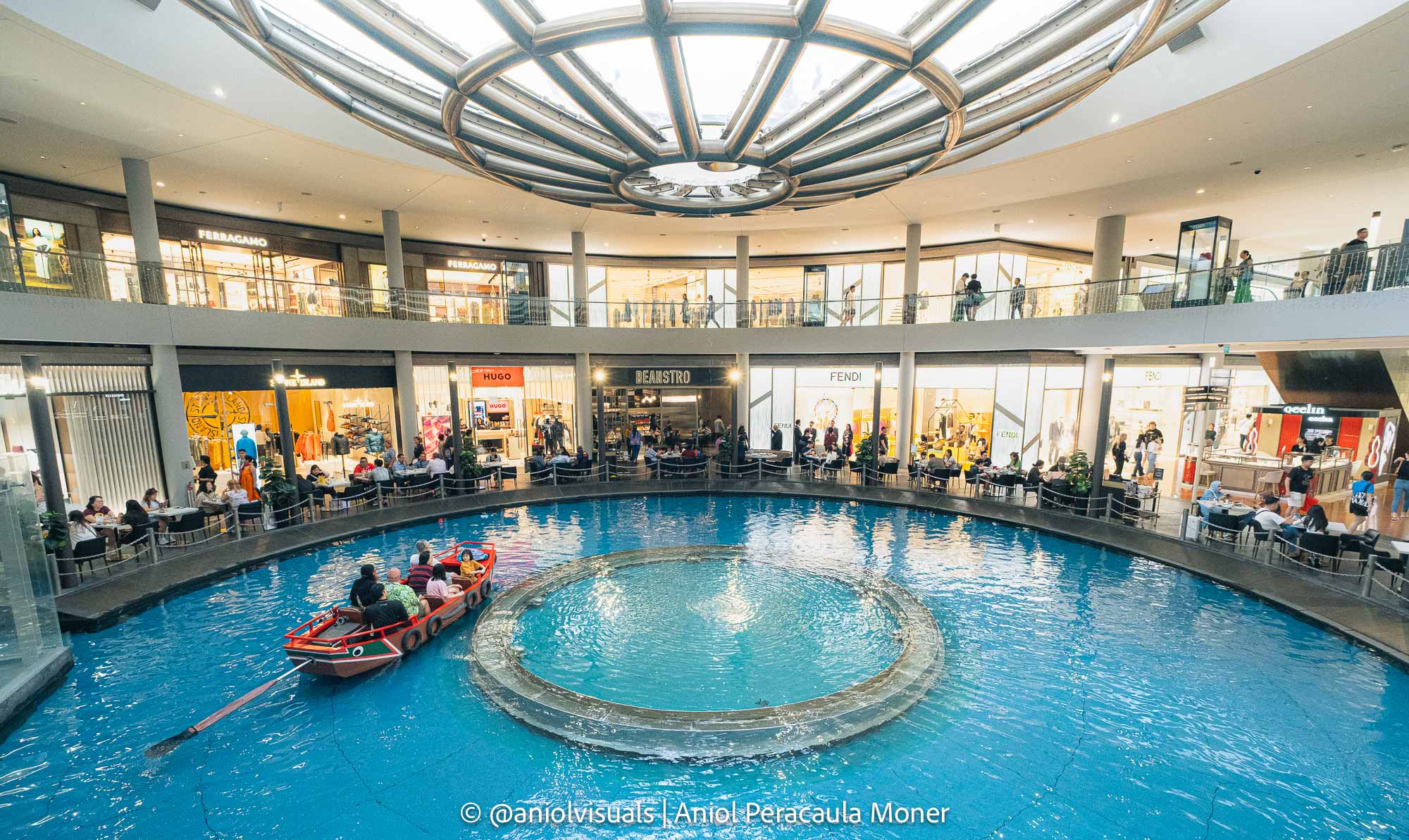
Marina Bay Sands shopping mall
The last of the malls is the one located under the hotel. What makes it unique are the gondolas and water canals that you can find inside the mall, just like the ones in Vegas.
Moreover, there is also the Rain Oculus, a swirling waterfall, that happens a few times a day.
Little India photography spots
Singapore has 3 amazing neighbours or areas for street photography, and the 3 of them are listed as spots in this guide. They are not listed in any specific order, but I do have a favourite one.
Little India, as its name indicates, is one of the Indian neighbourhoods of Singapore. Singapore is a mix of cultures, as it is a very young country. In Little India, besides great food, you can also take some photos that, at first glance, no one would think were taken in Singapore.
It’s one of the most chaotic areas of the centre of Singapore, and I enjoyed getting lost in the little alleys, which were also very photogenic. There are some market or street shopping areas that can also make for great photos.
I can’t say an exact photography spot, I just recommend spending some time in the area and maybe having lunch there. After visiting it at daytime and nighttime, I think it’s not the best place to take photos at night in Singapore. If your time is limited, Marina Bay or Chinatown might be better places for some night street photography.
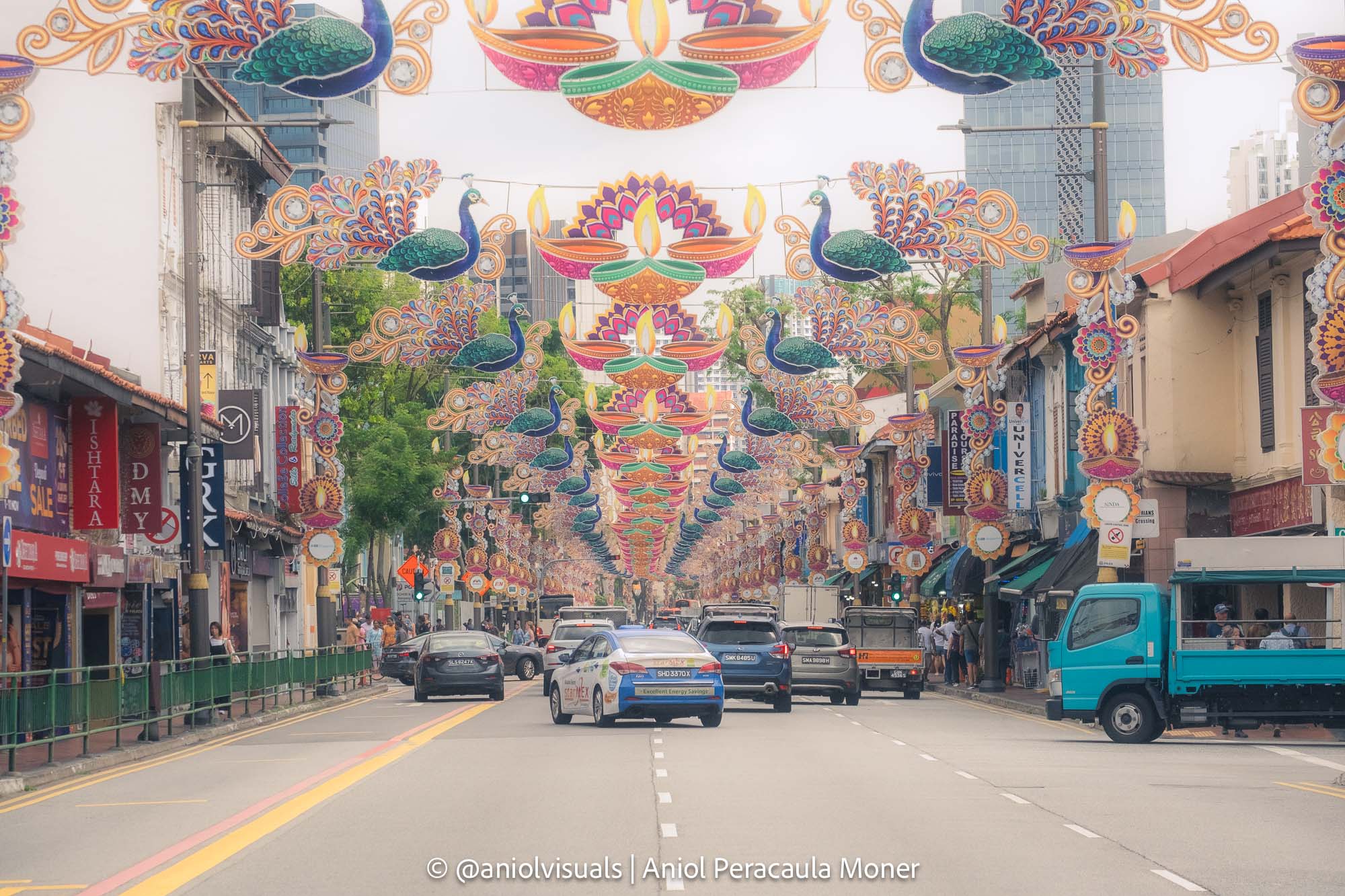
Arab Street photography spots
Although I mention one specific street, this is a full area. As its name indicates, Arab Street is where part of the Arabian community meets in Singapore. It is also a street with some hectic nightlife, but I would recommend visiting it in the daytime, especially for photography.
The Sultan Mosque is the most notable building in the area, and it can be a nice element to add to your photos. Like Little India, it feels nothing like Singapore, which is something I liked about this less futuristic area. Continuing with its similarities with Little India, it’s a colourful street, lively, and at a decent distance from the main tourist attractions.
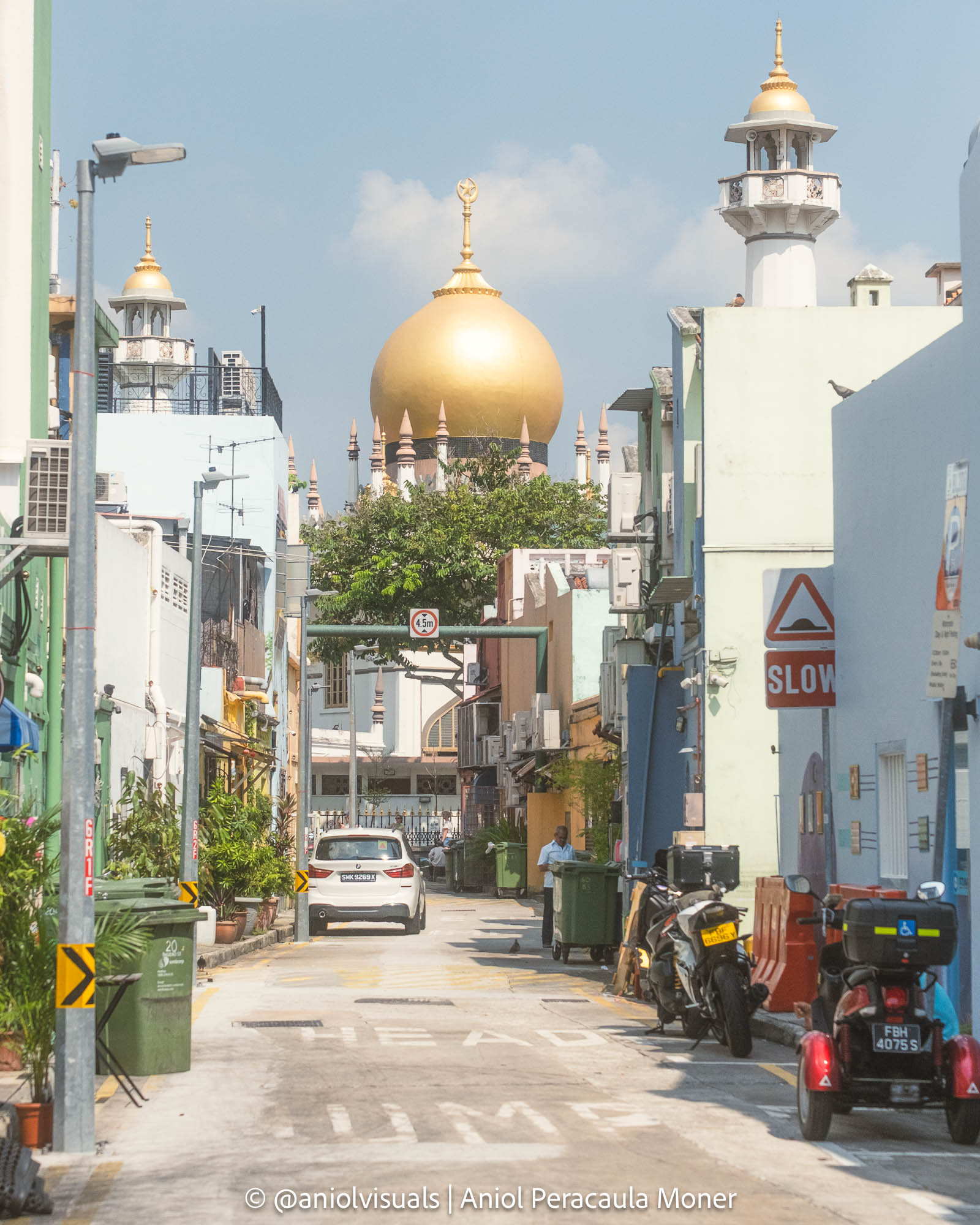
Chinatown photography spots
This is my favourite area of Singapore for street photography, as it has some of the best spots in the whole country. Any Singapore photography guide should include Chinatown, and it completes the trio of neighbouring cultures that have found their way into Singapore: Little India, Arab Street and Chinatown. Unlike the previous ones, there are some specific photography spots that I can recommend.
Besides the spots listed below, you should not forget to just walk around. There are endless details in Chinatown, and my best photos from Singapore were taken there.
Chinatown is a night photography location. Not only is it full of light, but it is also full of life after sunset. All photos below were taken at night, although I also visited them during the day.
Buda Tooth Relic temple
This might be my favourite Singapore photo spot after Changi Airport. An Asian-looking temple, located in the middle of Chinatown, with the Singapore skyline behind it. The trick to taking this photo is that you can’t be at street level. I don’t like sharing exact locations, so I won’t say how I took this photo, but I did not break the law, and it was super easy. If you want to know more, you can book a free 30′ Q&A with me.
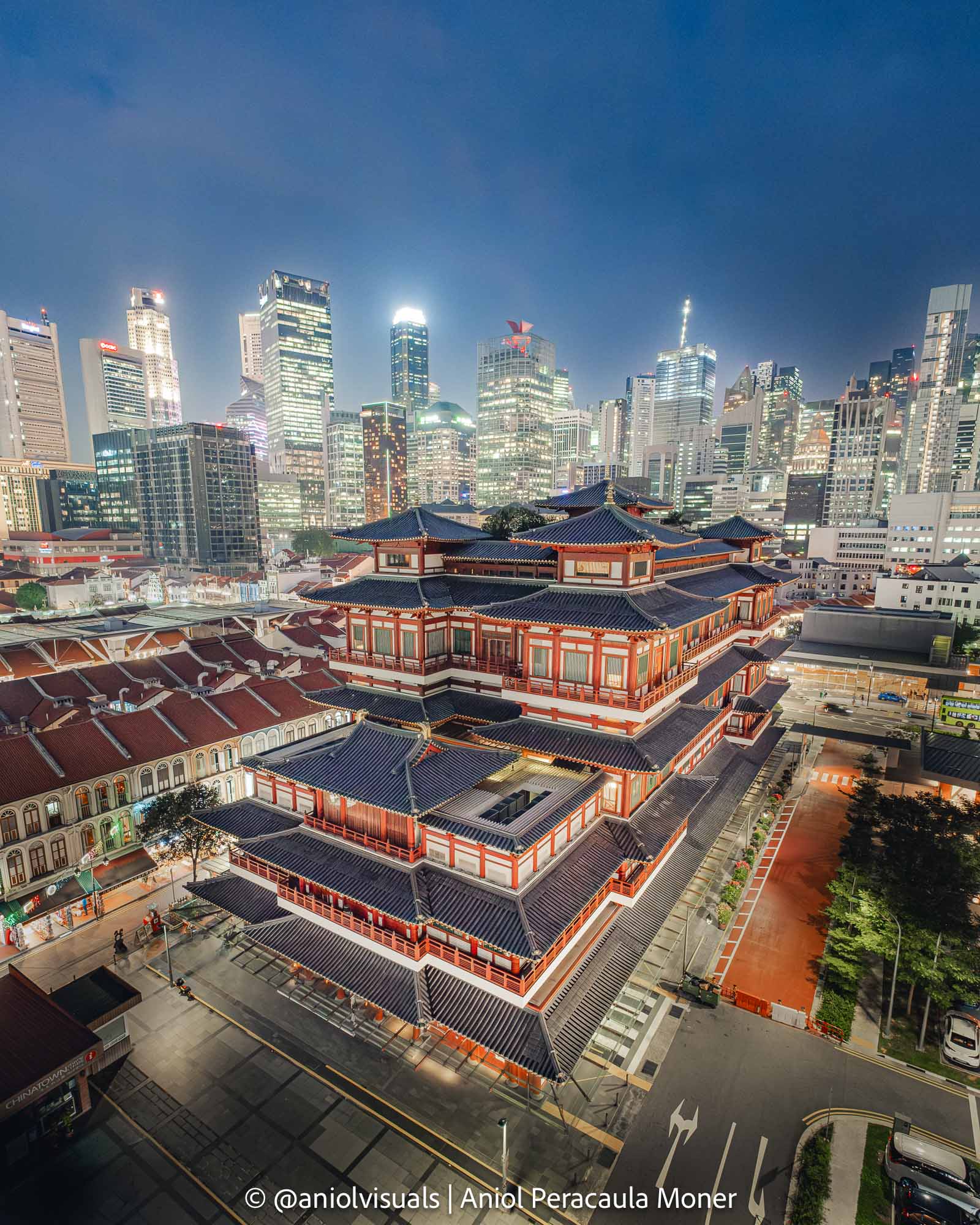
Potato Head building
Potato Head is a burger restaurant. We are not discussing burgers here, but the building where it is located. It is one of the few colonial buildings I liked. When searching for photography spots online, you will find the Koon Seng Road Colourful Houses, which are quite far away from the centre, and which I also didn’t find particularly photogenic, or that offered lots of space for creativity. This one, though, due to its location, made for a nice photo.
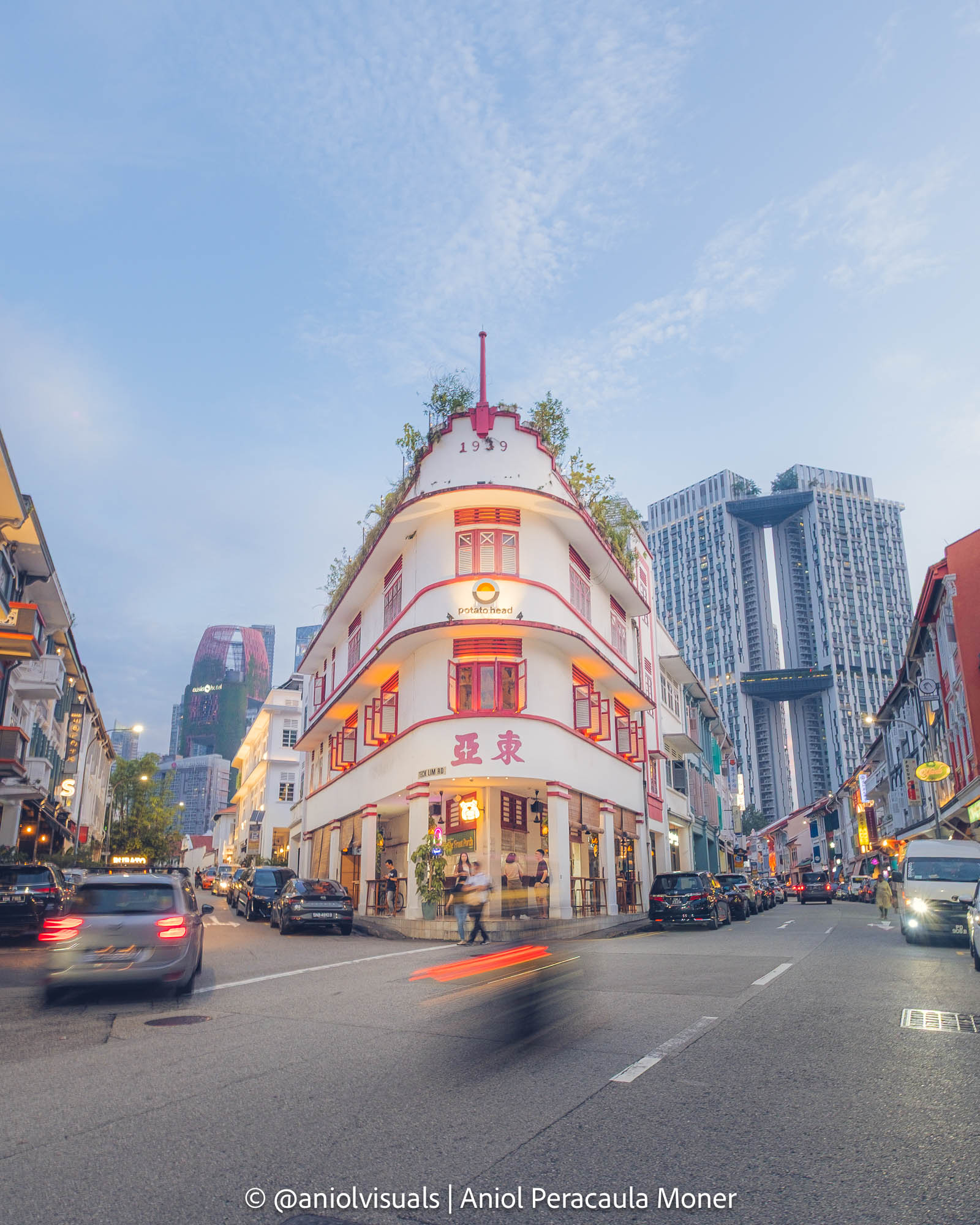
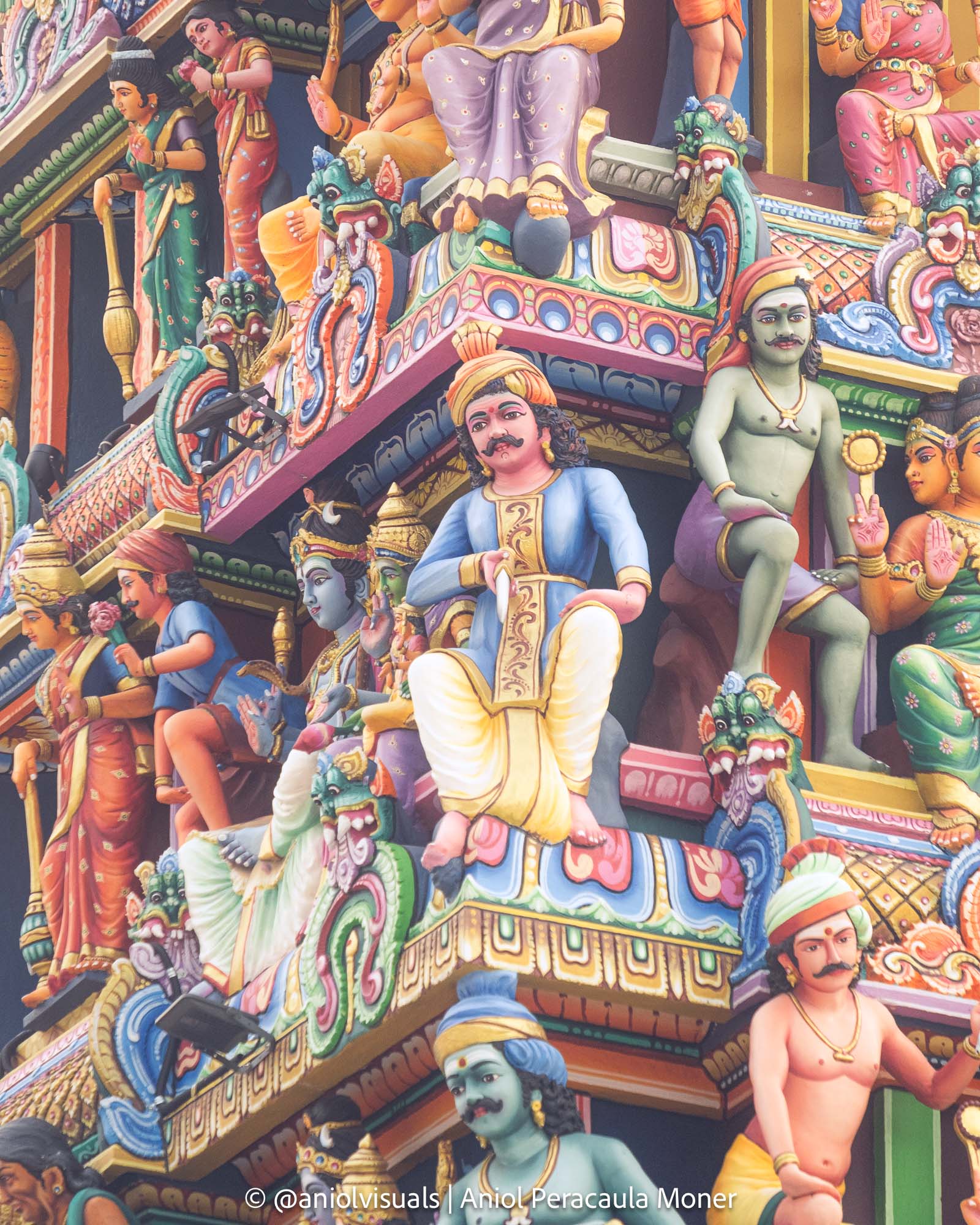
Sri Mariamman Temple
This is a Hindu temple, but it’s in Chinatown. What I liked the most about it were its details. I was lucky enough to be there when some celebrations were taking place, but this also meant it was impossible to visit or get in.
Secret Singapore photo spot
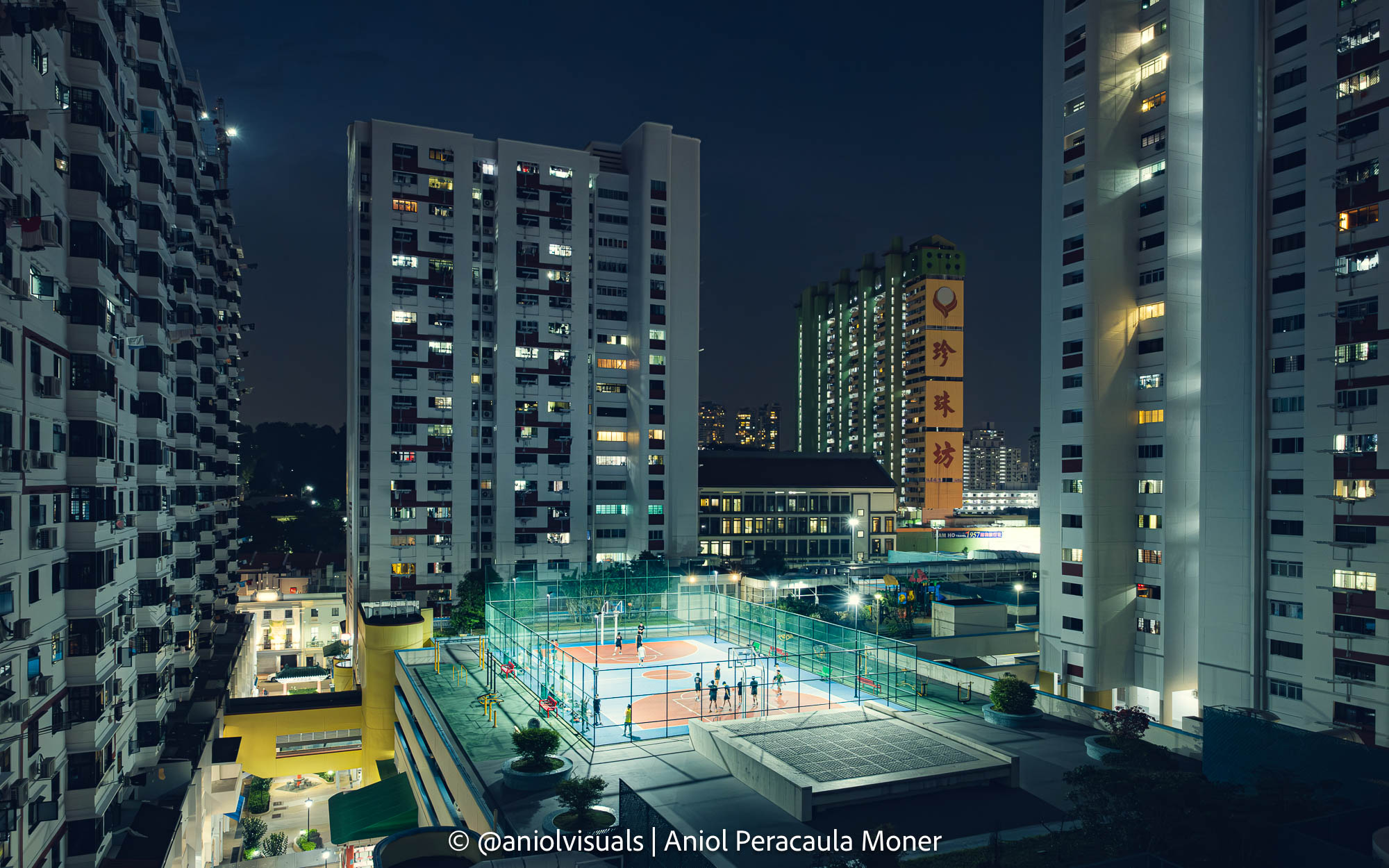
If you have read the introductory part, I mentioned that Singapore disappointed me a bit. I expected a more authentic city and country, and I found little space for creativity. It might also be that I wasn’t focused or creative enough. However, there is one photography spot that made the trip worth it. One that I had not seen on the internet before getting there.
This is a basketball court on the top of a building, surrounded by even taller buildings. Like with the Buda Relic Tooth temple, I did not break any law to take this photo, and it was VERY close to the main temple of Chinatown. Let me know if you find it!
Chinatown buildings
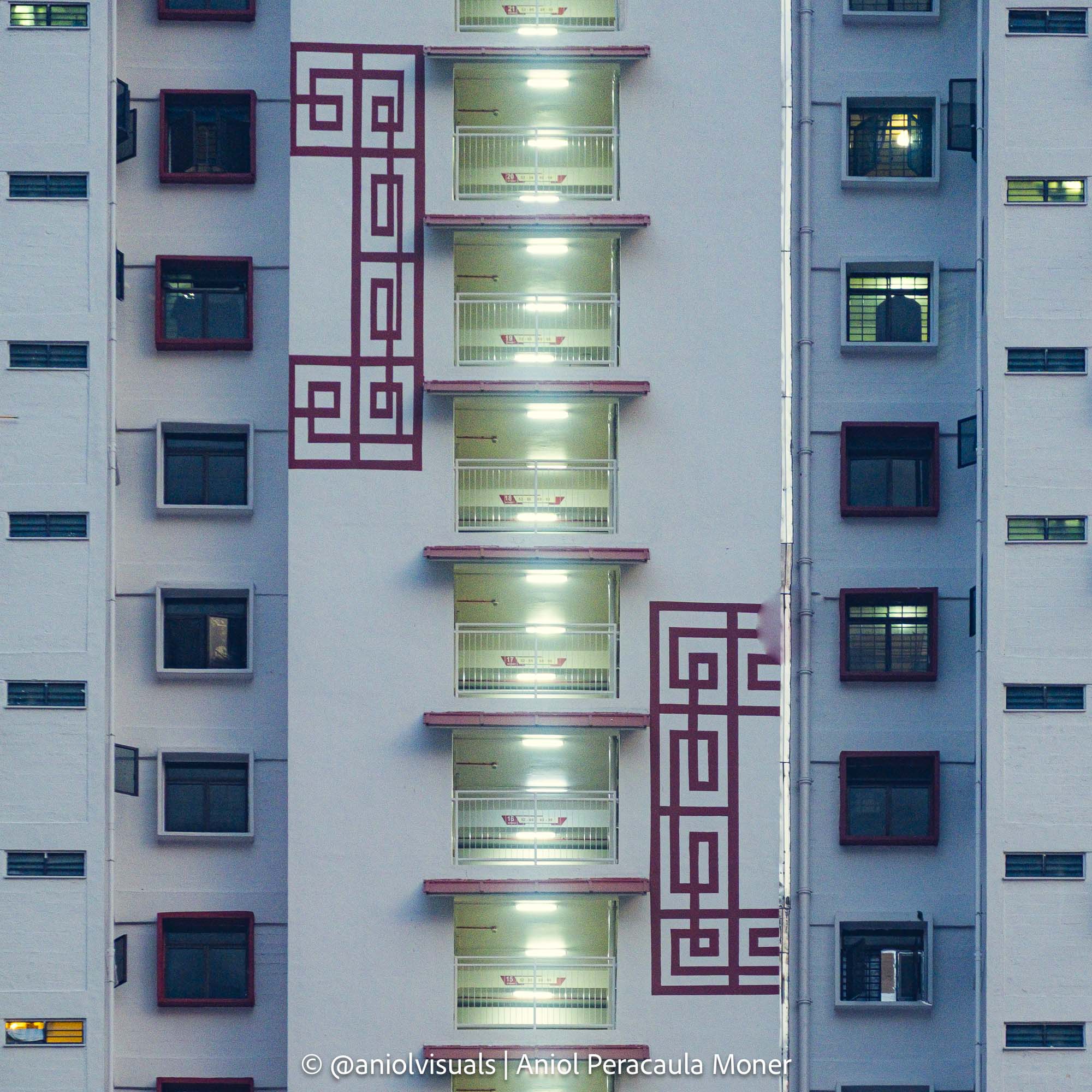
Finally, there’s one extra photography opportunity I’d like to mention about Chinatown: its buildings. Unlike the rest of Singapore, Chinatown has a slightly more authentic vibe, and its tall residential buildings have a lot to do with it. They remind me of what I’ve seen in other countries, such as Hong Kong, or even in Taipei. It can’t be compared with them, but keep an eye for some of the buildings in the area, as you can end up taking cool photos.
Other Singapore photography spots
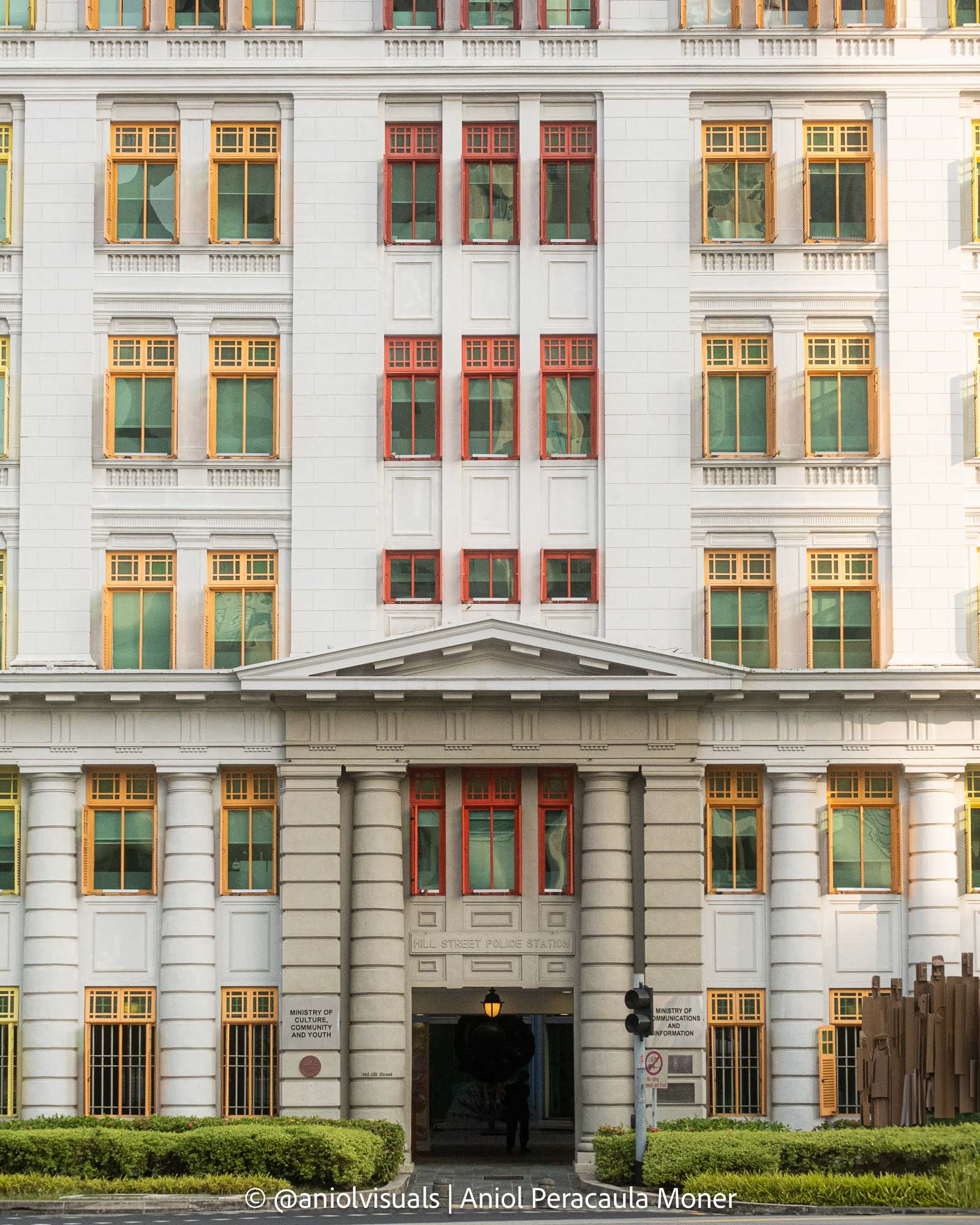
Old Hill Street Police Station
This is one of the most common Singapore photography spots when you search online. This is a colorful colonial building, as many in the city. Although I am including it here, I did not find it that special. I’d say this is one of the Instagram photography spots, where you need someone standing in front of it in order to be worth it.
If that’s your case, then this spot is for you.
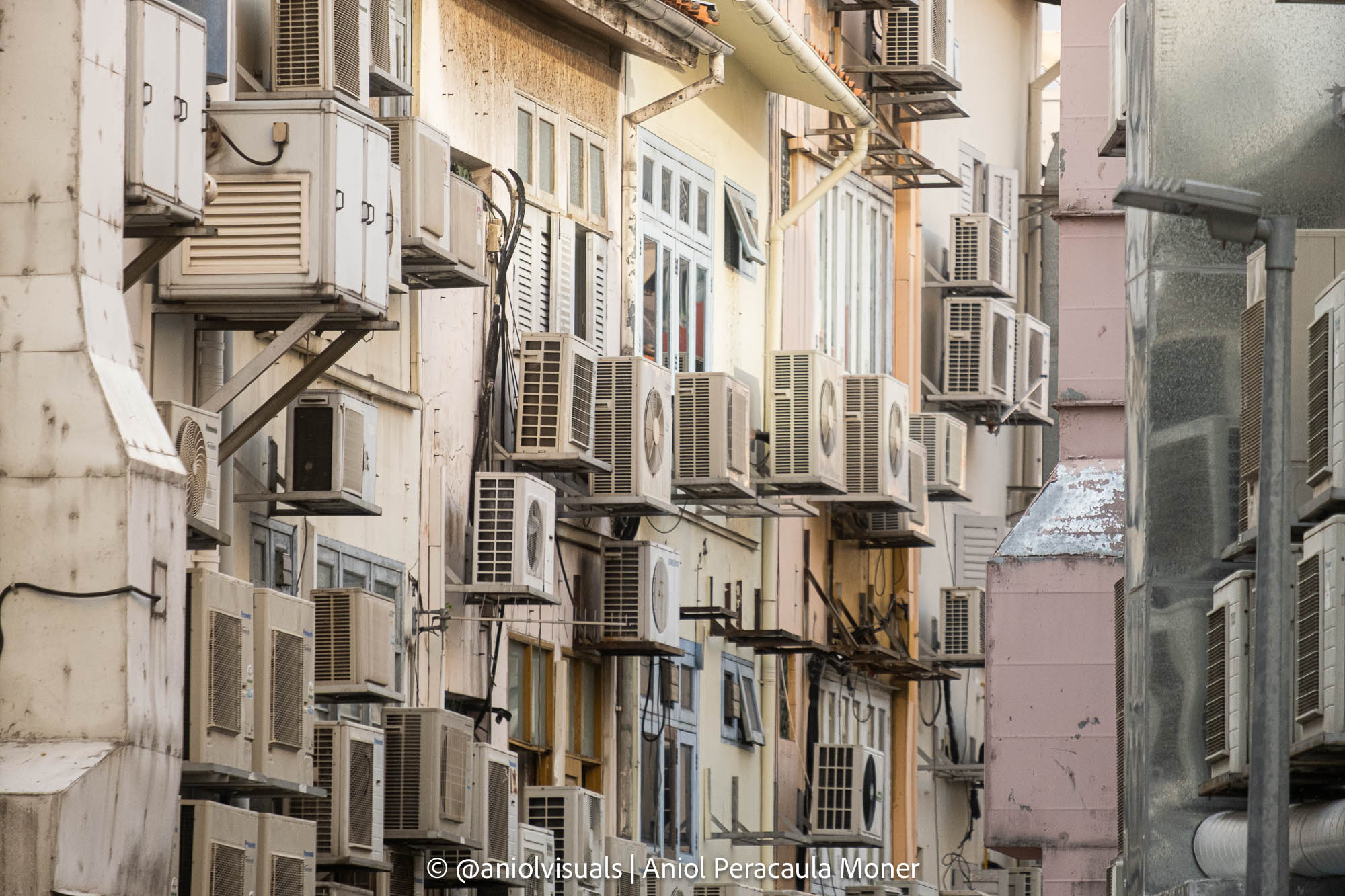
Aircon street
This is an interesting spot, one that I haven’t seen that much online. While the photo is in one specific street, you can find more like this if you wander around Singapore. Due to the high temperatures and the humidity, all shops, bars, restaurants, hotels… have the aircon on almost 24/7. Thus, the aircon machines must be somewhere, usually on the back streets or little alleys. This specific one is on the street parallel of Circular Rd.
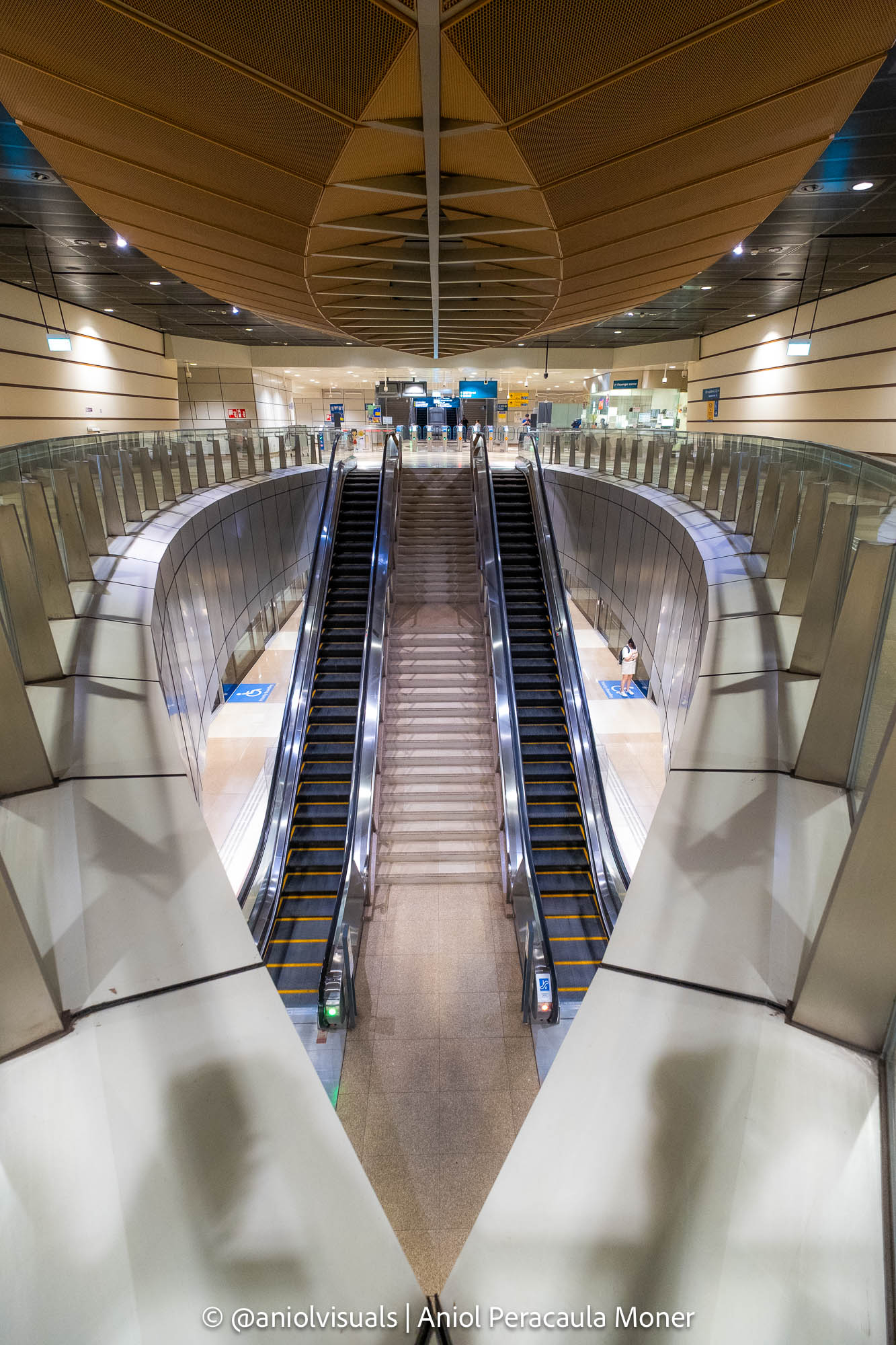
Geylang Bahru metro station
The final spot I wanted to mention in this Singapore photography guide is a metro station. I am a fan of photographing metro stations. There’s something that mesmerises me when places meant for commuting leave some space for art or creativity. It’s easy to see why Geylang Bahru metro station is on this list. The symmetry and the wood-like ceiling make you feel as if you were inside a church.
If you have some extra time, don’t miss it!
This is my Singapore photography guide, with its best spots and areas to take photos. If you have any doubts or questions, feel free to schedule a 30′ Q&A with me!
26 best Romania photography spots: a complete guide
Best Frankfurt photography spots: a complete guide
Best Bucharest photography spots: complete guide (10+ spots)
What are the best Hamburg photography spots? 28 locations
The 17 best Salzburg photography spots: a complete guide