Find out how to make the most of the best Bukhara photography spots with this complete guide. Explore one of the largest cities in Uzbekistan, and take unique photos!
With a bit more than 300.000 inhabitants, Bukhara is among the 10 most populated cities in Uzbekistan. Besides that, it is also one of the most touristy cities in the country, and in the past, part of the famous Silk Road. While Samarkand is the most famous city in Uzbekistan, Bukhara has nothing to envy in terms of history and sites to visit.
In this Bukhara photography spots guide, you will find out all you need to make the most out of your time in Bukhara. The best spots, where to stay, how to get there, and in-location tips, to take amazing photos in this unique city. If you are planning a (photography) trip to Uzbekistan and want first-hand knowledge of the country, you can schedule a call with me using the link below!
- Bukhara photography spots: FAQs
- Bukhara photography spots
- Ark of Bukhara
- Bukhara Tower
- Po-i-Kalan (Bukhara central square)
- Kalan Mosque
- Kalon Minaret Tower
- Mir-i-Arab Madrasah
- Toqi Zargaron
- Abdulaziz Khan Madrassah
- Ulugʻbek Madrasah
- Toqi Telpakfurushon
- Toqi Sarrofon
- Bukhara Central Bazaar
- Samanids Mausoleum
- Bolo Hauz Mosque
- Divan-Beghi Khanaka
- Chor Minor Monument
- Chor Minor area
- Abdullakhan madrasah
Bukhara photography spots: FAQs
Before deep-diving into the best Bukhara photography spots, here are some of the questions I wasn’t sure about before travelling there. From where to stay, to how to get there, safety, and much more!
How to get to Bukhara?
Getting to Bukhara is really easy. Most people access Uzbekistan by plane, either in Tashkent, the capital or in Samarkand. In both cases, there’s a high-speed line that connects the city of Bukhara with the other cities. Thus, it is really easy to travel through this part of the country. Moreover, there are also slower and more traditional trains covering this route.
If you want to take the train from Samarkand or Tashkent to Bukhara, make sure to book it in advance. Especially during the busiest months, trains can be booked days in advance. To book, check the official Uzbekistan Railways website. There, you will see all train options. Make sure to check which station you are leaving from and arriving at, as in big cities like Tashkent, there is more than one station.
For those who don’t want to take the train, there are other options: a private taxi, shared taxis, buses, and even direct flights (from Tashkent). However, the flight time of 1h makes it not worth it, and it is usually more expensive. There’s no reason not to choose the train. It’s affordable, quick, and comfortable.
Is it worth it to photograph Bukhara?
Yes, 100%. Bukhara is a common tourist destination in Uzbekistan. The proximity of the city to Samarkand and the train connection favour people getting there. Some advertise day trips to Bukhara from Samarkand, but as I’ll mention in the next section, it’s not what I’d recommend.
Why photograph Bukhara? Because, despite being touristy, it has a different vibe from the main touristy cities like Samarkand or Khiva. In Bukhara, it is possible to get a bit away from the old town and experience a more authentic city. While Khiva has an amazing walled old town, and Samarkand has the world-renowned Registan Square, Bukhara has outstanding madrasahs and a rich life, making it perfect for photography.
How many days to visit Bukhara?
If you are in a rush, you could visit Bukhara in 1 full day (plus an afternoon-evening or morning). However, I recommend a bit more time in the city, especially if you want to take great photos, as this way you will get more opportunities with great light.
The sweet spot, in my opinion, is in 2 full days. Most of the Bukhara photography spots are very close one from each other, but two days will give you enough time to go beyond the main square and madrassahs. This is what I did, and although I left with the feeling that I could have done more (it happens in almost every place), I had time to photograph most spots twice or in different light conditions, which is a must for me.
Where to stay in Bukhara?
Bukhara is not enormous, but it’s big. To move around the city, you’ll need to walk (in almost all cases). Except when going to the train station, where I recommend taking a taxi, the best way to explore the old town is by walking. Moreover, part of the old town is a no-car area, so walking is a must.
Thus, I recommend staying near the old town, but not at its heart, unless you are willing to pay the premium. Uzbekistan (and Bukhara) have lots of small hotels and guesthouses at very affordable prices. Don’t be afraid to stay there for a more authentic experience, as there are only a few international/well-known hotels in the country.
In terms of areas, I’d recommend south or east of the Toki Sarrofon. The best hotels in the city will have shuttles connecting the hotel with the old town, but if you stay in the area I mentioned, you’ll be at a 5-10 minute walk from the main square.
Is Bukhara, Uzbekistan, safe?
Yes. Very safe. Really. Not only Bukhara, but all of Uzbekistan. If you have read any of my other Uzbekistan photography spots guides, you’ll see I am repeating myself here, but I think it’s very important, because Uzbekistan is many times mistakenly associated with other -stan countries that have had (or have) security issues.
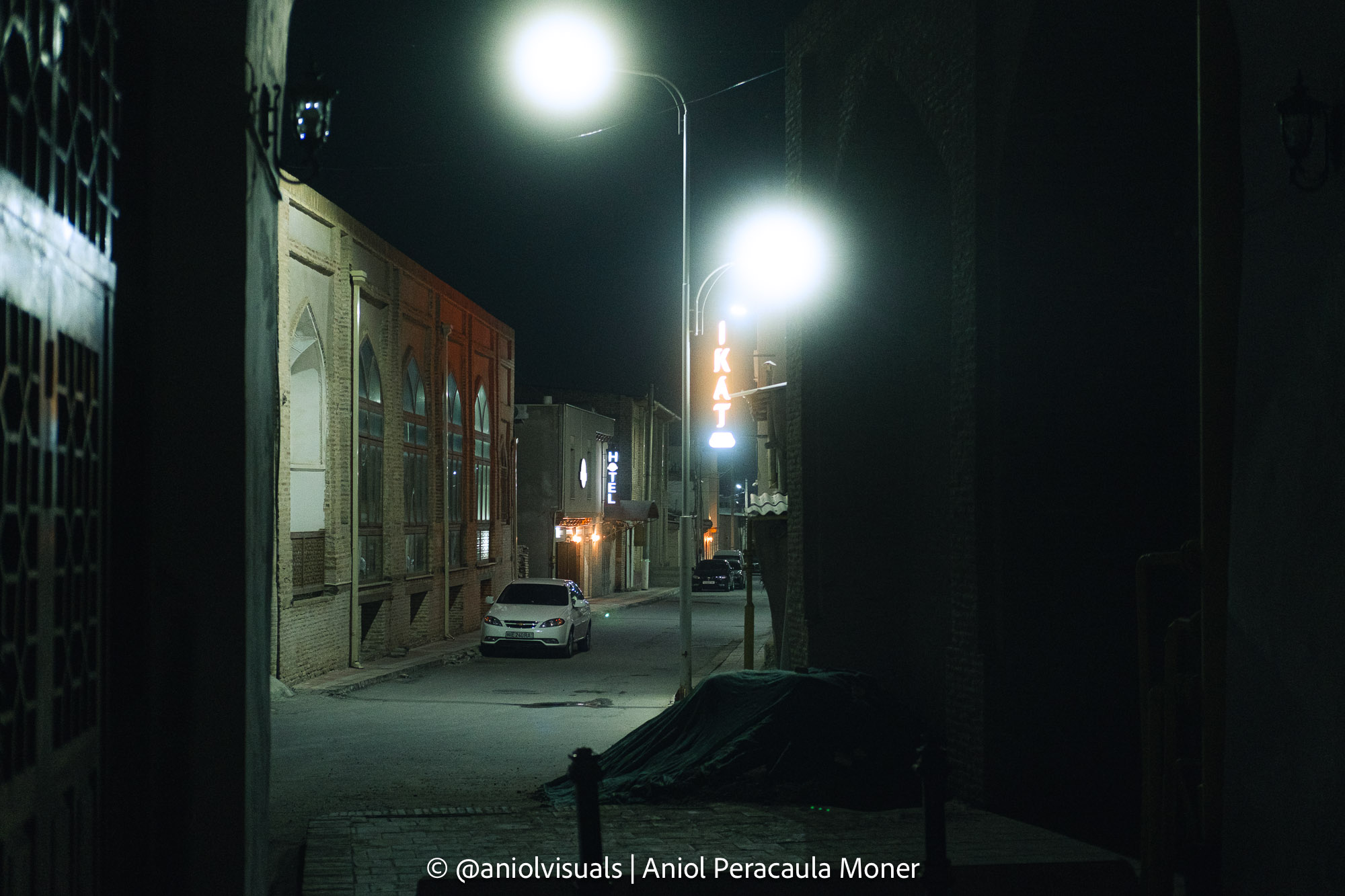
Bukhara is very safe, even at night. I walked alone and took photos alone, and the only thing that happened to me was to be approached by locals asking me to take a photo of them or who were curious about what I was photographing.
As always, exercise usual precautions, but the main risk you’ll face will be when crossing busy streets, as drivers in Uzbekistan are not the most cautious in the world.
Bukhara photography spots
Ark of Bukhara
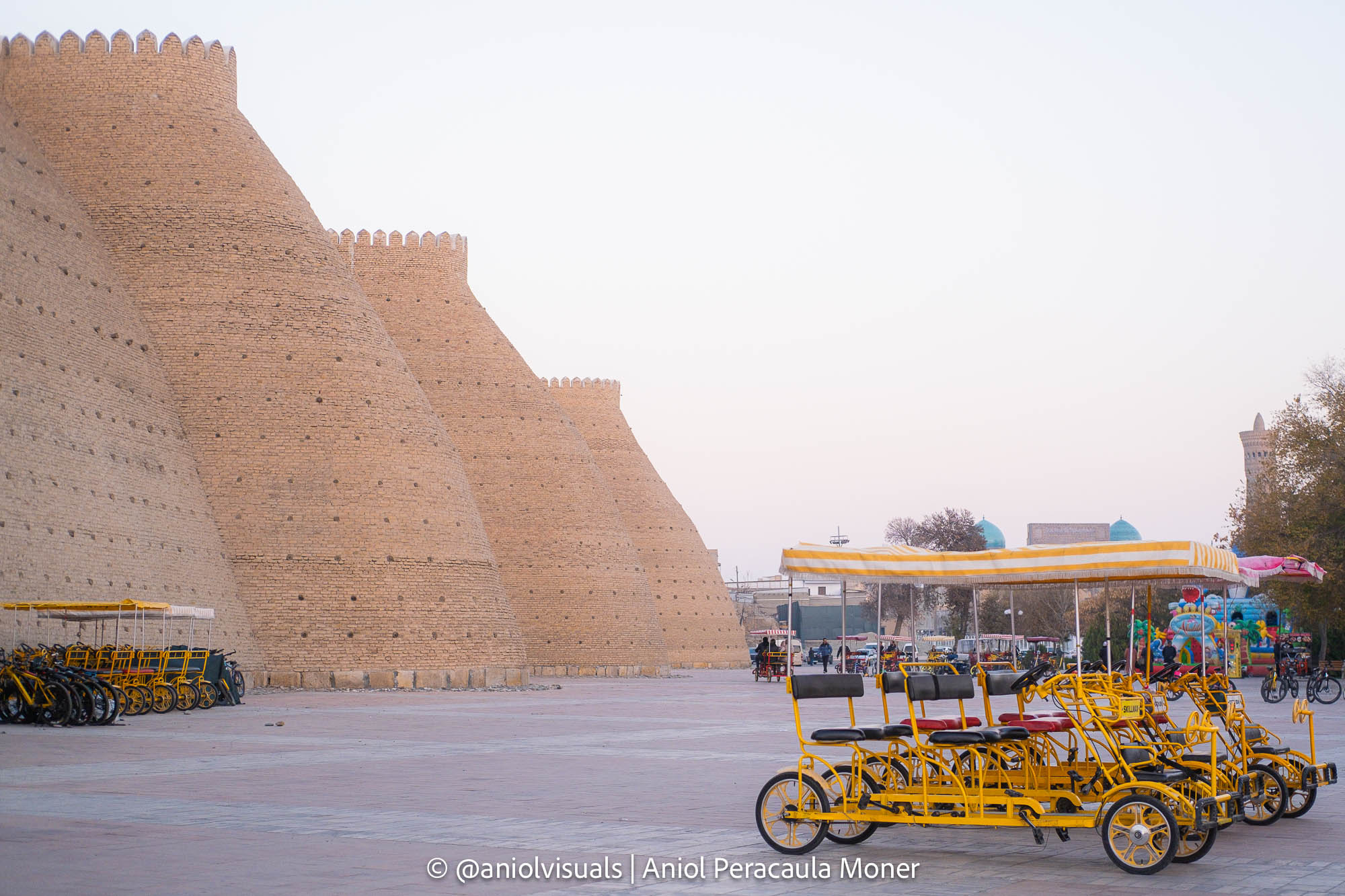
This fortress (with some parts dating back to the 5th century), is one of the great Bukhara photography spots. Although it is listed as a single spot, there are multiple photo opportunities in the Ark of Bukhara.
One of the obvious ones is the gates of the Ark. The impressive entrance to the fortress makes for a great photo. Inside, there’s the Jome Mosque, a panoramic view over the Old Town, and other interesting scenes with craftsmen and tourists.
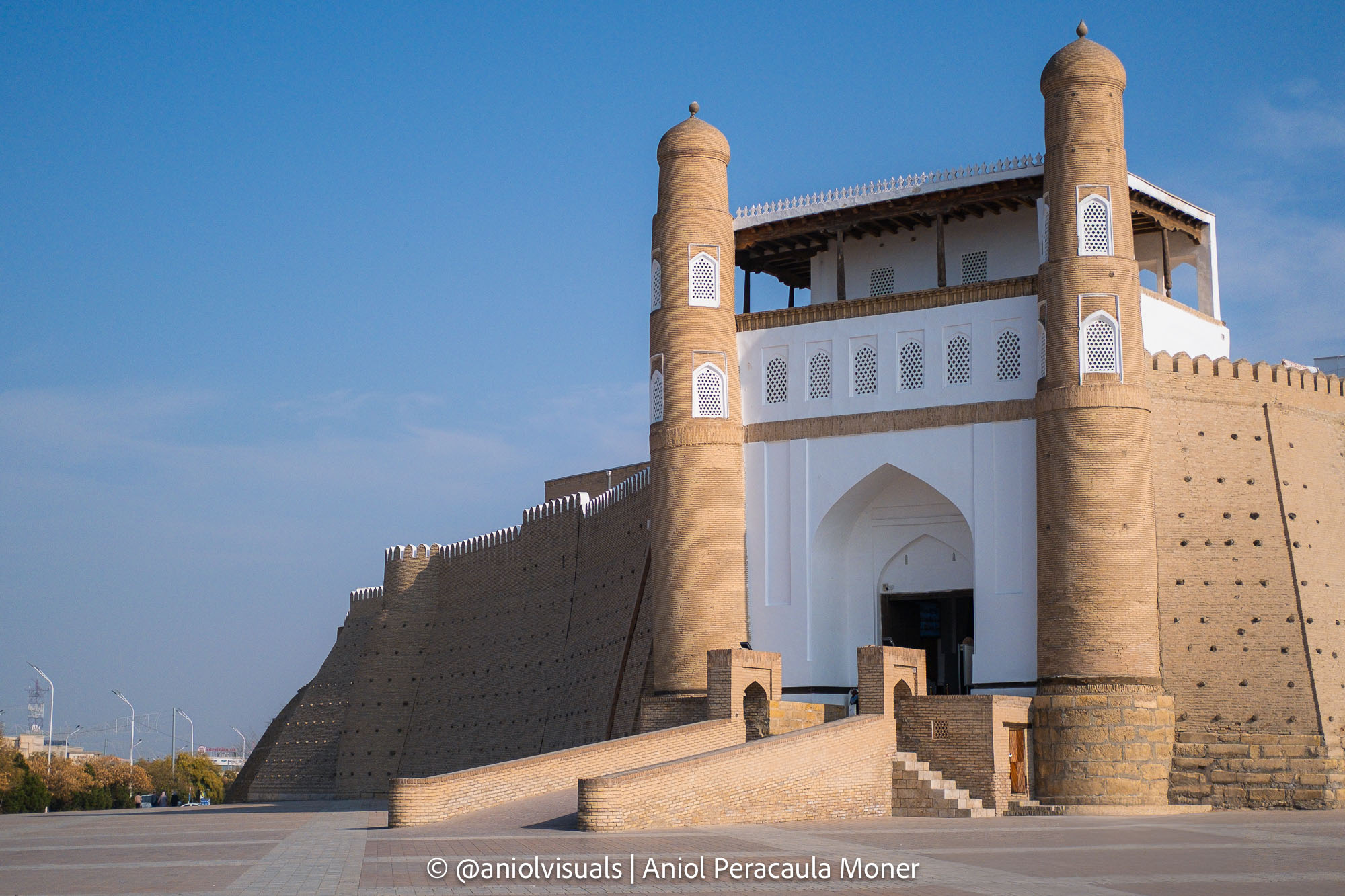
The other spot worth listing, though, is its walls. The walls of the Ark of Buhara resemble the ones of cities like Khiva, for which I have also written a photography guide. What I liked were the contrasts between the massive old walls and the more modern businesses that stood next to them, creating a different photo.
Bukhara Tower
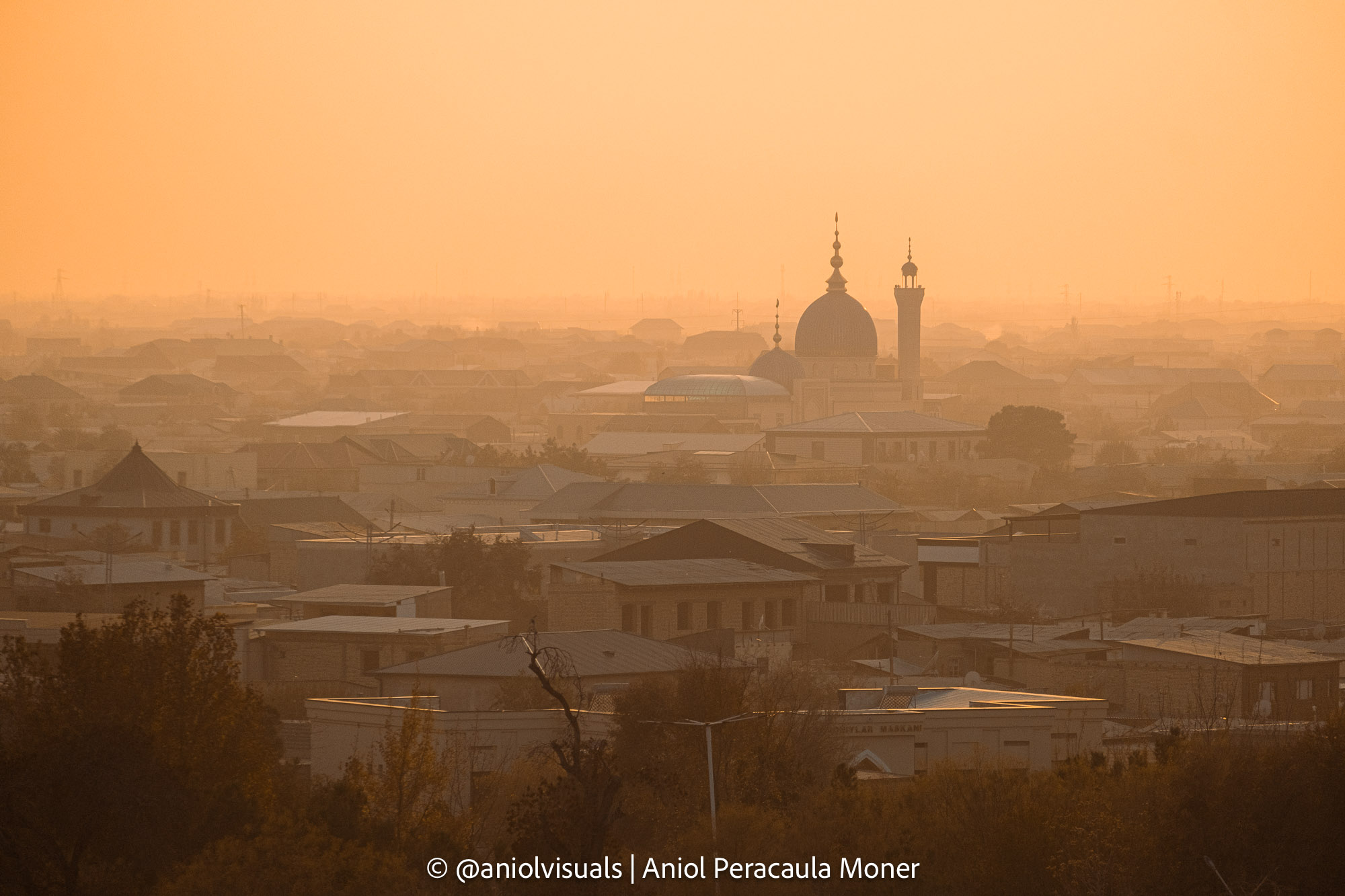
This is one of the best Bukhara photography spots, especially at sunset. Climbing to the top of the tower is not free, but it’s really worth it (and cheap). This is not an enormous tower, like the one in Taskhent. Instead, it elevates just enough to give a bird’s-eye view, without being too far away from the ground, so you don’t lose the sense of size in your photos.
The obvious photos are of the old town, the Ark of Bukhara, Bolo Hauz Mosque… but my favourite ones were the photos in the opposite direction, towards the city, the mosques in the distance, the grids of houses,…
Po-i-Kalan (Bukhara central square)
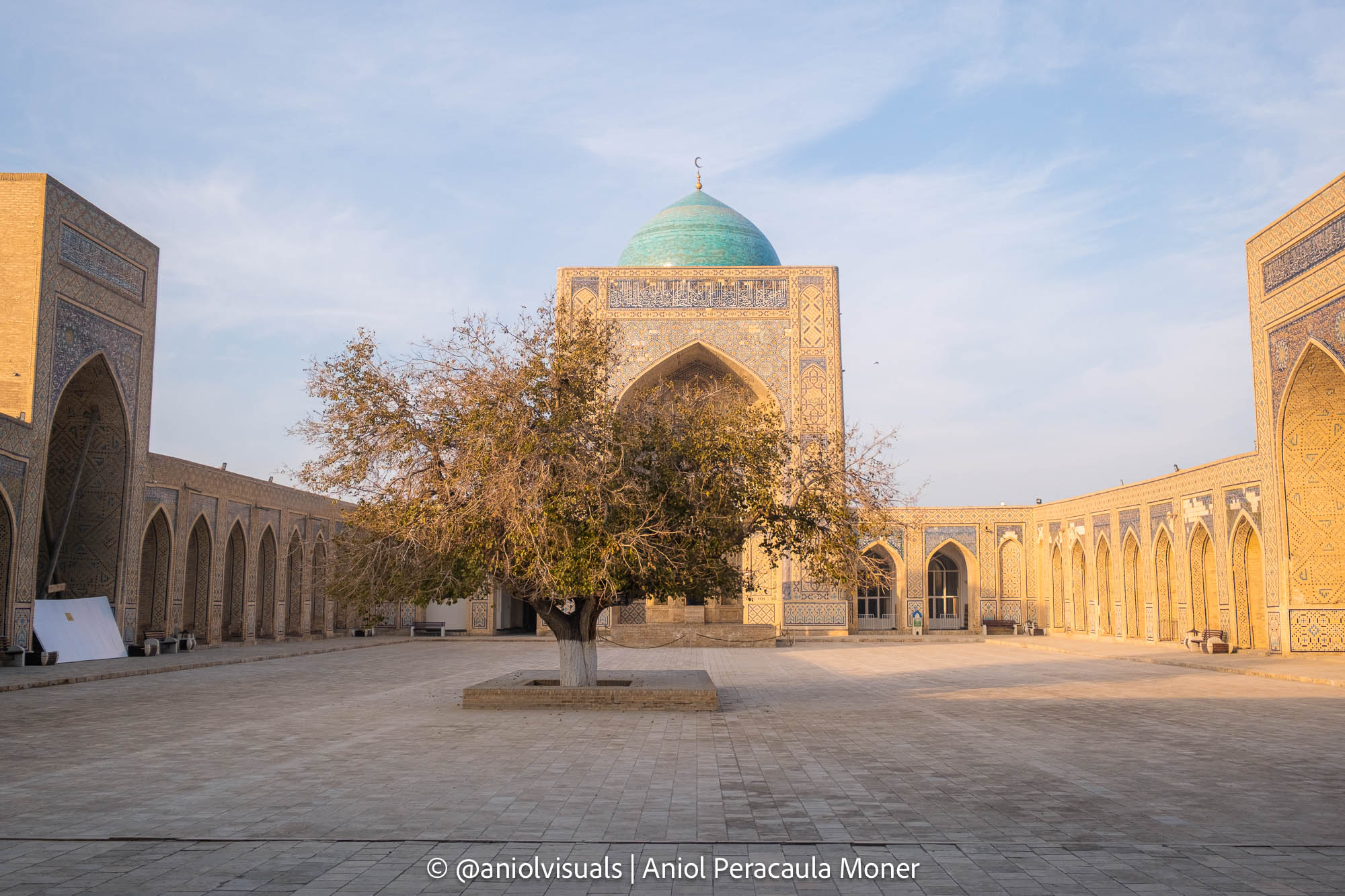
This is the most visited Bukhara photography spot. At the heart of the old town, there’s the central square, with 3 main structures: the Kalan Mosque, the Kalan Minaret and the Mir-i-Arab Madrasah. Each of them is listed individually in this Bukhara photography spots guide, but the square itself deserves a mention.
It is the best spot to take photos of more than one of the 3 elements in the same image. You can play with the arches of one madrasah and the gate of the other, or with the minaret, including them in one photo.
This is a place that must be visited at 2 times: day and night. For the day visit, get up early, be there a bit before the mosques open their doors, and you’ll get the place for yourself. Not because there are crowds, I found them manageable, but because of the feeling of being in such an amazing place alone.
At night, get ready for more people and a curious illumination. Just like in Samarkand, the different buildings get illuminated with colourful lights. This makes it quite challenging when it comes to editing photos, as not all buildings get the same tones. Still, worth visiting at night, as eventually, they get all the natural white light.
Kalan Mosque
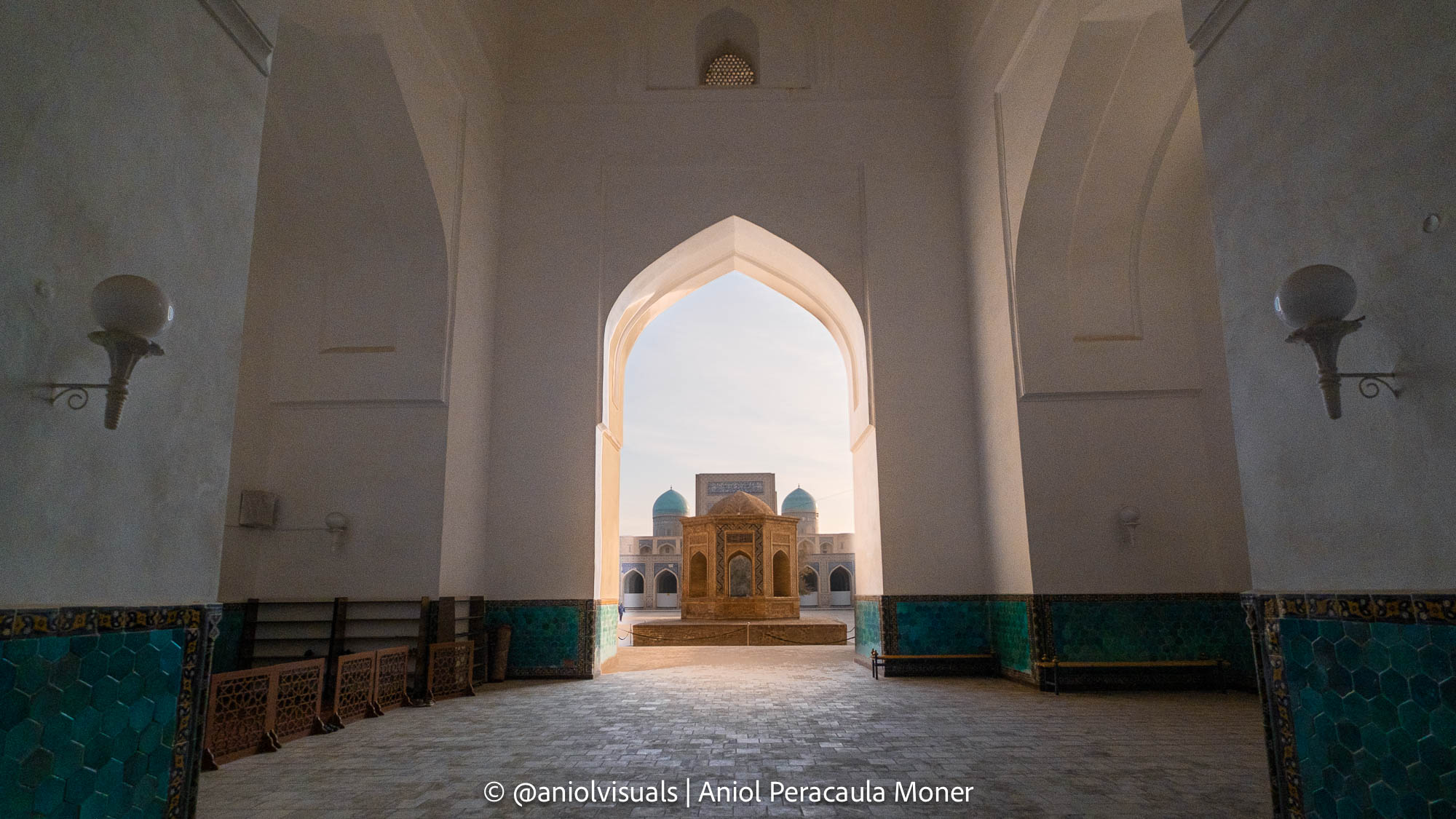
The Kalan Mosque is one of the three attractions of the Po-i-Kalan, and the only one that can be visited. Thus, I’ll focus on its interior. As of late 2024 and early 2025, part of it was under restoration, but it is still worth visiting. In terms of photography opportunities, it’s possible to play with the different levels of arches and light.
Getting there early helps a lot, as for the first 20-30′ after opening, the flow of visitors is low, and is composed mainly of single or small groups.
Kalon Minaret Tower
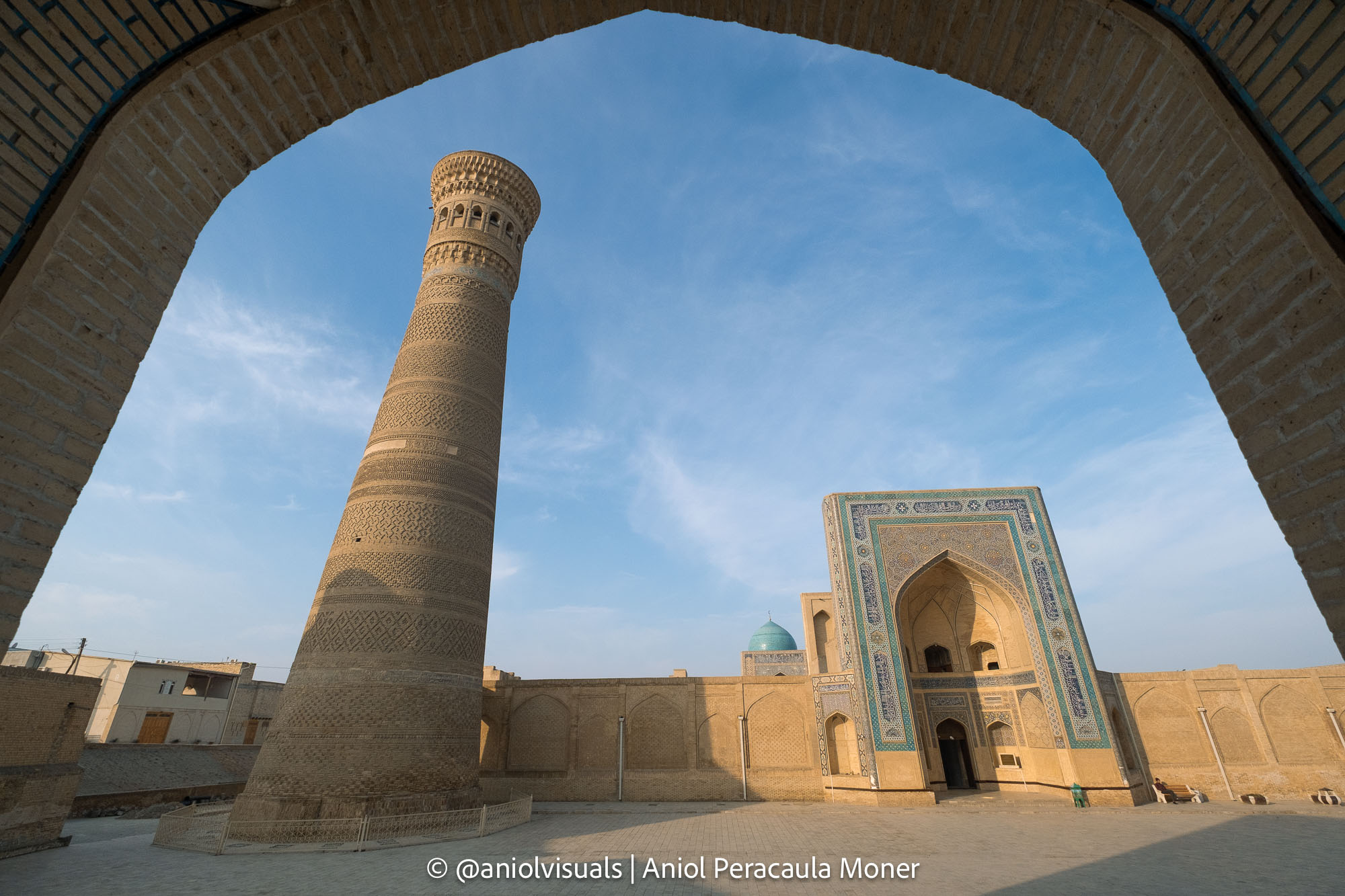
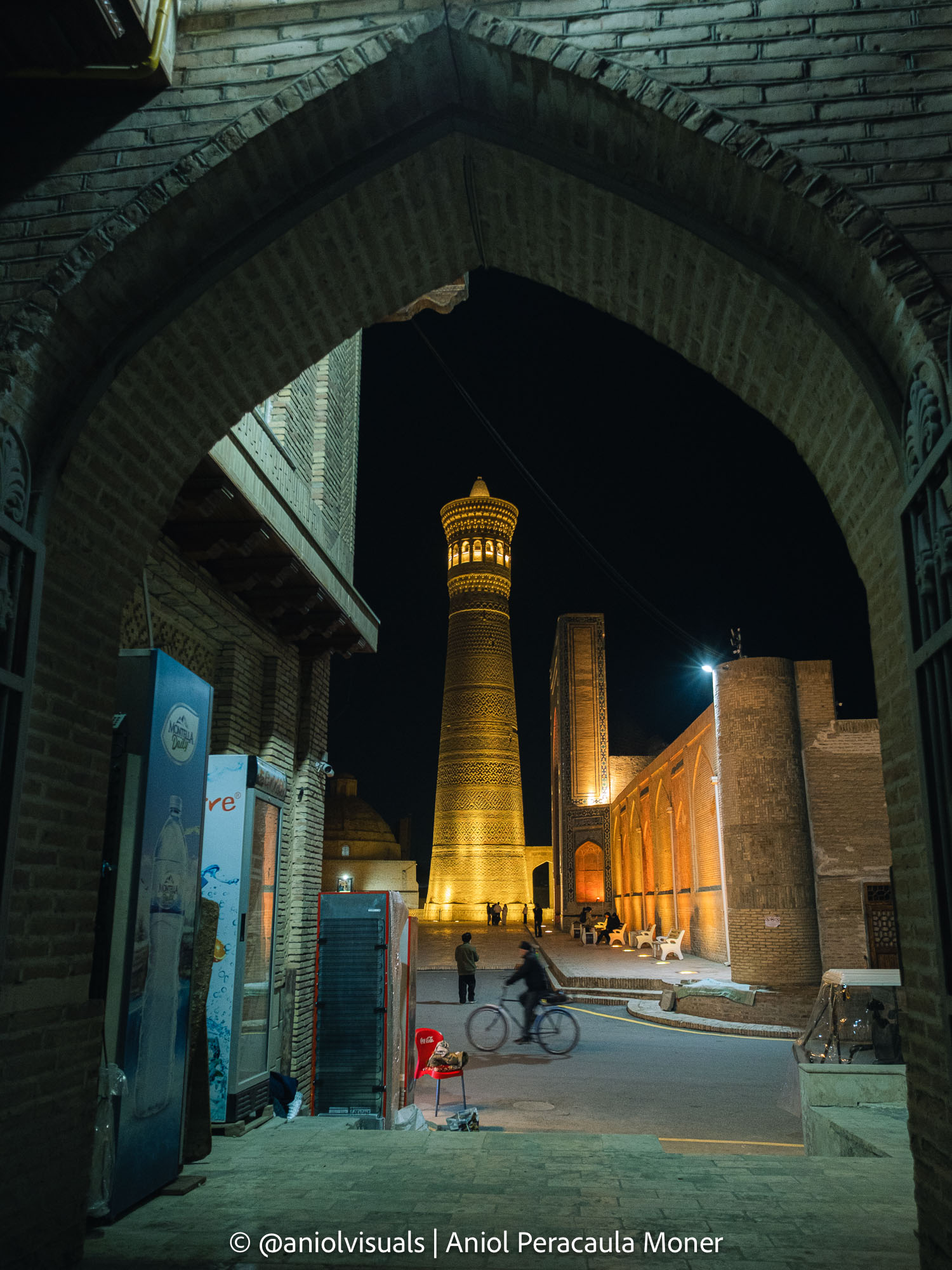
The Kalon Tower is immediately next to the Kalan Mosque. Unfortunately, it’s not possible to legally climb to the top of it, but as with most tall structures, a bit of distance is usually great for shooting it.
My favourite photos of the minaret are taken not from the square, but from nearby streets or alleys. From there, you can see it as the tall building it is. Shooting at it from the square itself can be challenging; it requires a really wide lens if you want to compose it with any of the other buildings.
It’s one of the great Bukhara photography spots, and one of the most characteristic ones.
Mir-i-Arab Madrasah
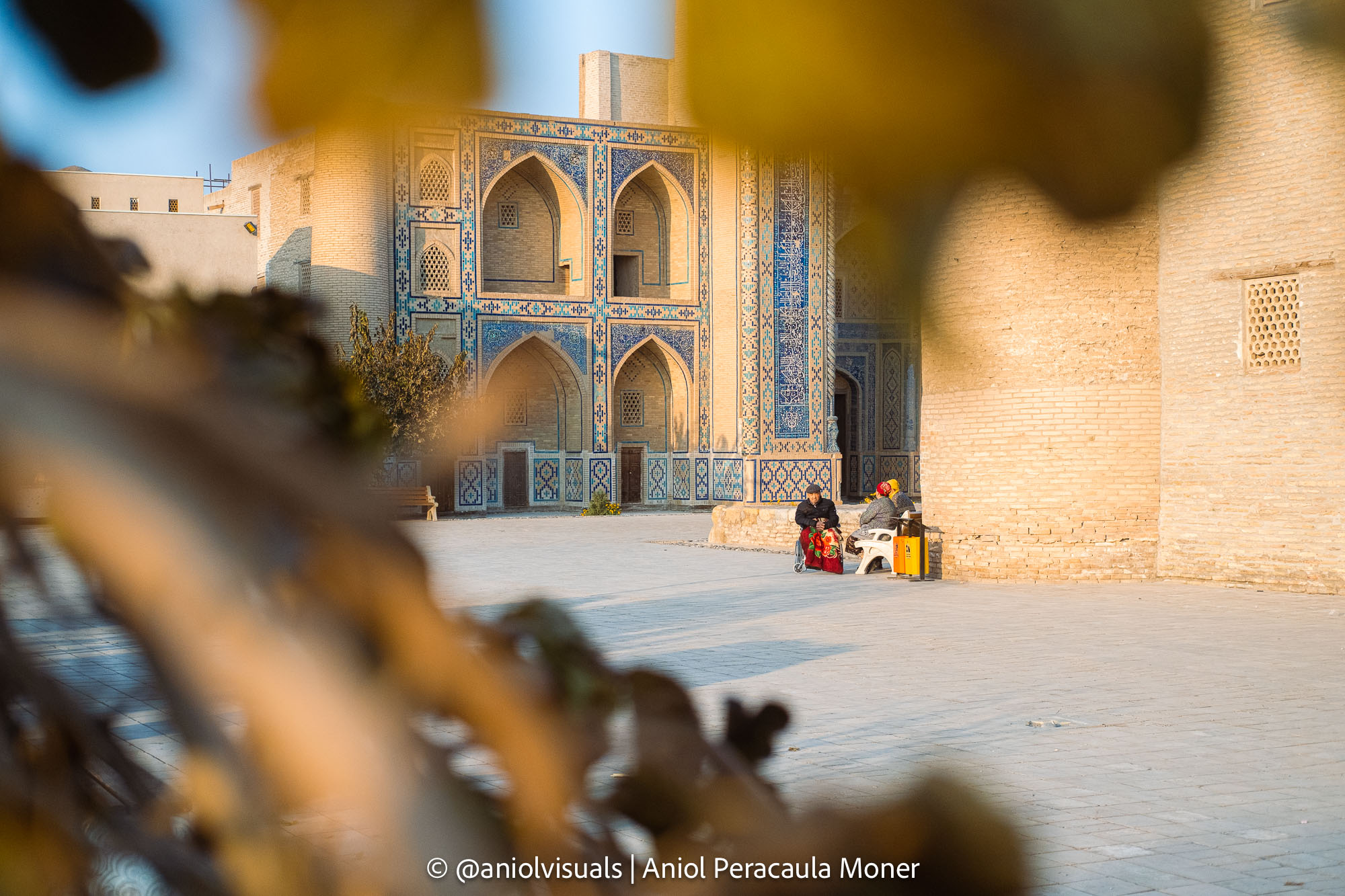
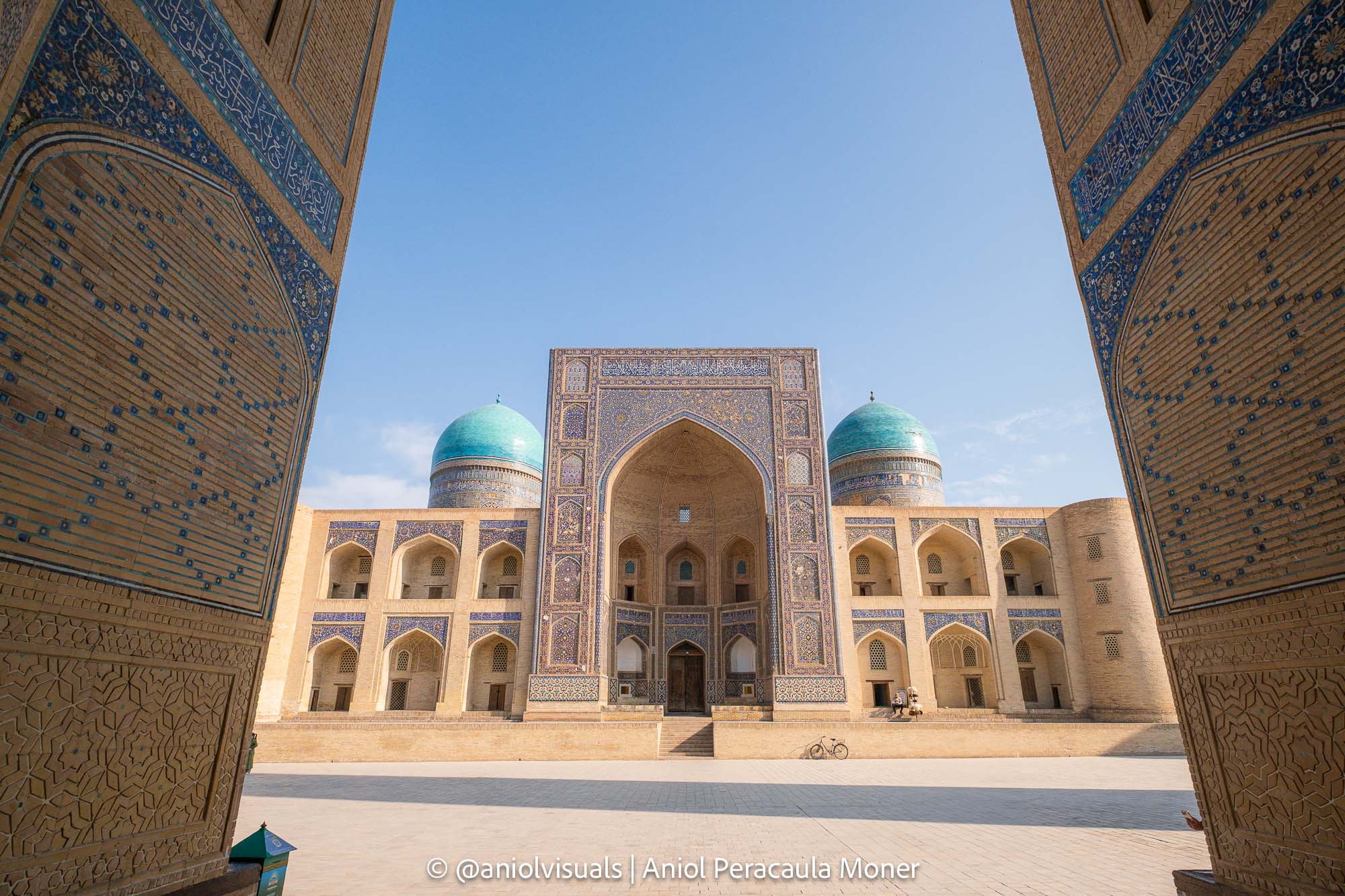
The Mir-i-Arab Madrasah is the third building of the Po-i-Kalan square. It’s not possible to visit the interior of it, but what made it among the most famous Bukhara photography spots is its exterior, especially the two blue domes, one at each side of the main entrance.
Both during the day and at night, the view of the Mir-i-Arab madrasah is impressive and can make for great photos. While the main photo is of the main gate of the Madrasah, don’t focus just on it. There are other angles worth shooting, which can result in way less common images.
Toqi Zargaron
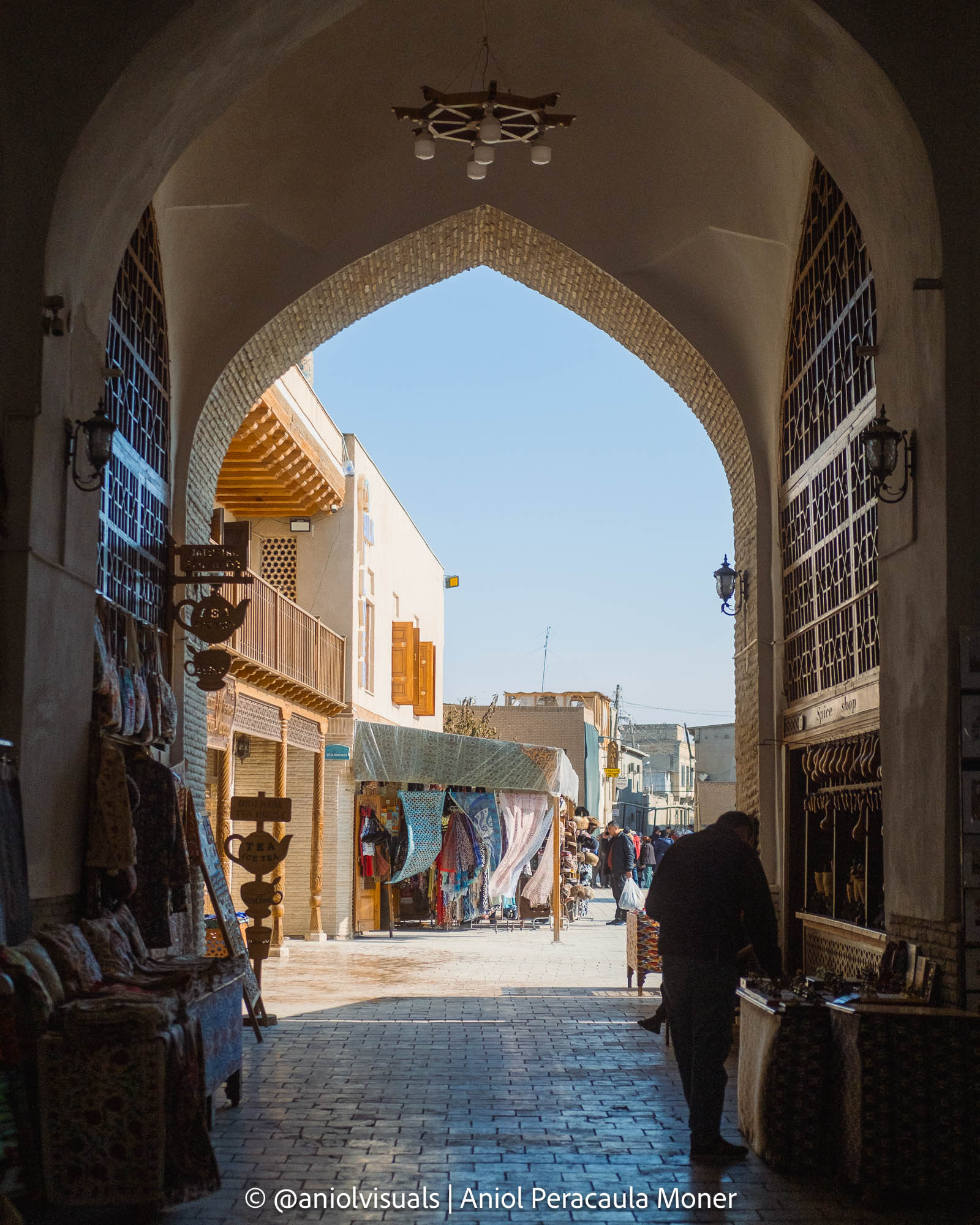
This is not the only market in this Bukhara photography spots guide. As a city on the old Silk Road, Bukhara has many old markets. While all of them might look similar to the untrained eye (like mine), the photo opportunities in them are countless. From early in the morning, with the first beams of sunlight illuminating the domes, to late into the night, with the not-so-good illumination, giving a more mysterious vibe to the streets of the market.
Oh, and it is a great place to get some souvenirs, if you are looking for them. Better there than in Samarkand or Tashkent, according to my own experience.
Abdulaziz Khan Madrassah
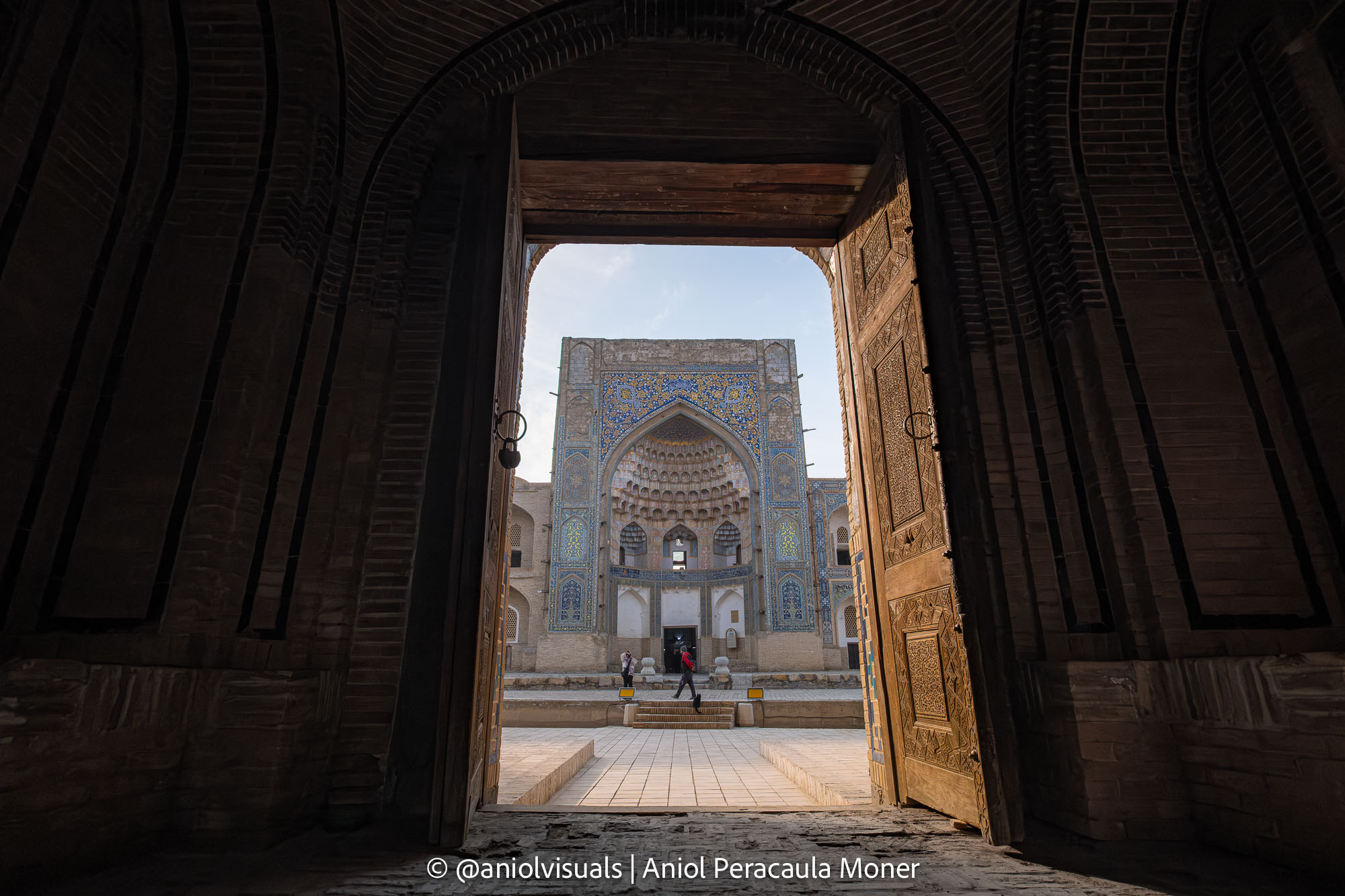
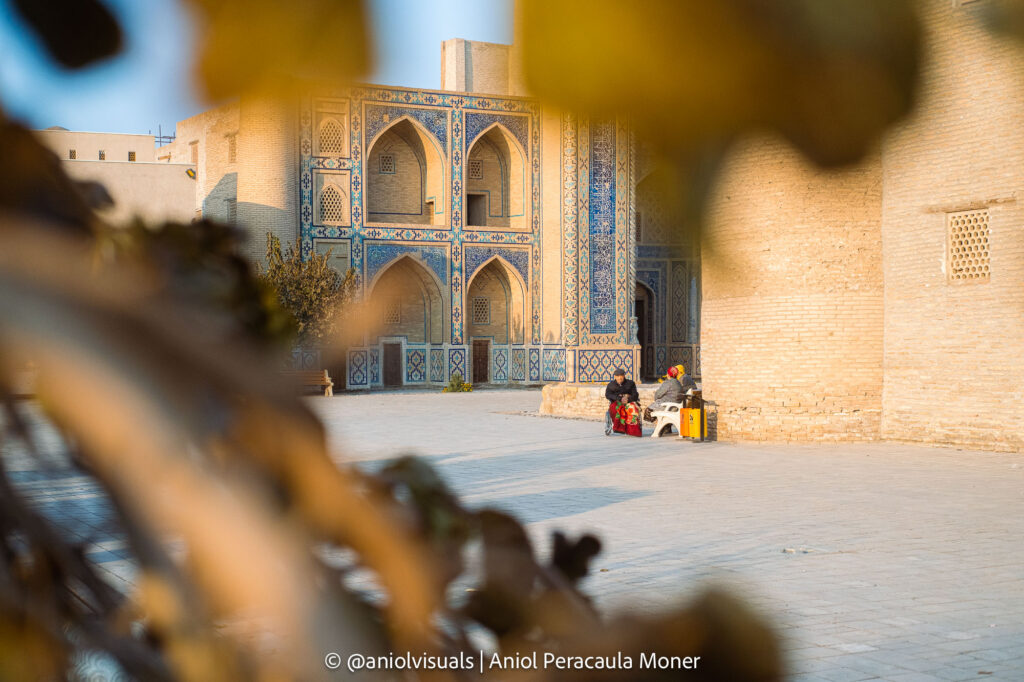
Another Madrasah? Yes, and it’s not the last one in this Bukhara photography spots guide. While the Po-i-Kalan is the most famous complex of buildings in Bukhara, not far from there, two more madrasahs are facing each other, which, in my opinion, are more beautiful for photos of their details.
Unlike the massive ones in the square, Abdulaziz Khan Madrassah is a bit smaller, but with a richer and more detailed façade. It’s colourful, and it’s where I took some of my favourite Bukhara photos. Don’t skip it, or the next one in the list, as it’s literally at a 3-minute walk from the main square.
Ulugʻbek Madrasah
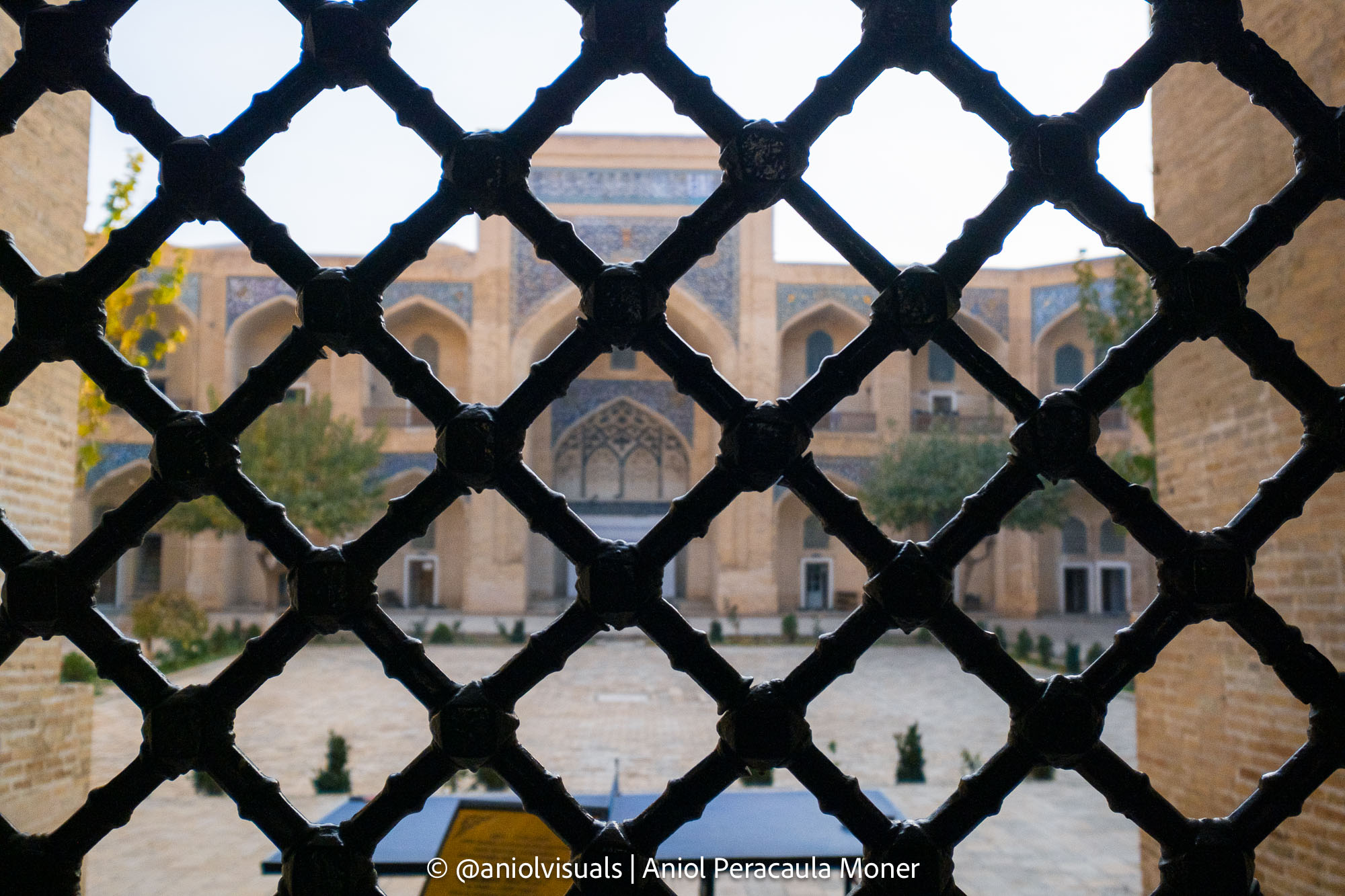
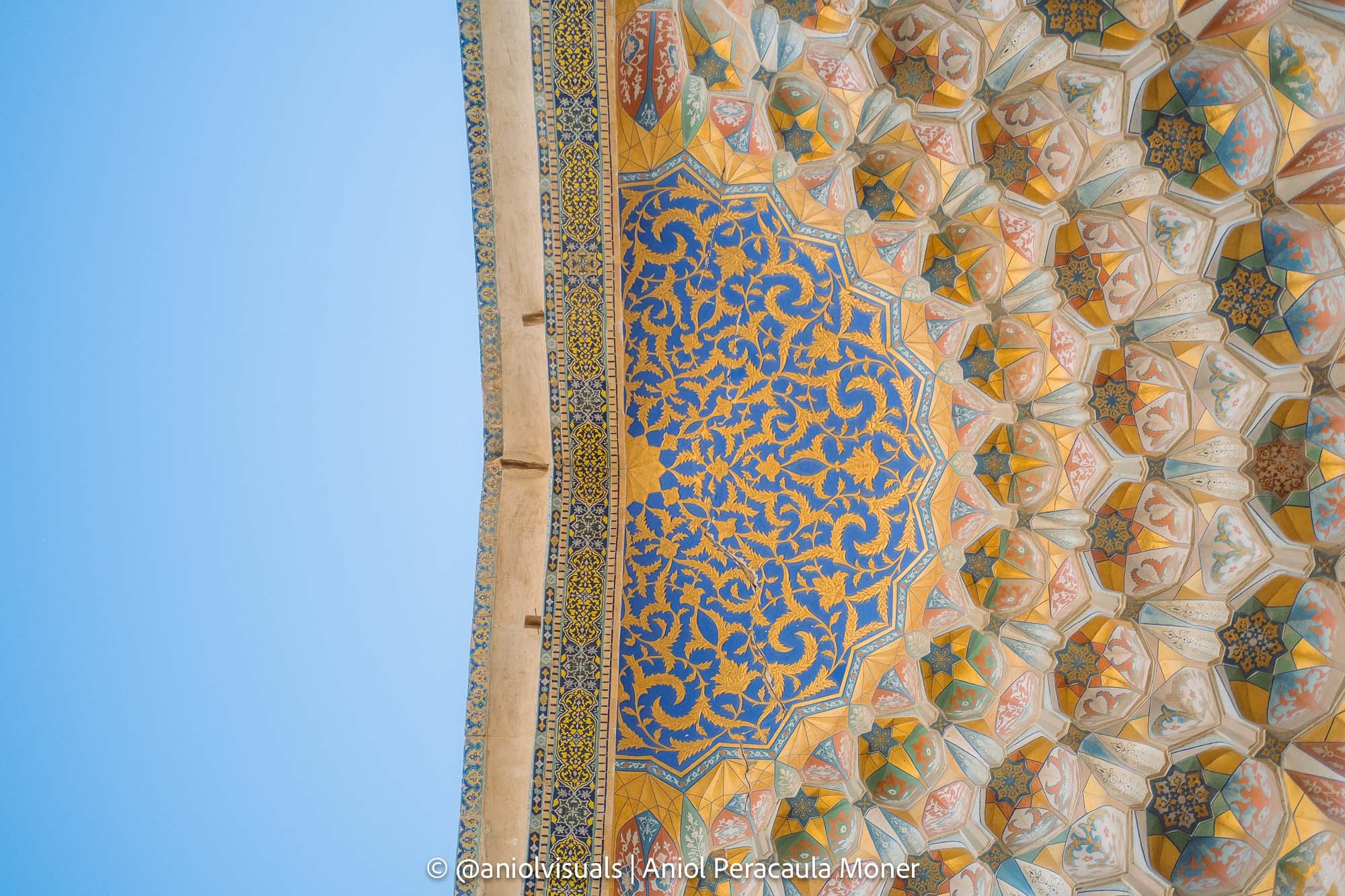
In front of the Abdulaziz Khan Madrassah, there’s the Ulugʻbek Madrasah. Restorations are still in place in some parts of it, but it’s worth exploring and going inside. The more reasonable size of the Madrasah makes it possible to use the arches of one of them as framing for the other one.
Also, there are many stray cats in the area, which can make for cute photos.
Toqi Telpakfurushon
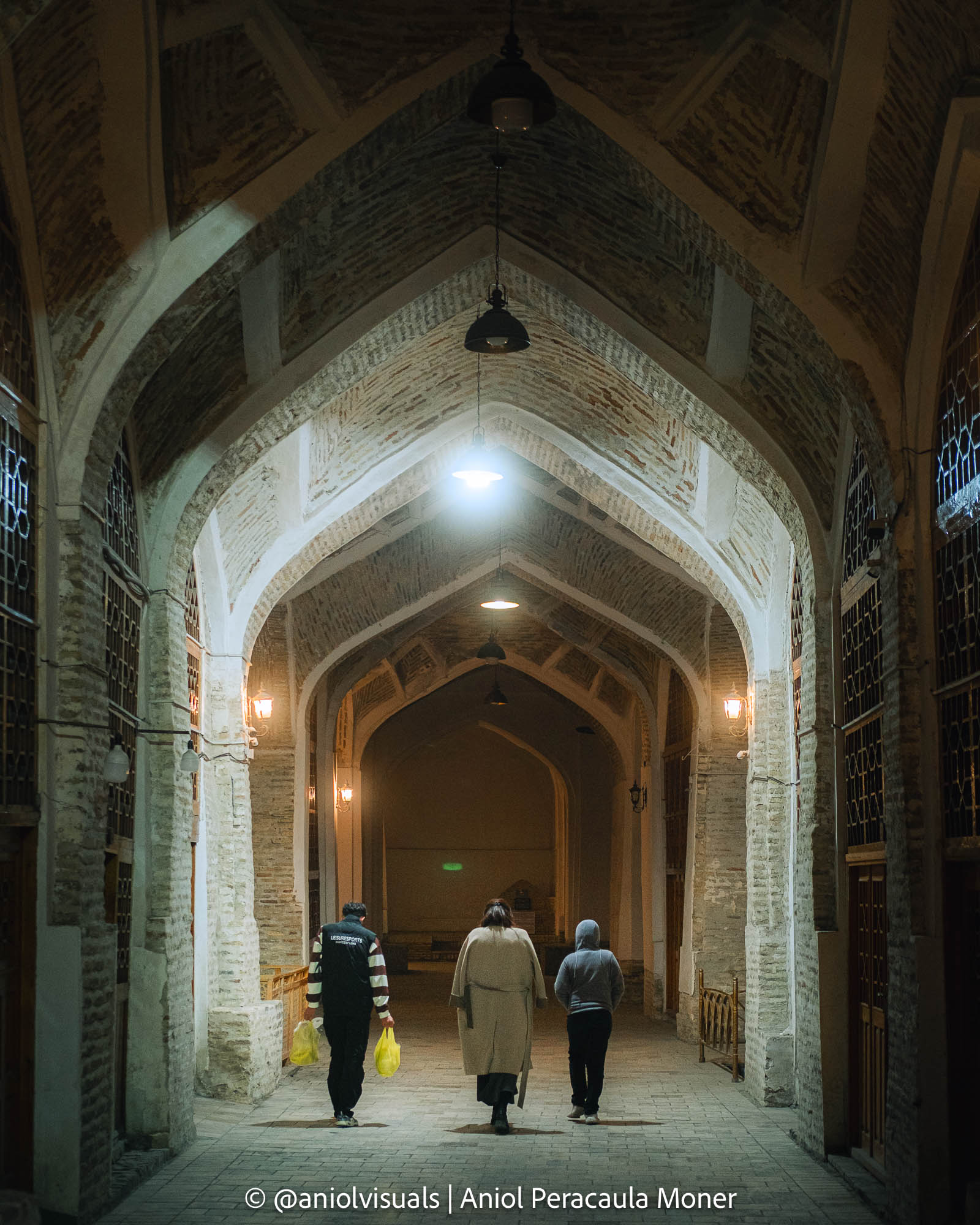
As mentioned, there are multiple markets/bazars in Bukhara, and this is another one of them. Just like the previous one and the one I will list next, it’s among the best Bukhara photography spots, for two reasons: first, there’s a lot of life, which changes depending on the time of day. Second, the architecture. Multiple arches and symmetry make it really easy to get pleasant visual images from there.
Toqi Sarrofon
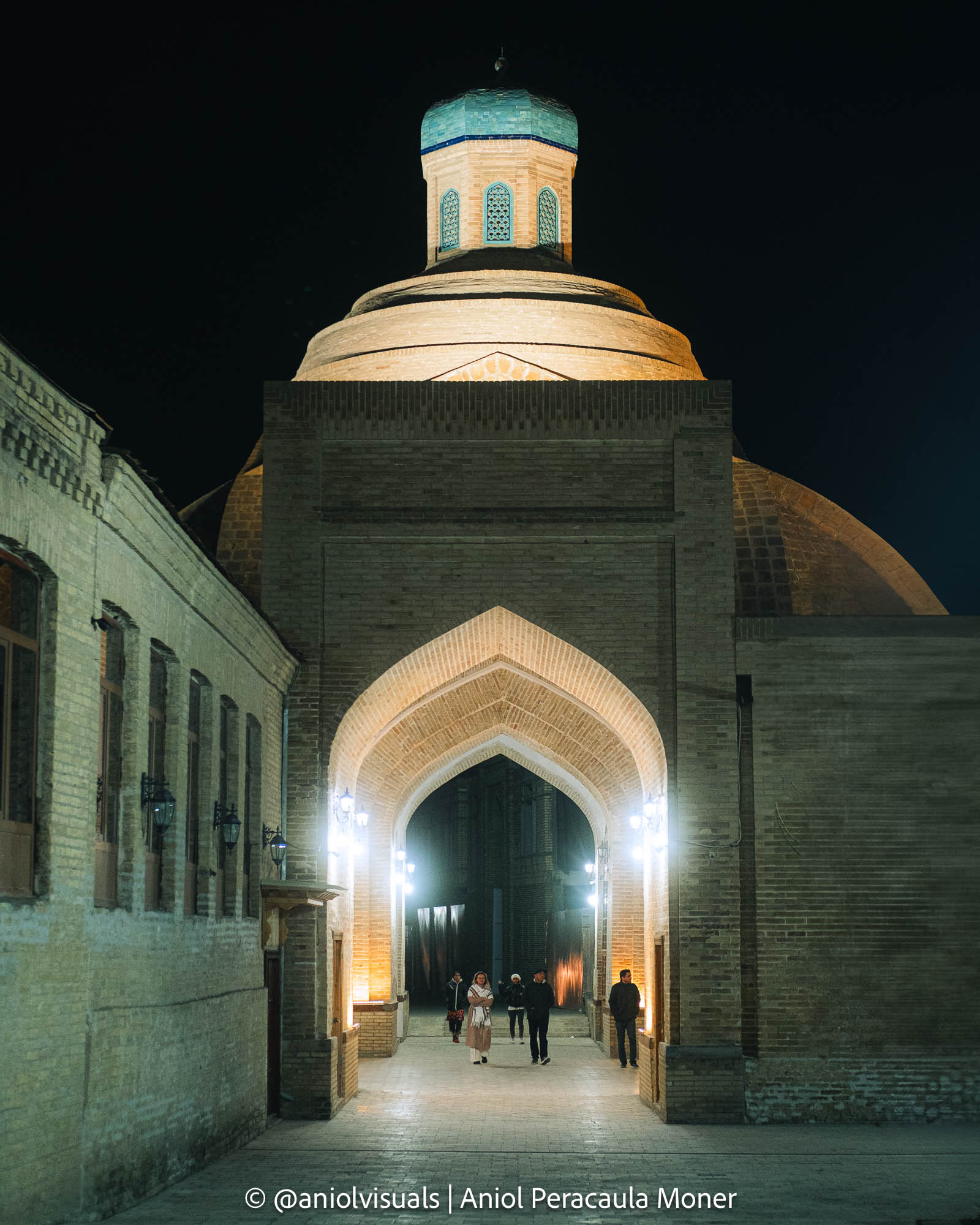
This is the smallest of the three markets, but it is still worth visiting and photographing. I found the cupola with the blue top especially photogenic, which means that, unlike the other two, I captured it mostly from the outside, instead of photographing the interior of the market.
Bukhara Central Bazaar
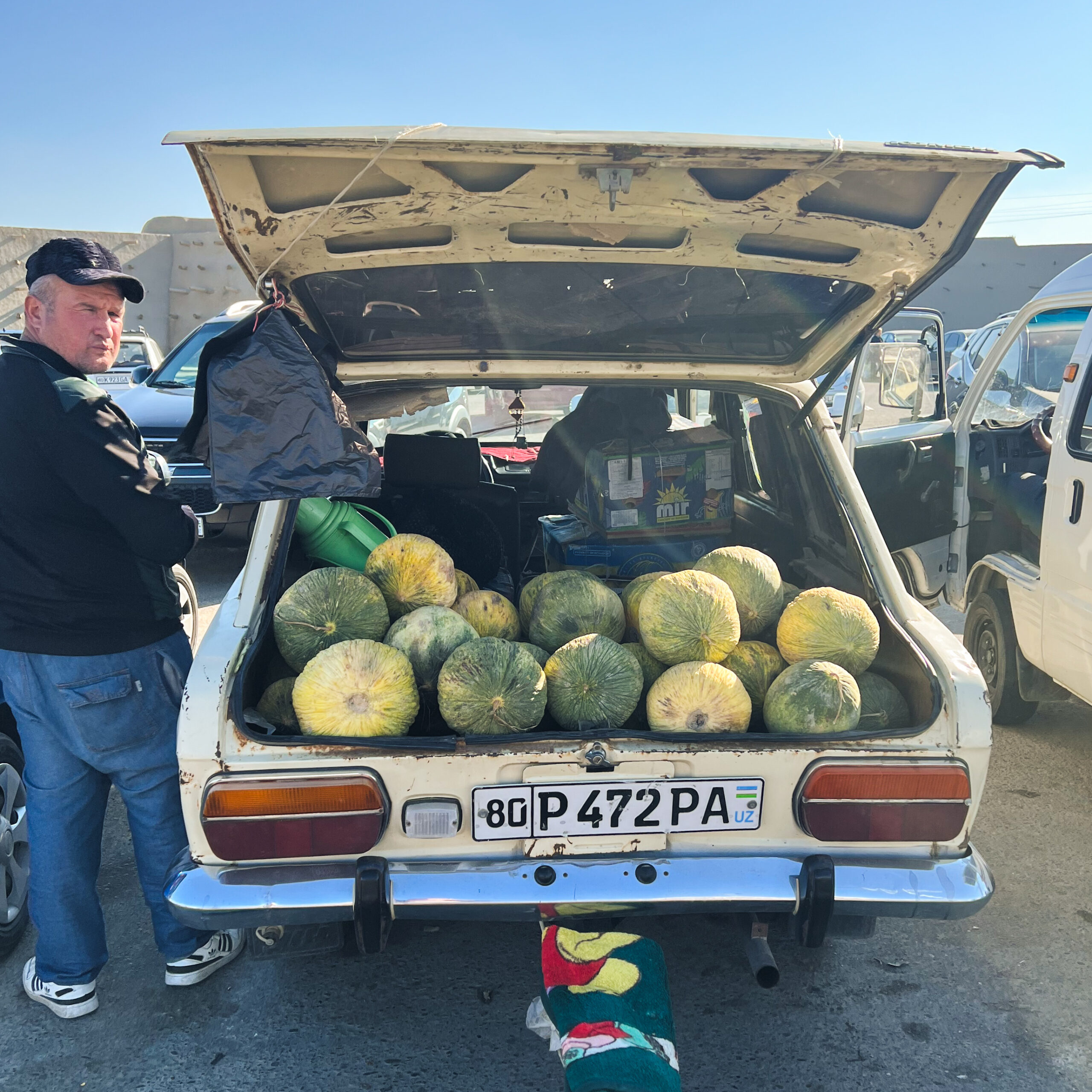
A great place to see a more authentic Bukhara is its Central Bazaar. It’s large, chaotic and with plenty of activity, which means there are tons of photo opportunities. However, it’s a place that I would recommend visiting with a small camera.
Unlike the rest of the Bukhara photography spots, the Central Bazaar is not a touristy place, so your presence will be very noticeable, even more if you are holding a camera. A discreet outfit and gear can help you blend in with the crowds.
Samanids Mausoleum
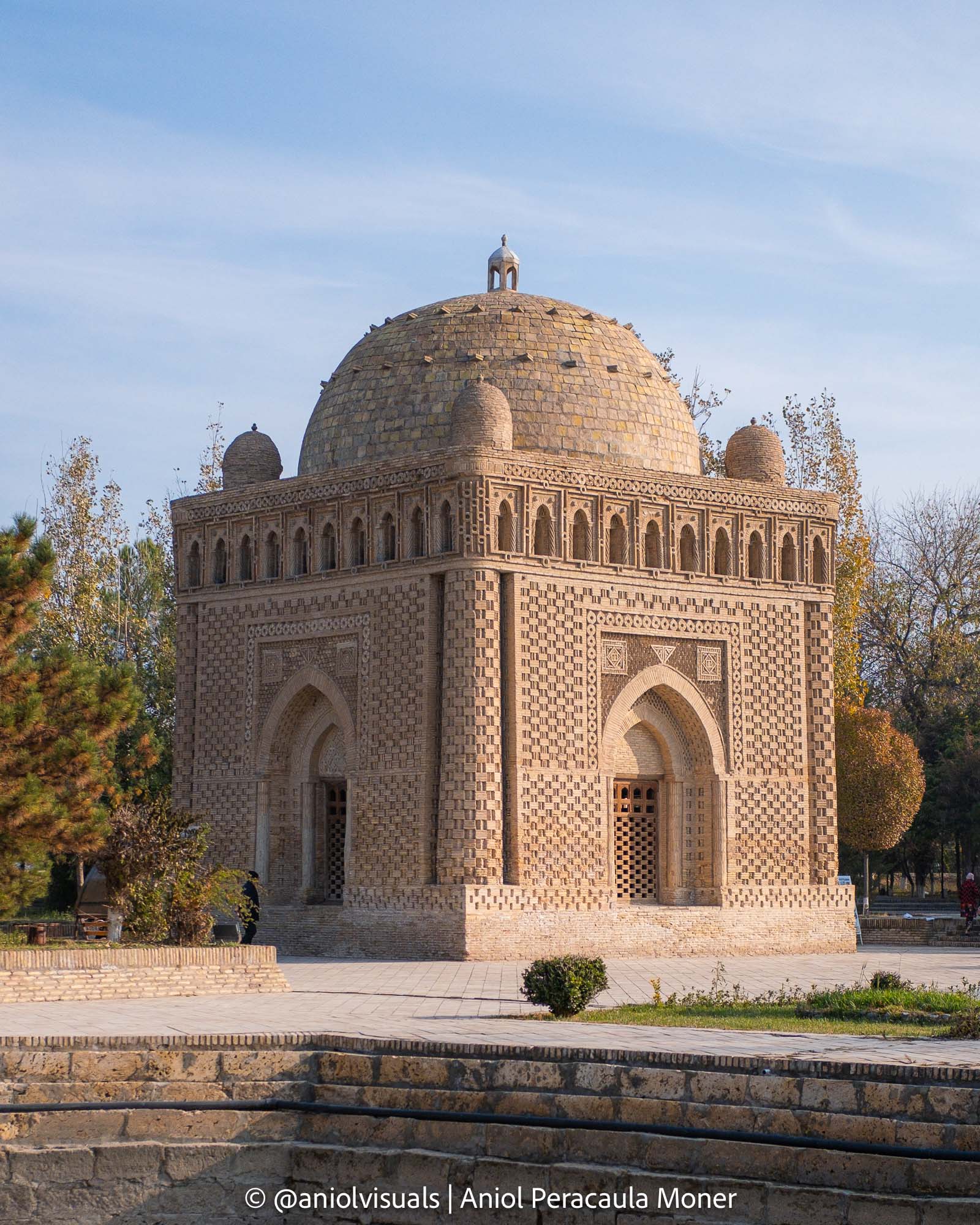
The Samanids Mausoleum is a small building in the Samanids Recreation Park, which could also make it into this Bukhara photography spots list, but I include it in this section.
This mausoleum is immediately next to a mini pond, which is great for photography. However, during the winter months, fountains and small bodies of water are not usually there. Thus, if you want to visit the mausoleum exclusively for the reflection photo and you visit between October and March, the small pond might be dry (as it was when I was there)
Bolo Hauz Mosque
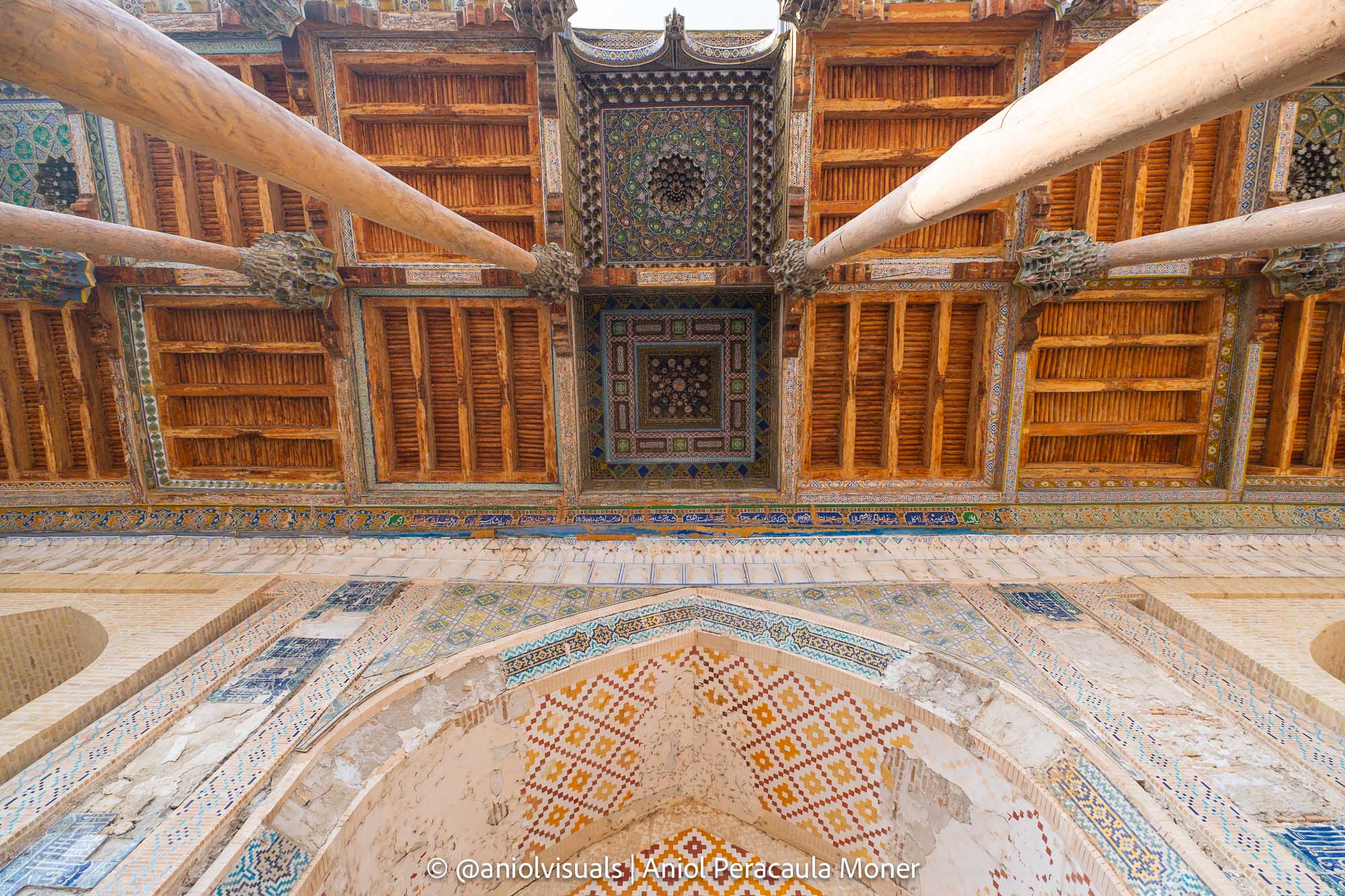
Among all the religious buildings of Bukhara, the Bolo Hauz Mosque is one of the most relevant ones. When it comes to photography, I found it more beautiful from the outside than from the inside. The wooden columns at the entrance are its main attraction. Composition can be a bit tricky, but it’s worth spending some time until you can find a good angle.
Another great way to capture the mosque is from the air. Drones are a big no-no in Uzbekistan, but luckily, there’s the Bukhara tower (also listed in this guide), from where you can get a nice view over the Bolo Hauz Mosque.
Divan-Beghi Khanaka
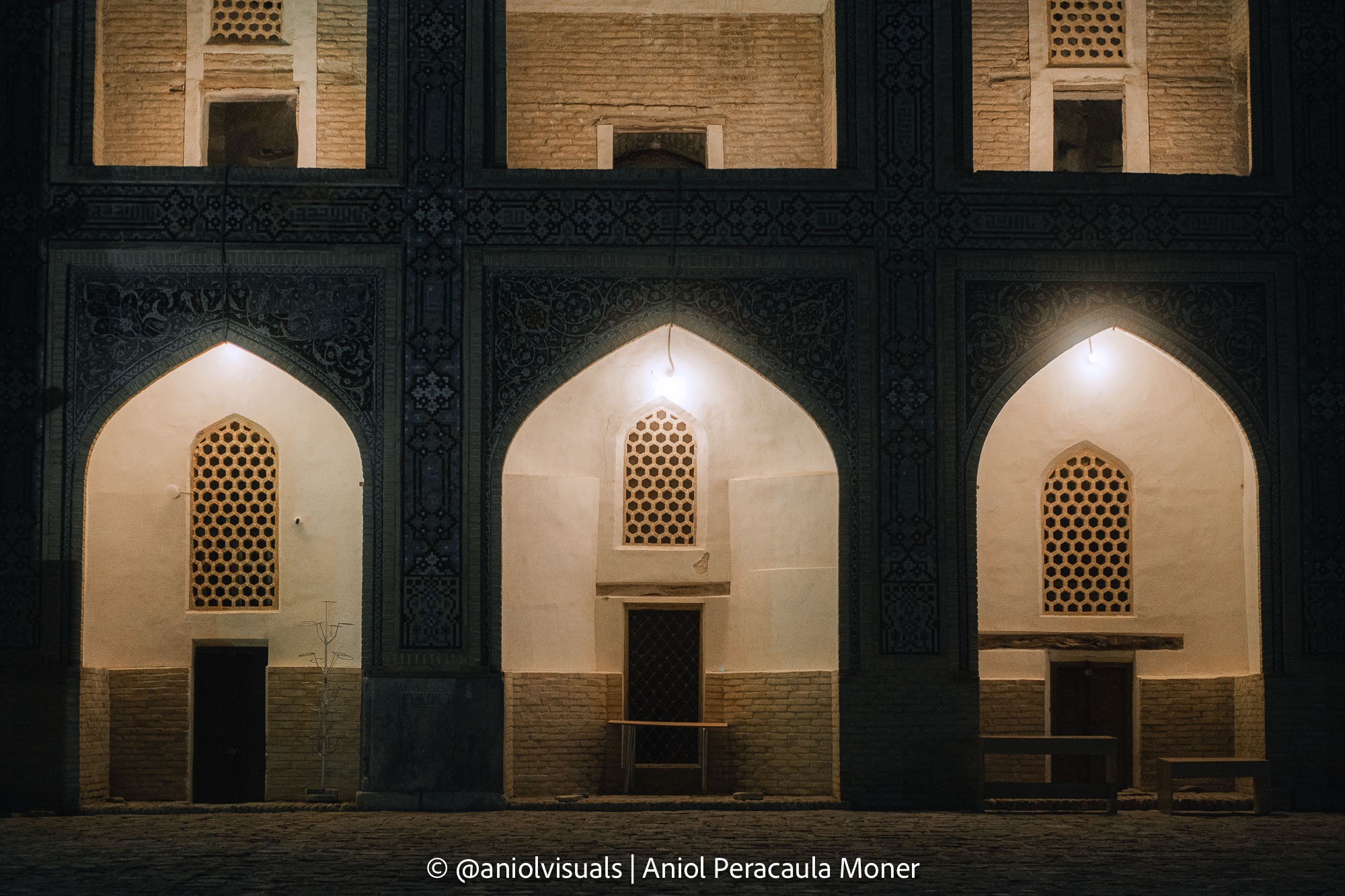
One of the struggles I had when listing the Bukhara photography spots is that after visiting some of them, many can look similar. This is why it’s important to learn a bit of history in order to understand what you are photographing. In this case, it can look like a Madrasah, but this spot is a Khanaka, or a Sufi Lodge, a space for gatherings of the Sufi brotherhood.
From a photography point of view, its interest is in the area where it is. It’s probably the most modern area of the city, next to a small pond, with some bars and restaurants around. The building itself can make for a good photo, but what really makes me list it in this guide is the area and the vibe.
Chor Minor Monument
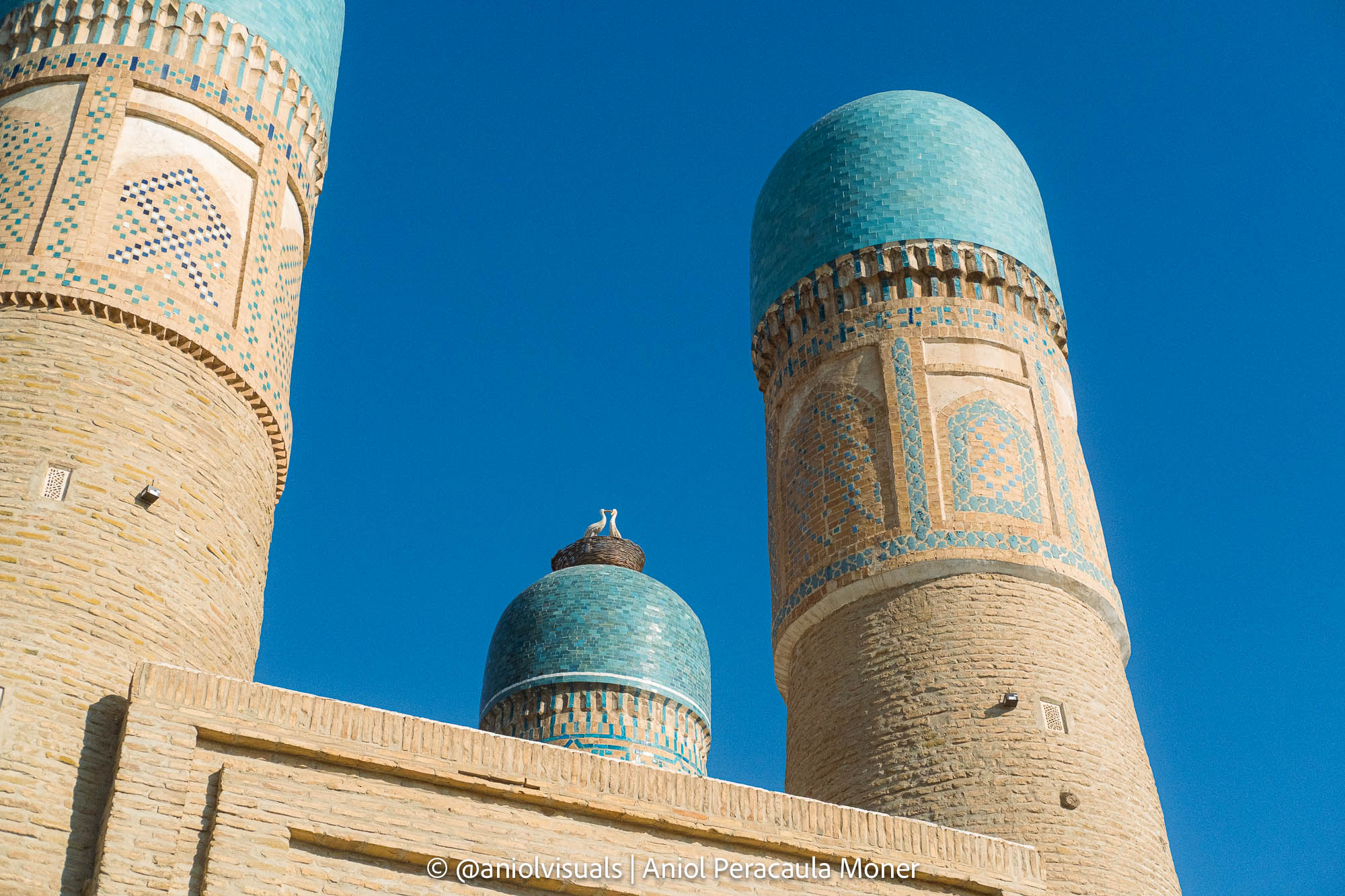
These last items in the Bukhara photography spots guide are not that well-known. I am a huge fan of visiting less touristy areas in cities. This allows me to see how they look and feel outside of the “tourist path”. The Chor Minor monument is a small structure located within walking distance of the city centre.
The four towers of the monument make it extremely photogenic. On its interior, there’s a small souvenir shop, and in the small gardens surrounding it, a few cats that were very interested in the photos I was taking.
Chor Minor area
Beyond the Chor Minor monument, the area around it is worth a visit. I can’t say exactly which streets or alleys, as I just took my camera and walked around the area, exploring the streets. Some of them were full of children playing, others were completely deserted.
Unlike the main Bukhara photography spots, in this area, I didn’t find any tourists, and locals were quite surprised to see me around. I strongly recommend spending some time getting lost in an area like this one. Wherever you are in the city, walk 10 minutes, leaving a tourist spot behind you, and chances are you will find great street photography opportunities.
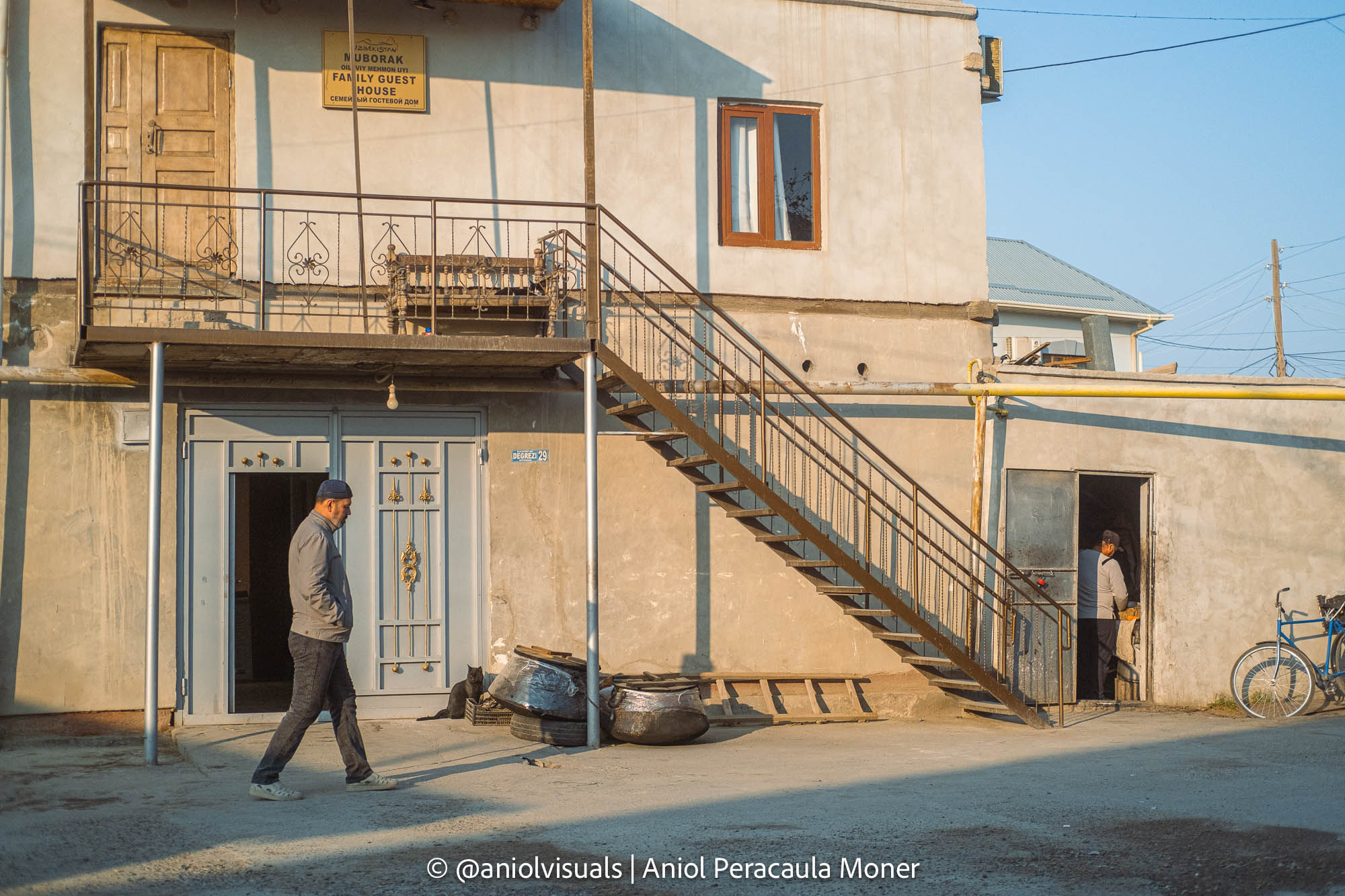
Abdullakhan madrasah
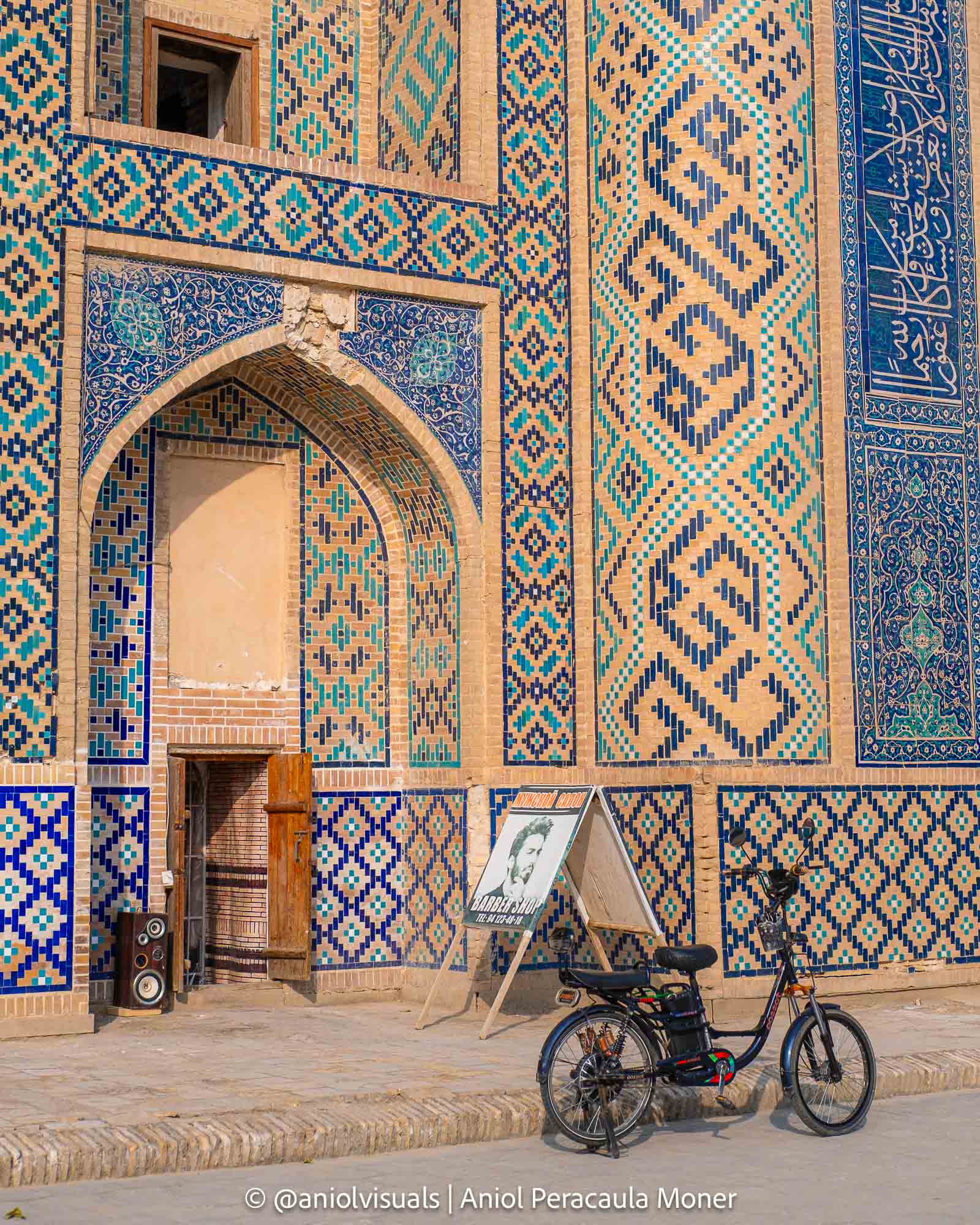
Following up on the previous spot, this is another of the opportunities you can find if you wander around the streets instead of following only specific photography spots.
This madrasah is small, a bit separated from the old town, and a great place to see how the people of Bukhara are using them nowadays. Instead of souvenirs or silk shops, like in most madrasahs, this one had a barber shop in one of its rooms.
Given that some madrasahs can look very similar, details like this one make me list is here, as it’s worth exploring less common Bukhara photography spots.
This concludes my Bukhara photography spots guide! If you need help planning your trip to Bukhara or Uzbekistan, you can schedule a call with me using the links below, and find more Uzbekistan guides in the suggested articles. To stay in touch and for travel photography inspiration, follow me on Instagram! (@aniolvisuals)
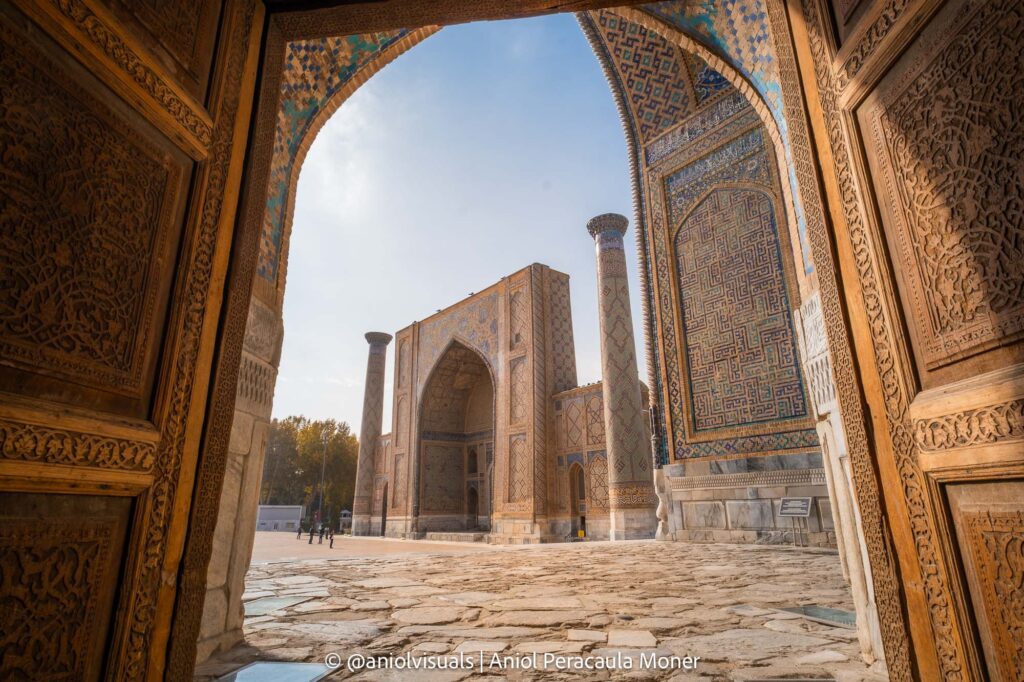
30+ best Uzbekistan photography spots: ultimate travel guide
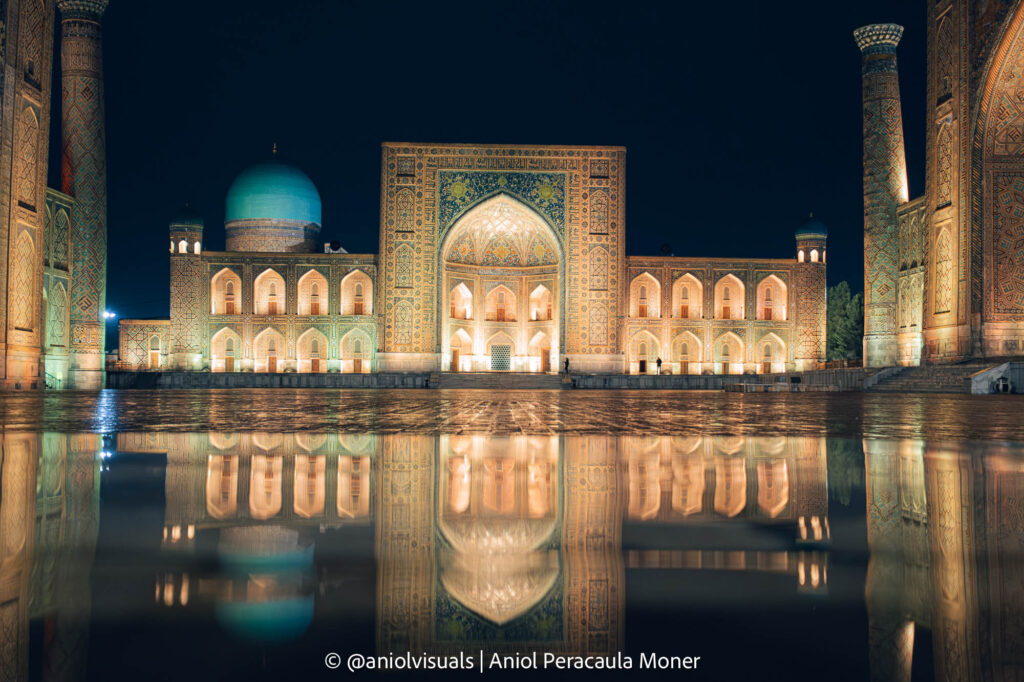
10 best Samarkand photography spots: a complete guide
18 best Bukhara photography spots: a complete guide
Best Khiva photography spots and photo opportunities: a complete guide
10 best Tashkent photography spots: an ultimate travel guide